A squint needs treatment when it threatens vision development, causes double vision or other functional problems, appears suddenly, or persists instead of remaining a harmless intermittent variation. By the end, you will know which signs need prompt assessment, what an eye examination measures, when observation is reasonable and how doctors choose between glasses, amblyopia treatment, prisms, injections and surgery.
Key takeaways
- Assess constant, worsening or vision-affecting squints.
- Children need timely review to protect visual development.
- Sudden adult squint with double vision needs prompt medical assessment.
- Treatment may include glasses, patching, prisms or surgery.
Which squints need assessment rather than watchful waiting?
A squint needs assessment when it is constant, becoming more frequent, or affects vision, eye comfort or daily function. An intermittent squint, including a squint when tired or a squint at a particular distance, still deserves review if control is worsening, one eye is being avoided, or the child covers one eye.
Children can develop amblyopia even when their eyes look aligned at other times.
| Pattern | What it means | Action |
|---|---|---|
| Constant squint | The eyes remain misaligned and the brain may favour one eye | Arrange an ophthalmic assessment |
| Intermittent squint | Alignment breaks down at times, including when tired | Assess control, vision and binocular function |
| Squint at a particular distance | The deviation appears for near work or distance viewing | Measure alignment at both distances |
| Small, stable deviation | Control and vision remain good | Observation can be safe with scheduled follow-up |
Seek urgent medical attention for a new or suddenly worsening squint, sudden double vision, severe headache, eye pain, drooping eyelid, unequal pupils, weakness, numbness or loss of vision. Significant head or eye trauma also needs prompt assessment.
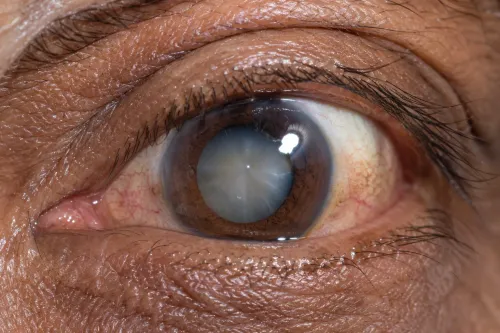
In a child, a white pupil or unusual white reflection requires urgent ophthalmic review, and so does persistent eye covering or a marked change in behaviour. Do not assume a new adult deviation is merely cosmetic; it can reflect neurological, orbital or muscular disease.
Why is a child’s squint more time-sensitive?
A child can seem to see normally because the brain suppresses the image from the misaligned eye instead of producing double vision. That coping mechanism hides the problem while the weaker eye receives less useful visual input, creating an amblyopia risk.
Delayed treatment can leave reduced vision and permanent loss of binocular vision after the visual system’s development becomes less adaptable.
Treatment deserves timely assessment when:
- The eye turns only when the child is tired, ill, looking far away or focusing close. Intermittent control can weaken over time.
- The child closes or covers one eye, tilts the head, or avoids tasks requiring both eyes to work together.
- The eyes look aligned in photographs or at some appointments but vision differs between the two eyes. Alignment alone does not prove equal sight.
- A broad nose or unusual eyelid shape creates a false appearance of crossing. This is pseudostrabismus, but an examination must distinguish it from a real children’s squint.
Treatment targets the visual cause, not just the appearance. Correct glasses improve the image reaching the weaker eye; patching or atropine in the stronger eye may encourage the weaker eye to work, though patching is not automatic for every child. Surgery changes eye-muscle position but does not restore vision already lost from amblyopia.
Observation is safe only with measured alignment, vision and control checked at planned follow-ups.
What happens during a squint assessment?
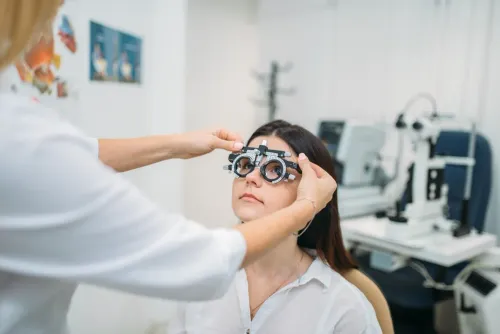
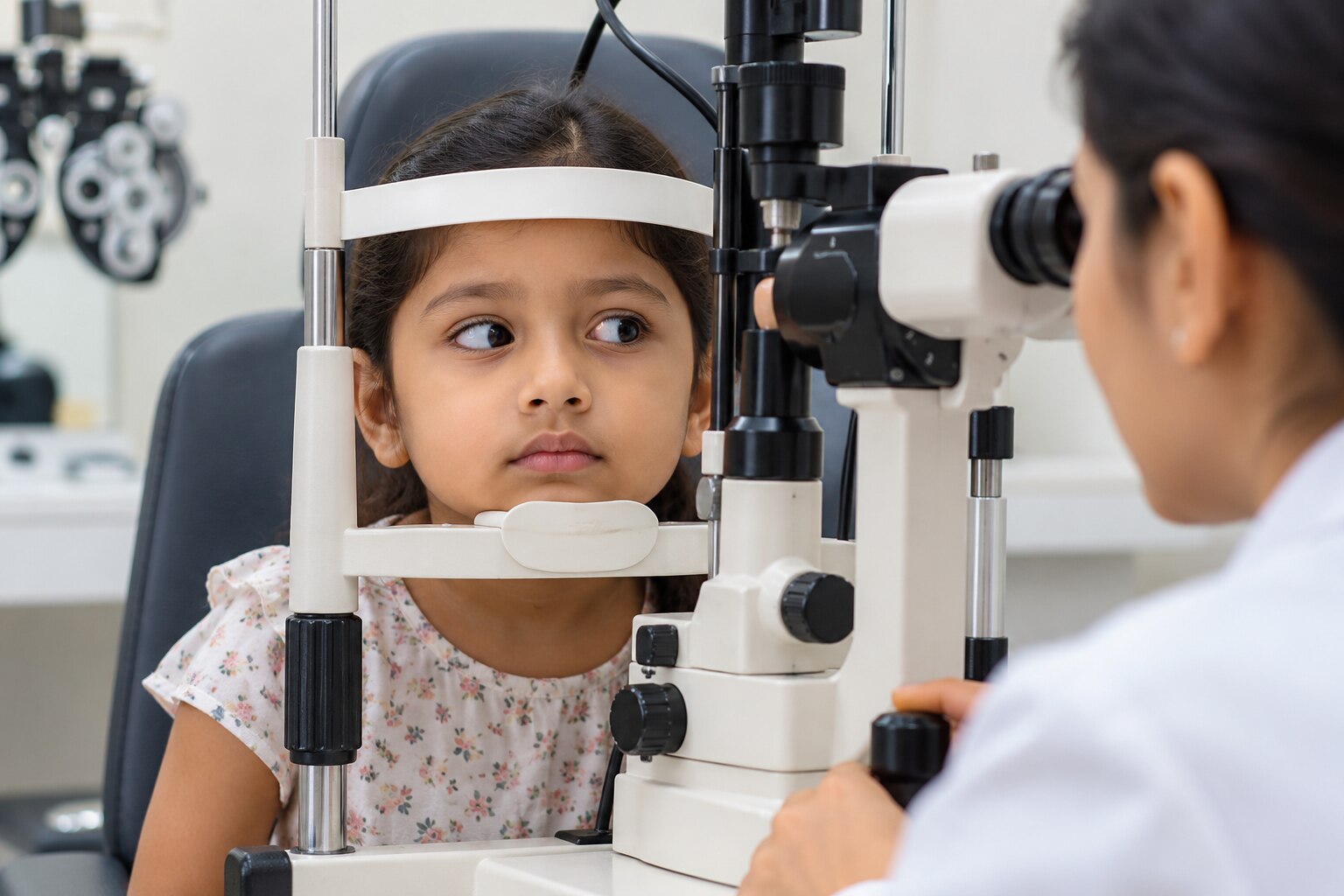
The assessment separates a true eye misalignment from an appearance that changes with gaze, tiredness or viewing distance. The clinician records your symptoms, onset, medical history and, for a child, whether either eye is being favoured or covered.
| Test | What it shows | Why it matters |
|---|---|---|
| Visual acuity one eye at a time | The smallest letters, symbols or pictures each eye can identify | A difference between eyes can indicate amblyopia, even when alignment looks normal |
| Cover and uncover test | Whether one eye moves when the other is covered and uncovered | Confirms a manifest squint and detects a hidden tendency to misalign |
| Eye-movement examination | Whether both eyes move fully and together in every direction | Restriction, weakness or an unusual movement pattern can point to a muscle, nerve, thyroid or orbital problem |
| Prism measurement | The strength and direction of the deviation at near and distance | Quantifies alignment and shows whether it is stable, intermittent or changing |
The examiner may repeat measurements with glasses, without glasses and while you fixate on targets at different distances. A sudden adult deviation, double vision, pain, drooping eyelid, unequal pupils or vision loss needs prompt investigation rather than routine observation.
Observation is safe only when the measured deviation is small, stable and well controlled, each eye sees adequately, and there is no amblyopia, double vision or functional difficulty. It must include scheduled reviews; a missed follow-up can allow a child’s weaker eye or binocular vision to deteriorate.
When does an adult squint require prompt or urgent treatment?
A new or suddenly worsening deviation in an adult needs medical assessment, not an assumption that it is a cosmetic problem. Arrange urgent evaluation for sudden double vision, severe headache, loss of vision, weakness, numbness, eye pain, a drooping eyelid, unequal pupils, or a deviation after significant head or eye trauma.
| Feature | Possible concern | Action |
|---|---|---|
| Sudden double vision with weakness, numbness or severe headache | Stroke or cranial-nerve palsy | Seek emergency medical care |
| Drooping eyelid, variable misalignment or fatigue-related worsening | Myasthenia gravis, a muscle-junction disorder | Arrange prompt ophthalmic or neurological assessment |
| Pain, bulging eye, restricted movement or vision loss | Thyroid eye disease, orbital inflammation or an orbital mass | Seek urgent eye assessment |
| New deviation without other warning signs | Cranial-nerve palsy, thyroid disease, trauma or another acquired cause | Arrange prompt examination; imaging or blood tests may be needed |
Treatment is justified when the turn causes persistent diplopia, difficulty reading or driving, an abnormal head posture, a reduced visual field, or work and social difficulties. Adult squint treatment can restore binocular function and relieve symptoms; surgery is not merely cosmetic when misalignment disrupts daily activities.
Observation suits only a small, intermittent, stable deviation with good vision and no diplopia or functional loss. It still requires scheduled reviews, because a change in control, alignment or symptoms changes the decision.
How do doctors choose between glasses, patching, prisms and surgery?
The measured cause determines the treatment: correct focusing error first, treat reduced vision separately, and realign the eyes only when a significant deviation remains or symptoms persist. A child with accommodative esotropia may straighten with corrective glasses alone; operating before testing this can mean unnecessary surgery.
| Option | What it changes | When it applies | Realistic result |
|---|---|---|---|
| Corrective glasses | Focusing effort and sometimes the eye turn | The deviation reduces with the prescribed lenses | May align the eyes and improve vision, but does not correct every squint |
| Patching or atropine drops | Forces the stronger eye to work less, improving input to the weaker eye | Amblyopia is measured in one eye | Can improve visual sharpness; it does not physically straighten the eyes |
| Prism glasses | Bends incoming light to reduce the image difference | Adults or older children with manageable double vision and a stable deviation | Can relieve diplopia, but cannot cure the underlying muscle imbalance |
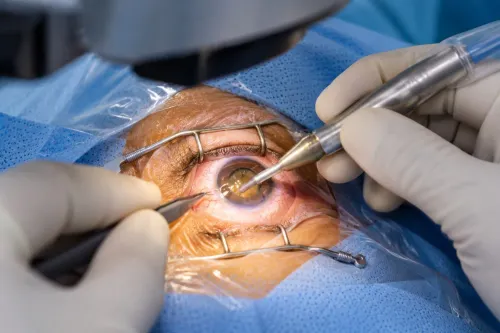
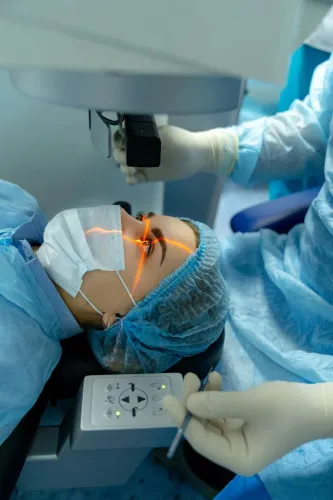
| Surgery | Changes the pull of selected eye muscles | Misalignment remains clinically significant despite appropriate glasses, or causes disabling symptoms | Can improve alignment and binocular function; residual or recurrent deviation is possible |
Patching is not automatic for every child with a squint. Surgery also cannot restore vision already lost to amblyopia, so glasses and amblyopia treatment may come before or after it.
At Focus Eye Clinic - 02235048608, ask for the measured deviation with and without glasses and the visual acuity of each eye; those figures explain the recommendation.
Frequently asked questions
Which squints need assessment rather than watchful waiting?
Arrange an assessment for a constant squint, a squint becoming more frequent, or one affecting vision, eye comfort or daily activities. Review an intermittent squint if control is worsening, one eye is being avoided, or a child covers one eye.
Why is a child’s squint more time-sensitive?
A child’s visual system is still developing. An eye that is consistently misaligned or avoided can develop weaker vision, so timely assessment helps identify reduced visual use and suitable treatment.
What happens during a squint assessment?
The clinician checks eye alignment, eye movements, vision in each eye, focusing and how the eyes work together. Children may also need drops to relax focusing and allow an accurate examination of the back of the eye.
When does an adult squint require prompt or urgent treatment?
Seek prompt assessment for a new or worsening adult squint, especially with double vision. Seek urgent medical care when it starts suddenly with severe headache, weakness, confusion, unequal pupils, drooping eyelid or other neurological symptoms.
How do doctors choose between glasses, patching, prisms and surgery?
The choice depends on the squint’s cause, angle, pattern, vision in each eye, symptoms and response to earlier treatment. Glasses address focusing problems, patching encourages use of a weaker eye, prisms can reduce double vision, and surgery changes eye-muscle alignment when other measures are insufficient or unsuitable.
Keywords