Blurred vision is not the only reason to arrange an eye examination: headaches, glare, fluctuating sight and difficulty reading or driving can also signal a problem. You will be able to distinguish routine symptoms from emergencies, choose an appropriate examination schedule and prepare for what happens before and after the assessment.
Key takeaways
- Book an examination for persistent, recurring or work-limiting visual changes.
- Seek same-day care for sudden vision loss, severe eye pain or flashes with a curtain-like shadow.
- Follow age- and risk-based examination intervals instead of waiting for new glasses.
- Bring your glasses, contact lens details, medicines and relevant medical history.
Which symptoms mean you should book a comprehensive examination?
Book a comprehensive examination when a visual change persists, recurs or affects work, reading, travel or driving. Arrange a prompt appointment rather than simply ordering new glasses.
| Symptom | What to do | Why examination matters |
|---|---|---|
| Blurred vision, fluctuating vision or eye strain | Book promptly, especially if close work triggers headaches | The cause may involve focusing, the eye surface or disease behind the eye |
| Difficulty seeing at night, glare, trouble reading or driving | Arrange an examination | Cataract, corneal changes, retinal disease or an unsuitable prescription can reduce useful vision |
| Double vision, persistent light sensitivity, distortion or a new difference between the two eyes | Seek prompt assessment | These symptoms can arise from corneal, retinal, optic-nerve, neurological or inflammatory problems |
| Persistent eye pain | Arrange prompt assessment; seek urgent care if severe or sudden | Pain is not explained by an ordinary change in spectacle power |
A stronger spectacle prescription does not explain flashes, loss of part of your visual field, one-sided vision changes or persistent pain. Sudden flashes, a curtain-like shadow or sudden vision loss require urgent assessment rather than a routine booking.
An examination is worthwhile even when your vision seems normal. Early glaucoma, diabetic retinopathy and some retinal or optic-nerve disorders cause no noticeable symptoms, so visual acuity alone cannot rule them out.
Which eye symptoms require same-day or emergency care?
Do not wait for a routine appointment if vision changes suddenly. Same-day assessment can identify a retinal tear or detachment before it causes permanent sight loss; delay can threaten vision.
| Warning sign | What to do | Why it matters |
|---|---|---|
| Sudden vision loss | Seek emergency eye care immediately | It can signal retinal detachment, a retinal vascular problem or another sight-threatening disorder. |
| A sudden increase in floaters, repeated flashes, a curtain-like shadow or a missing area in your visual field | Go for same-day emergency assessment | Flashes and floaters with a field defect can indicate a retinal tear or detachment. |
| Severe eye pain, especially with redness, blurred vision, halos around lights, nausea or vomiting | Attend an emergency department immediately | This pattern can indicate acute angle-closure glaucoma, where pressure can damage the optic nerve quickly. |
| Chemical splash or an eye injury | Rinse a chemical exposure with clean running water immediately, then seek emergency care; do not delay for pain to develop | Chemical burns and trauma can worsen while the surface still looks intact. |
| Contact-lens pain, redness, discharge, light sensitivity or sudden blur | Remove the lens and obtain urgent eye care | A contact-lens-related corneal infection can progress rapidly and threaten sight. |
Do not assume stronger spectacles explain flashes, sudden one-sided loss or a missing field. Those symptoms require examination of the retina and optic nerve, not simply a new prescription.
How often should you have an eye examination based on age and risk?
A practical eye examination schedule changes with age, symptoms and medical risk. A children's eye examination should be arranged promptly after an abnormal screening result, an eye turn or wandering eye, persistent squinting, reading or tracking difficulty, near-work headaches, or a family history of childhood eye disease.
Delayed treatment can leave amblyopia, or “lazy eye”, with permanently reduced vision.
- Children with these findings need assessment rather than waiting for the next routine check.
- Adults without symptoms should have a baseline comprehensive examination at 40. After that, follow-up depends on age, examination findings and risk; a new prescription alone does not set the interval.
- Older adults need examinations for cataract, macular disease, glaucoma and diabetic eye disease. Do not assume worsening reading ability is presbyopia.
- Contact-lens users need eye-health and lens-fit reviews at the interval set by their eye-care professional, with earlier review for discomfort, redness or changing vision.
- People with diabetes or high blood pressure need retinal assessment on a schedule based on diabetes type, pregnancy, retinal findings and treatment. Diabetes and eye examination timing must come from the clinician managing those risks.
- Arrange earlier or more frequent review with a family history of glaucoma or macular disease, severe short-sightedness, or long-term corticosteroid or other eye-affecting medicine use.
Normal visual clarity does not rule out glaucoma or retinal disease. Your eye examination schedule should therefore follow documented findings, not only how clearly you read the chart.
What does a comprehensive examination check beyond your spectacle number?
A basic vision screening or refraction measures how clearly you see and whether you need a different prescription. The vision screening versus eye examination distinction matters: normal clarity does not rule out glaucoma, diabetic retinopathy, retinal disease or optic-nerve damage.
| Test | Basic screening or refraction | Comprehensive eye examination |
|---|---|---|
| Visual clarity | Measures acuity and prescription needs | Measures acuity and prescription needs |
| Eye health | Limited or absent assessment | Examines the front and back of the eye |
| Disease risk | May miss silent disease | Assesses findings that need monitoring or treatment |
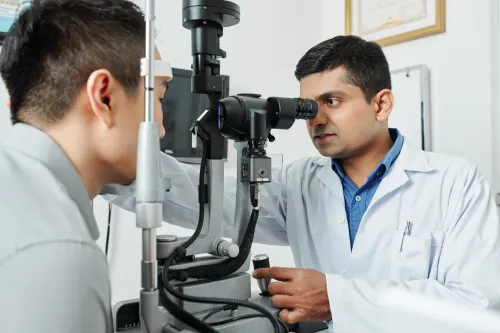
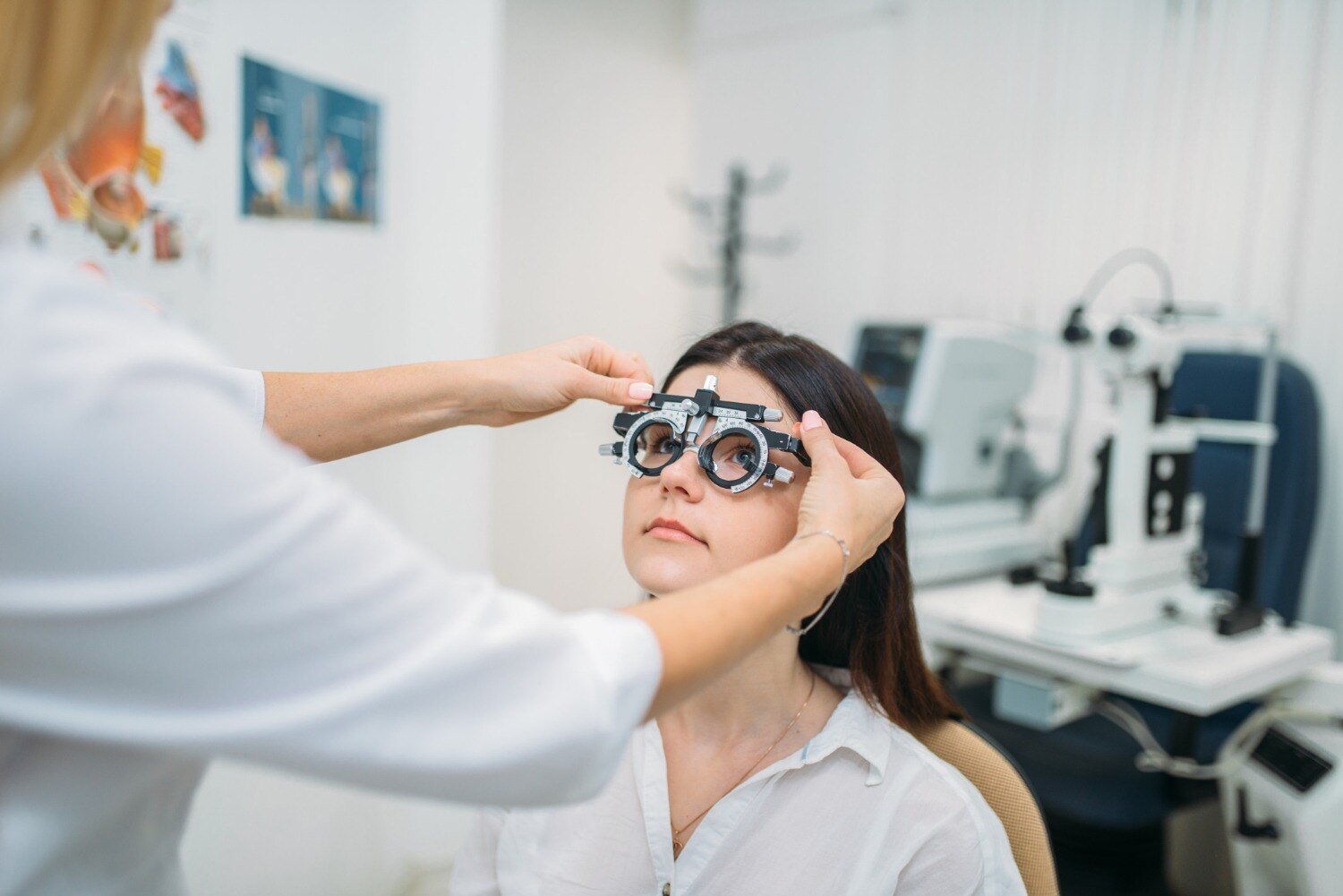
A comprehensive eye examination usually includes your medical and family history, visual acuity, refraction, pupil responses, eye movements, slit-lamp examination, an eye pressure test and peripheral-vision assessment. The slit-lamp examination checks the cornea, conjunctiva, iris and lens; pressure measurement helps assess glaucoma risk but cannot diagnose it alone.
Additional tests answer narrower questions:
- Dilation widens the view of the retina and optic nerve.
- Retinal photography or imaging documents structures and supports comparison over time.
- Visual-field testing maps functional peripheral loss that a reading chart can miss.
- Gonioscopy examines the drainage angle when glaucoma risk or pressure findings require it.
- Specialist tests target the cornea, macula, optic nerve or ocular surface.
Dilation is not automatic at every visit. It becomes important when symptoms, age, diabetes, medication use or examination findings increase concern, because a non-dilated check can leave important retinal or optic-nerve areas unseen.
How should you prepare, and what happens after the examination?
Bring your current spectacles, contact-lens prescription or lens details, medication names and doses, and previous eye records. Tell the clinician about diabetes, high blood pressure, autoimmune disease and pregnancy, because these details can change the tests you need.
Allow enough time for your history, testing and explanation. A comprehensive examination may include a dilated eye examination, retinal imaging, pressure measurement and visual-field testing, so rushing can leave important questions unanswered.
1. Ask what each test found and record your eye examination results, including your prescription, eye-pressure readings and any retinal or macular findings.
2. Arrange transport if dilation causes temporary blurred vision or light sensitivity. Bring sunglasses for the journey home, and do not plan to drive until your vision is clear and you feel safe.
3. Confirm the next step before leaving. If your eyes are healthy, a new prescription may be sufficient. Pressure, retinal or macular changes may require scheduled monitoring, while confirmed disease may require treatment or referral.
4. Keep the report and ask when to return, which symptoms require earlier review, and whether another test is needed. Retinal imaging is more useful when future scans can be compared with the current baseline.
Arrange care with an ophthalmology clinic such as Focus Eye Clinic - 02235048608 in Thane when you need more than a basic refraction, particularly when examination, interpretation and follow-up must be planned together.
Related services
Ophthalmology Eye Spectacles check up at Thane ₹900 Experience clarity and comfort with a comprehensive eye number check-up at Focus Eye Clinic, Thane. Led by Dr. View service → |
Ophthalmology ₹900 Retinal check-up at Focus Eye Clinic by Dr. Mohini Modak is essential for early detection of serious eye conditions that can affect vision. View service → |
Frequently asked questions
Which symptoms mean you should book a comprehensive eye examination?
Book an examination when blurred or fluctuating vision persists or recurs, reading becomes difficult, headaches follow visual tasks, you struggle with night driving, or your vision affects work, travel or daily activities. Do not assume new glasses will solve symptoms without an eye health assessment.
Which eye symptoms require same-day or emergency care?
Seek same-day assessment for sudden vision loss, a new shower of floaters, flashes followed by a curtain-like shadow, severe eye pain, marked redness with nausea, a sudden double-vision change, or an eye injury involving chemicals or a penetrating object. Rinse chemical exposure with clean running water while arranging urgent care.
How often should you have a comprehensive eye examination?
The interval depends on age, symptoms and risk. Children need examinations during early visual development and before school when advised. Adults with no symptoms should follow their eye-care professional's schedule; people with diabetes, glaucoma risk, high spectacle prescriptions, previous eye disease or regular eye medicines need more frequent reviews.
What does a comprehensive eye examination check beyond your spectacle number?
It can assess visual acuity, focusing and eye movements, the front of the eye, eye pressure, the optic nerve, retina and macula. The clinician may dilate your pupils and recommend tests such as retinal imaging, visual fields or corneal measurements when findings or risk factors warrant them.
How should you prepare for an eye examination?
Bring your current glasses, contact lens details, medication list, medical history, family history of eye disease and previous reports. Ask whether to remove contact lenses beforehand. Arrange sunglasses or a driver if dilation is planned, because near vision and bright-light comfort can be temporarily affected.
Keywords