Peripheral vision loss, halos, or a painful red eye can signal very different levels of urgency, while early open-angle glaucoma often produces no noticeable change at all. You will learn which symptoms require same-day care, how to check for warning changes without relying on a home test, what an assessment measures, and how treatment protects the vision you still have.
Key takeaways
- Sudden eye pain, redness, blurred vision, halos, nausea, or vomiting need urgent assessment.
- Glaucoma can damage side vision before reading or distance vision changes.
- Regular pressure, optic-nerve, visual-field, and imaging checks reveal progression.
- Drops, laser treatment, and surgery lower eye pressure to protect remaining vision.
Which glaucoma symptoms require urgent care?
A routine 20/20 result or the ability to read comfortably does not exclude glaucoma. Central vision can remain clear while optic-nerve damage takes away side vision, and chronic open-angle glaucoma often causes no noticeable symptoms until substantial loss has occurred.
| Pattern | Symptoms or clues | What to do |
|---|---|---|
| Chronic open-angle glaucoma | Peripheral vision loss, difficulty adjusting to darkness, or unnoticed gaps in side vision | Arrange an eye examination; do not rely on a clear reading chart |
| Acute angle-closure glaucoma | Sudden eye pain, headache, a red eye, halos or colored rings around lights, nausea, vomiting, blurred vision, or rapidly reduced vision | Seek immediate same-day emergency assessment |
| Other urgent causes | Sudden visual symptoms without the typical glaucoma pattern | Use the urgent service advised after examination |
Peripheral vision loss glaucoma symptoms can be easy to miss because your better eye may compensate. A sudden painful red eye with halos, nausea, vomiting, or rapid vision loss is not a home-monitoring problem: go for emergency assessment the same day.
Sudden visual changes can also result from retinal disease, migraine, or a neurological problem. The correct urgent service depends on the symptom pattern and examination findings, so do not assume every sudden visual disturbance is glaucoma.
How can you notice side-vision changes, and who needs screening?
A home check can reveal an obvious difference in side vision, but it cannot measure your visual field or replace an eye examination.
- Cover one eye without pressing on it.
- Look straight at a fixed object.
- Have someone move a hand or object inward from the side, and notice whether it appears equally on the left and right.
- Repeat with the other eye.
Do not treat a normal result as clearance. Open-angle glaucoma can be substantially more advanced in one eye than the other, and the better-feeling eye does not rule out disease in its partner.
| Home check | What it can show | What it cannot show |
|---|---|---|
| One eye covered | An obvious side-to-side difference | The exact size or location of field loss |
| Both eyes tested separately | Whether one eye seems less aware of movement | Optic-nerve damage or glaucoma stage |
| Routine vision chart | Clear central vision | Early peripheral loss, even with 20/20 vision |
Arrange screening even without symptoms if you have these glaucoma risk factors:
- Increasing age
- A family history of glaucoma
- Previously high eye pressure
- Diabetes
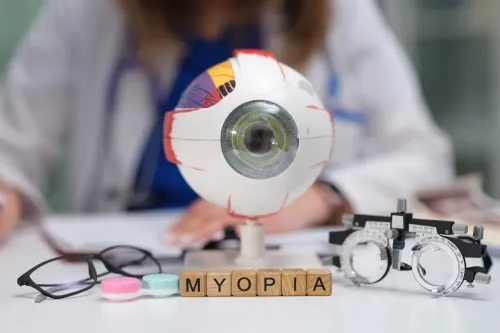
- High myopia and glaucoma risk
- Previous eye injury
- Corticosteroid use
- Narrow drainage angles
These factors increase the need for surveillance; they do not diagnose glaucoma. A comprehensive examination compares eye pressure, optic nerves, and visual fields between both eyes.
What happens during a glaucoma assessment, and how is progression tracked?
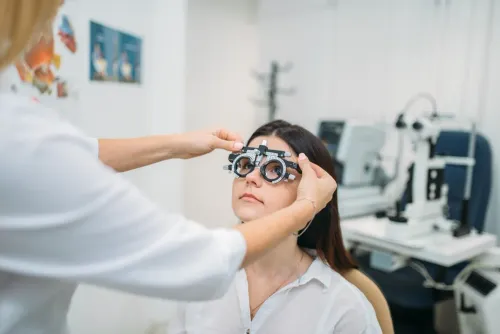
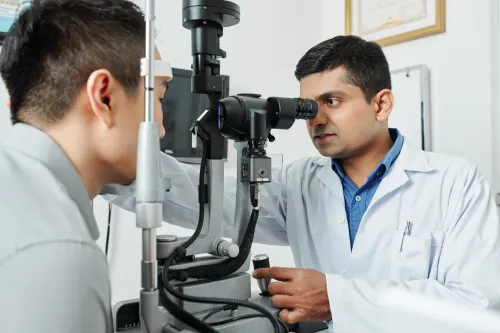
A glaucoma assessment combines several glaucoma assessment tests; no single pressure reading confirms or excludes the disease.
1. Visual-acuity testing checks sharpness at distance and near. Clear reading vision does not rule out peripheral damage.
2. Tonometry measures intraocular pressure. Pressure is a risk factor, not a stand-alone diagnosis: optic-nerve damage can occur at statistically normal pressure, while elevated pressure does not always become glaucoma.
3. Corneal-thickness measurement, called pachymetry, helps interpret the pressure result and refine the target pressure.
4. Optic-nerve examination looks for cupping, rim loss, asymmetry, or other structural damage.
5. Automated visual-field testing maps side vision. A visual-field test can show missing areas that you have not noticed in daily life.
6. Gonioscopy uses a special contact lens to inspect the drainage angle and distinguish open from narrow or closed angles.
7. When indicated, optical coherence tomography glaucoma imaging measures the retinal nerve-fiber layer and ganglion-cell layers. Thinning or change can signal damage before obvious symptoms.
Clinicians compare pressure, fields, optic nerves, and imaging between visits and between your two eyes. Follow-up is closer after diagnosis or a treatment change, then lengthens only when these measures remain stable. The interval depends on damage severity, target pressure, treatment response, rate of change, corneal thickness, family history, and overall risk.
Progression can require a lower pressure target, even when the reading falls within a population “normal” range.
How do drops, laser treatment, and surgery protect remaining vision?
Once testing confirms the glaucoma type and severity, treatment is chosen to keep intraocular pressure below your target and protect remaining optic-nerve function. It cannot restore nerve tissue or vision already lost.
Glaucoma eye drops, including prostaglandin analogues, lower pressure but work only when used every day. Redness, eyelash growth, and darkening of the iris or eyelid skin can occur.
- Wash your hands, tilt your head back, and place one drop without touching the bottle tip to your eye.
- Close your eyes and press the inner corners beside your nose for about one minute; this punctal occlusion reduces drainage into the body.
- Space different drops by at least several minutes. Ask what to do after a missed dose; do not double the next dose.
Selective laser trabeculoplasty treats the drainage pathway in many people with open-angle glaucoma or ocular hypertension and can reduce reliance on drops. Its effect can diminish, so pressure checks and follow-up continue.
Glaucoma surgery, such as trabeculectomy or a glaucoma drainage-device operation, is considered when pressure remains above target or damage progresses despite drops or laser. Risks include hypotony, infection, bleeding, cataract progression, and further procedures.
For narrow or closed angles, YAG peripheral iridotomy creates a small iris opening during an outpatient laser appointment. Expect temporary blur or inflammation, a pressure check, and short YAG peripheral iridotomy recovery; it does not reverse established damage or treat every glaucoma type.
How should you prepare for glaucoma care, and when might another diagnosis be more likely?
1. To prepare for a glaucoma appointment, bring previous eye-pressure readings, visual-field printouts, OCT reports, and a complete medication list. Include details of steroid tablets, inhalers, creams, injections, or eye drops; this glaucoma medication disclosure can reveal a pressure-related risk that is easy to miss.
Tell the clinician about driving, screen-based work, contact lenses, and difficulty following a daily drop schedule.
2. Ask whether you can drive after dilating drops or laser treatment. Arrange transport if blurred vision is possible, especially when the appointment includes dilation or a procedure.
3. Dry eye, cataract, migraine, retinal disease, and neurological conditions can mimic selected glaucoma complaints, but each needs different tests and treatment. Persistent eye discomfort without optic-nerve damage or visual-field changes should not automatically be labelled glaucoma; this is why glaucoma differential diagnosis matters.
Focus Eye Clinic - 02235048608 in Thane can match symptoms with pressure, optic-nerve, retinal, and field findings instead of assuming every visual complaint is glaucoma.
Sudden severe pain, a red eye, halos around lights, vomiting, or rapid vision loss is when glaucoma symptoms are an emergency: seek immediate assessment rather than monitoring at home. These signs can also reflect another urgent eye or neurological disorder, so emergency examination is the safest next step.
Related services
Ophthalmology ₹900 Glaucoma treatment at Focus Eye Clinic by Dr. Mohini Modak focuses on protecting vision by controlling increased eye pressure, which can damage the... View service → |
Ophthalmology ₹900 Retinal check-up at Focus Eye Clinic by Dr. Mohini Modak is essential for early detection of serious eye conditions that can affect vision. View service → |
Frequently asked questions
Which glaucoma symptoms require urgent care?
Seek urgent eye care for sudden severe eye pain, a red eye, blurred vision, halos around lights, nausea, or vomiting. These symptoms can indicate acute angle-closure glaucoma.
How can you notice side-vision changes, and who needs screening?
Side-vision loss is difficult to notice because central vision can remain clear. Arrange screening if you have raised eye pressure, a family history of glaucoma, increasing age, diabetes, significant short-sightedness, or previous eye injury or surgery.
What happens during a glaucoma assessment, and how is progression tracked?
Assessment can include eye-pressure measurement, optic-nerve examination, visual-field testing, and retinal or optic-nerve imaging. Clinicians compare repeat results over time to identify change.
How do drops, laser treatment, and surgery protect remaining vision?
These treatments lower eye pressure, reducing stress on the optic nerve. The appropriate option depends on glaucoma type, pressure control, disease progression, eye anatomy, and your ability to use drops consistently.
How should you prepare for glaucoma care, and when might another diagnosis be more likely?
Bring your medication list, family eye history, previous test results, and details of vision changes. Sudden symptoms, pain, marked redness, or a rapid change need assessment because they can point to another urgent eye condition rather than typical chronic glaucoma.
Related services
Ophthalmology ₹900 At Focus Eye Clinic in Thane, Dr. Mohini Modak offers expert care for Pterygium—a wing-shaped growth on the eye’s surface often caused by UV... View service → |
Ophthalmology ₹900 YAG Capsulotomy is a safe, advanced laser procedure used to restore clear vision after cataract surgery. At Focus Eye Clinic, Dr. View service → |