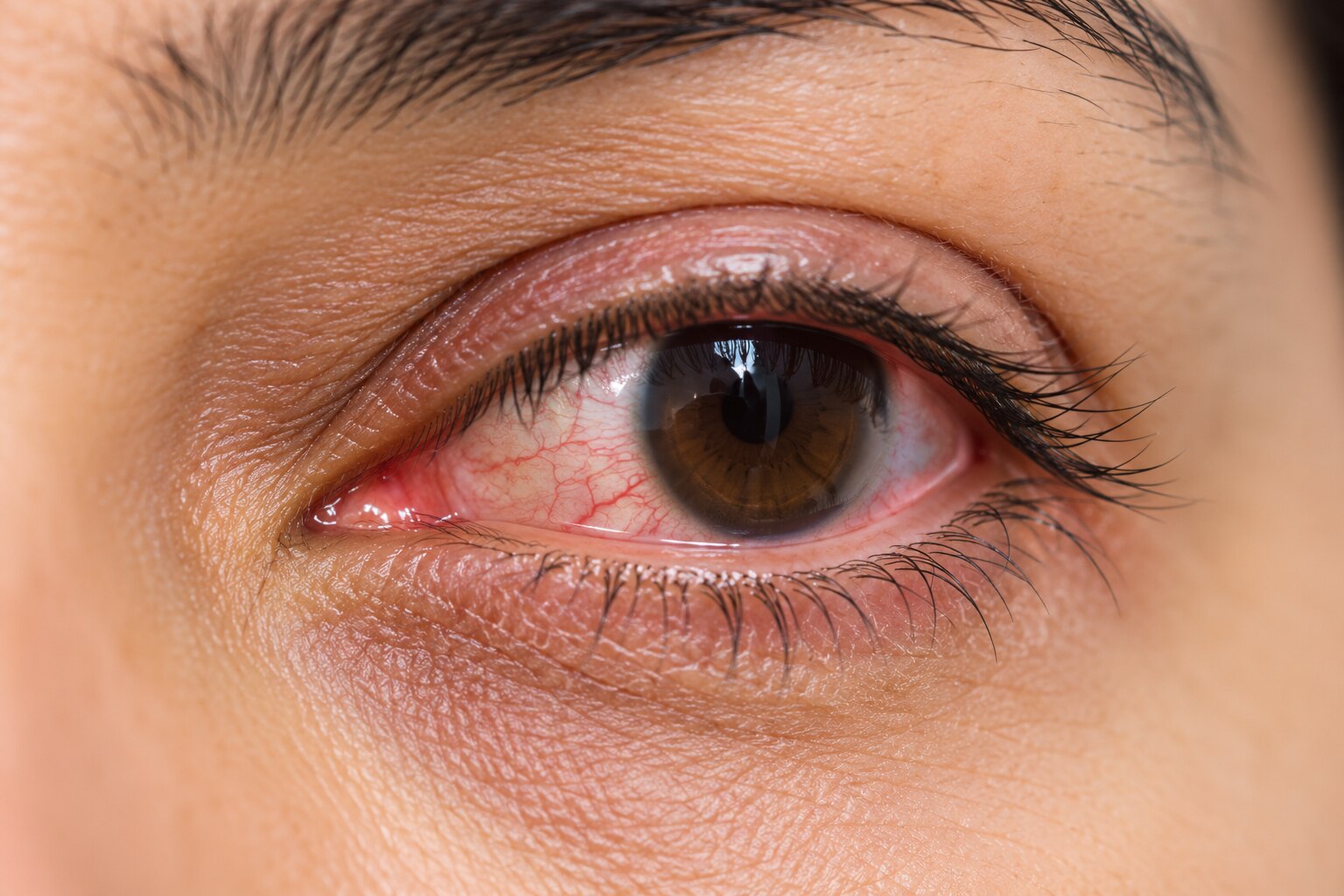
Dry eye can develop even when your eyes produce tears and look normal. Understanding whether the problem is low tear volume, rapid evaporation, eyelid disease, medication, or a wider health condition helps you choose sensible self-care and recognise when an eye examination is necessary.
Key takeaways
- Dry eye starts when tears evaporate too quickly, lack water, or spread unevenly.
- Screen use, air conditioning, smoke, contact lenses, and some medicines can destabilize tears.
- Seek urgent help for sudden vision loss, severe pain, injury, or marked redness.
- Arrange an eye examination when symptoms persist, recur, or interfere with daily activities.
How the Tear Film Fails and Why Dry Eye Develops
Dry eye develops when tears evaporate too quickly, are produced in too little volume, or become unstable. The tear film has three layers: oil slows evaporation; watery aqueous fluid lubricates the eyes; mucus helps tears spread evenly.
Screens, reduced blinking, air conditioning, fans, smoke, pollution, contact lenses, ageing, eyelid inflammation, medicines and illness can disrupt it.
| Type | Main failure | What happens |
|---|---|---|
| Aqueous-deficient dry eye | Too little watery tear fluid | Tear production cannot replace normal loss. Sjögren syndrome, ageing and some medicines can contribute. |
| Evaporative dry eye | Excessive surface evaporation | Poor oil-layer function, often caused by meibomian-gland dysfunction, allows tears to evaporate even when tear volume is fairly normal. |
| Mixed dry eye | Low volume and rapid evaporation | Reduced aqueous production combines with an impaired oil layer, creating persistent tear-film instability. |
Dry eye is not simply a shortage of tears. Increased tear osmolarity, inflammation, surface damage and altered sensory-nerve function can cause burning and fluctuating vision, while irritation can trigger watery reflex tears that quickly evaporate. Assessment combines symptoms with breakup time, staining, Schirmer testing and eyelid examination; no single test defines the condition.
The Everyday Triggers Behind Tear-Film Instability
Screen use and reduced blinking can destabilise the tear film within hours: staring lowers blink frequency, so the watery layer evaporates before a fresh coating spreads.
| Trigger | What happens | Clues |
|---|---|---|
| Air conditioning, fans, low humidity or wind | Moving, dry air accelerates evaporation | Burning or fluctuating vision that improves away from the airflow |
| Smoke and pollution | Irritate the ocular surface and increase inflammation | Stinging, redness and symptoms outdoors or near traffic |
| Contact-lens wear or previous eye surgery | Lenses disrupt the surface; surgery can alter corneal nerves | Discomfort that increases during lens wear or follows a procedure |
| Ageing and hormonal changes | Tear production and surface stability can decline | Symptoms developing around menopause or later adulthood |
| Eyelid inflammation or meibomian-gland dysfunction | Blocked glands provide too little oil for the tear film’s outer layer | Crusting, swollen lids, foamy tears or worse symptoms on waking |
| Medicines | Antihistamines, some antidepressants, diuretics and isotretinoin can reduce lubrication | Symptoms beginning after a new medicine or dose change |
| Health conditions | Sjögren syndrome, rheumatoid arthritis, lupus and thyroid-related eye disease can affect tears or the surface | Dry mouth, joint swelling, rashes, mouth ulcers or thyroid symptoms |
Poor oil-layer function causes evaporative dry eye even when tear volume is fairly normal. Do not stop a prescribed medicine yourself; ask its prescriber whether an alternative is appropriate.
What Symptom Patterns Suggest Dry Eye Rather Than Another Eye Problem
Burning, grittiness, tired eyes and fluctuating vision that affect both eyes point toward dry eye, especially when symptoms worsen during reading or screen use and ease after blinking. Contact-lens intolerance can be another clue.
Watery eyes with dry eye are possible: surface irritation triggers reflex tears, but those watery tears drain away quickly because the tear film remains unstable.
| Pattern | Clues | More suggestive of |
|---|---|---|
| Dry eye | Burning, gritty feeling, intermittent blur, symptoms in both eyes | Tear-film instability |
| Allergy | Intense itching, swelling, stringy mucus, often both eyes | Allergic conjunctivitis |
| Infection | Persistent redness, soreness, sticky yellow or green discharge, eyelids stuck together | Infective conjunctivitis |
| Blepharitis | Crusts at the lash roots, irritated lid edges, foamy tears | Eyelid inflammation |
Blepharitis and meibomian-gland blockage can coexist with dry eye, so these patterns are not mutually exclusive. A scratched cornea causes sharp, one-sided pain and watering; uveitis causes deep pain, light sensitivity and blurred vision, while acute glaucoma can cause severe pain, halos, nausea and a marked drop in vision.
Seek urgent assessment for a red or painful eye with light sensitivity, reduced or suddenly blurred vision, discharge, a visible corneal spot, injury, chemical exposure or one-sided severe symptoms. Contact-lens wearers with pain or redness need prompt review because corneal infection can worsen quickly.
Symptoms and surface appearance do not always match, so persistent burning or blur deserves an examination rather than self-diagnosis.
What You Can Try at Home—and When to Seek Urgent Help
For mild, intermittent irritation without significant pain or vision change, use preservative-free lubricating drops and reduce direct airflow from fans or air conditioning. Take regular screen breaks, look into the distance, and practise complete blinking instead of staring through a half-closed gaze.
A warm compress and gentle eyelid cleaning may help if crusting or blocked oil glands contribute; avoid excessive heat or forceful rubbing.
| Situation | What to do | Why it matters |
|---|---|---|
| Mild symptoms that settle with self-care | Continue these measures and monitor the pattern | Drops relieve symptoms but may not fix the cause |
| Symptoms lasting several days, recurring, or needing frequent drops | Arrange an eye examination | Persistent discomfort can occur with little visible redness or staining |
| Blurred vision affecting reading, work, driving or sleep | Seek prompt assessment | Fluctuating vision can reflect an unstable tear film or another eye problem |
| Severe pain, marked redness, strong light sensitivity, sudden vision loss or a painful red eye while wearing contact lenses | Seek urgent eye care today | These signs can indicate corneal injury, infection, inflammation or raised eye pressure |
| Chemical splash, penetrating injury or a foreign body that will not wash out | Rinse with clean running water for at least 20 minutes and obtain emergency care | Delay can permanently damage the cornea |
Do not self-treat worsening symptoms by repeatedly changing over-the-counter products. Urgent assessment also applies after an eye injury, or when discharge, swelling or rapidly deteriorating vision appears.
When an Eye Examination and Targeted Dry Eye Treatment Make Sense
Persistent symptoms deserve professional assessment when basic measures have not settled them, vision keeps fluctuating, or contact lenses become uncomfortable.
Arrange an examination sooner if you also have dry mouth, joint swelling, rashes, recurrent mouth ulcers or thyroid-related symptoms; these can point to Sjögren syndrome, rheumatoid arthritis, lupus or thyroid eye disease rather than an isolated surface problem.
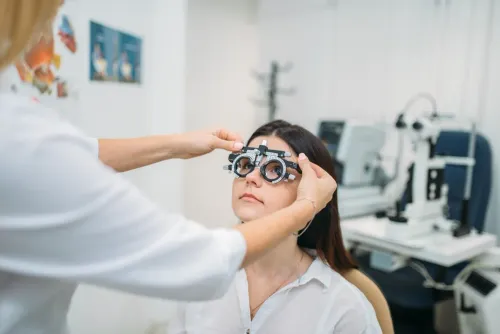
An ophthalmology evaluation may include:
- A symptom questionnaire and review of medicines, contact-lens use, screen habits and relevant medical conditions.
- Tear-film breakup time, which shows how quickly the tear layer breaks apart after a blink.
- Corneal and conjunctival staining to reveal surface damage that you cannot see in a mirror.
- Schirmer testing to estimate aqueous tear production.
- Examination of the eyelids and oil-producing glands for blepharitis or meibomian-gland dysfunction; tear osmolarity or inflammatory-marker testing can add information when the diagnosis remains unclear.
The plan should match the cause, not simply add more artificial tears. It may include preservative-free lubricants, blink and environmental changes, warm compresses and gentle lid cleaning for gland disease, or prescription anti-inflammatory or immunomodulatory drops.
A short corticosteroid course requires supervision because prolonged or inappropriate use can raise eye pressure, increase infection risk and contribute to cataract formation.
Focus Eye Clinic - 02235048608 can assess whether dry eye treatment in Thane should focus on low tear volume, excessive evaporation, eyelid disease or another condition that resembles dry eye.
Related service
Ophthalmology ₹900 Dry Eye is a common eye condition that causes irritation, burning sensation, redness, watery eyes, and blurred vision due to inadequate tear... View service → |
Frequently asked questions
What causes dry eye to develop?
Dry eye develops when tears evaporate too quickly, are produced in too little volume, or become unstable. Problems with the oil, watery, or mucus layer can affect the tear film.
Which everyday habits and environments can trigger dry eye?
Long screen sessions, reduced blinking, air conditioning, fans, smoke, dust, dry air, and contact lens use can increase evaporation or irritate the eye. Some medicines and health conditions also affect tear production.
How can you tell dry eye symptoms from another eye problem?
Dry eye often causes burning, grittiness, fluctuating vision, redness, watering, light sensitivity, and discomfort that worsens with reading or screen use. Severe pain, sudden vision change, injury, or pronounced redness needs prompt medical assessment.
When should you seek dry eye treatment from an eye specialist?
Book an eye examination when symptoms persist despite sensible home measures, keep returning, affect work or sleep, or occur while wearing contact lenses. An examination can identify the tear-film problem and guide targeted treatment.
Keywords