The right time for cataract surgery depends on what your vision prevents you from doing, not on whether the lens has become completely opaque. You will be able to identify symptoms that need urgent assessment, understand the tests used to confirm the cause, compare lens choices, and prepare for surgery and recovery.
Key takeaways
- Daily vision problems, not one visual acuity number, guide the surgery decision.
- Confirm cataract is causing symptoms before choosing an intraocular lens.
- Compare lens features, costs, glasses needs and surgical suitability.
- Seek urgent help for severe pain, worsening vision, flashes or a curtain-like shadow.
When Do Cataracts Justify Surgery?
Cataract surgery is recommended when blurred or glare-affected vision disrupts reading, driving, work, mobility, hobbies, independence or safety, including falls. Cataract surgery visual acuity is not decided by one fixed number; the effect on your daily life matters more.
| Situation | Practical decision | What to know |
|---|---|---|
| Mild symptoms | Monitor and update glasses | Brighter lighting and anti-glare measures can improve function temporarily, but do not remove an established cataract. |
| Daily activities affected | Discuss surgery | Driving and cataract surgery decisions depend on safe, comfortable vision, not a test result alone. |
| Earlier assessment needed | Arrange an ophthalmic review promptly | Seek assessment for rapidly worsening vision, disabling glare, a major difference between the eyes, or a cataract blocking examination or treatment of the retina. |
| Urgent warning signs | Seek urgent eye care | Sudden vision loss, severe eye pain, flashes, a curtain-like shadow, a sudden increase in floaters or marked redness are not routine cataract symptoms. |
You do not need to wait for cataract maturity or a “ripe cataract.” Waiting for the lens to become fully opaque prolongs poor vision and can make advanced surgery more difficult. Glasses may sharpen vision until the prescription no longer compensates, but only cataract surgery removes the cloudy lens.
Mild symptoms alone are a reason to monitor, improve lighting and review your prescription, not an automatic reason for surgery. If symptoms are progressing or reducing your independence, ask how the cataract affects the retina, optic nerve and your usable vision before deciding.
How Does an Ophthalmologist Confirm That Cataract Is the Main Problem?
The key question is whether the cloudy lens explains most of your reduced vision and whether removing it is likely to help. These cataract diagnosis tests build that answer:
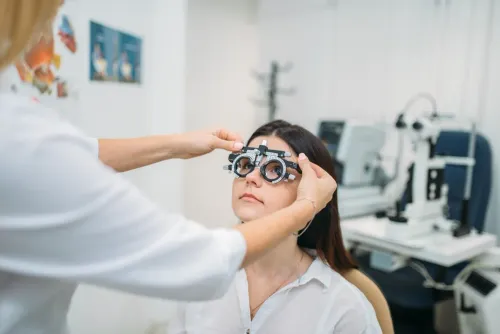
1. Visual-acuity testing measures sight with your current glasses and without them. Refraction then identifies an uncorrected prescription that new glasses might correct.
2. A slit-lamp examination uses magnification and a bright beam to inspect the cornea, lens and other front-of-eye structures, confirming the cataract’s type and density.
3. After dilating the pupil, a dilated retinal examination checks the macula, retina and optic nerve. It can reveal macular degeneration, diabetic retinopathy or optic-nerve damage that cataract surgery cannot reverse.
4. An eye pressure test before cataract surgery looks for glaucoma or pressure abnormalities that could affect safety and expected vision.
5. Biometry measures eye length and corneal power to calculate the intraocular lens power. The calculation is not perfectly predictable, so residual prescription and later glasses remain possible.
Surgery may produce limited improvement if glaucoma, corneal disease, macular degeneration, diabetic retinopathy or optic-nerve damage causes most of the loss. Treating the cataract first can also be premature when another condition needs attention.
A dense cataract can block the retinal view, making the examination less certain and altering imaging, surgical timing or the operative plan. Tell the ophthalmologist about previous eye operations, diabetes, blood-thinning medicines and every significant health condition before consent.
Which Lens Implant and Surgical Plan Should You Compare?
Choose the lens by matching its trade-offs to your routine, not by treating one design as an automatic upgrade. Ask whether your target is distance, intermediate work such as computer use, or near reading, how much spectacle use you accept, and how demanding night driving is.
| Option | Main benefit | Main trade-off |
|---|---|---|
| Monofocal lens | One selected main focus, often distance | Glasses may still be needed for intermediate or near tasks |
| Toric lens | Corrects corneal astigmatism | Does not guarantee freedom from glasses; alignment and residual error matter |
| Multifocal lens | Reduces spectacle dependence across distances | Halos, glare and lower contrast can occur, especially in dim light |
| Extended-depth-of-focus lens | Extends useful focus beyond one main distance | Near glasses may remain, with possible halos, glare or reduced dim-light contrast |
Biometry uses eye length and corneal power to calculate the intraocular lens power, but the result is not perfectly predictable. Residual refractive error can leave you needing glasses; options afterward include a prescription, laser enhancement or, in selected cases, lens exchange.
Compare the written estimate for:
- The lens and its out-of-pocket cost
- Included corneal measurements and other testing
- Medicines and follow-up visits
- Assessment and treatment of complications
“Laser cataract surgery” usually means femtosecond-laser assistance for selected steps. Conventional phacoemulsification uses ultrasound to remove the cloudy lens; laser assistance is not automatically safer or better. Ask which technique is proposed and why it suits your eye.
What Happens on the Day of Cataract Surgery?
At arrival, the team repeats final measurements, confirms the correct eye and lens target, reviews your health and medicines, and obtains consent. Ask questions before signing, because consent should cover the planned procedure, lens choice, expected glasses use and relevant risks.
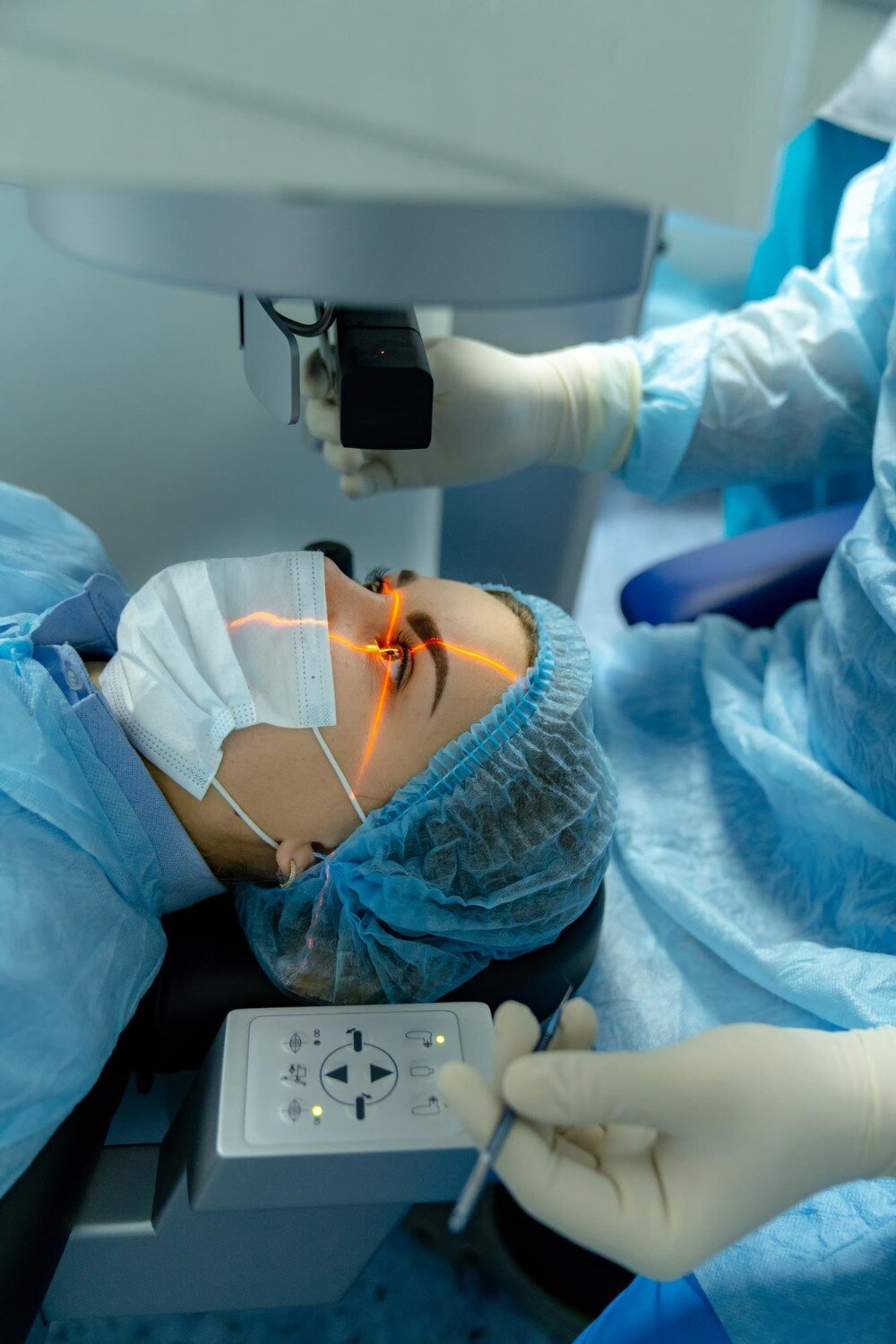
1. Pupil-dilating drops enlarge the pupil. Staff clean the skin around your eye, then provide local anaesthesia with numbing drops or an injection around the eye. Most patients remain awake during local anaesthetic cataract surgery.
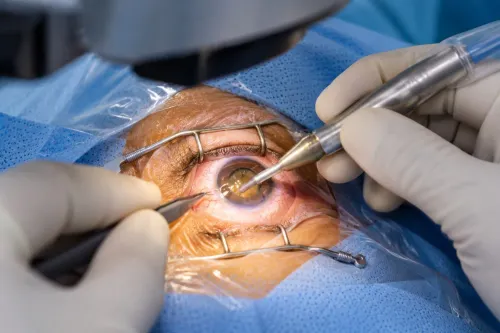
2. During what happens during cataract surgery, the surgeon makes a small incision, uses ultrasound to break up and remove the cloudy natural lens, and places an artificial intraocular lens. The implant is intended to remain permanently.
3. Day-case cataract surgery usually ends with same-day discharge, not an overnight stay. Arrange a companion for the journey home, and follow instructions about driving; you may not be allowed to drive immediately afterward.
Cataracts often affect both eyes, but one eye is treated first so its healing and visual result can be assessed. Same-day treatment of both eyes is reserved for selected patients, so ask which approach suits you.
Before the appointment, ask who will manage your regular medicines, how to adjust diabetes medicines or food instructions, what payment or insurance documents are needed, and when follow-up occurs. For readers in Thane, Focus Eye Clinic - 02235048608 can use the examination findings, lens target and surgical plan to make the consent discussion specific.
Related services
Ophthalmology Cataract Consultation in Thane ₹900 Cataract Surgery at Focus Eye Clinic by Dr. Mohini Modak is a safe and effective procedure to restore clear vision affected by cataracts. View service → |
Ophthalmology Cashless Cataract Surgery Consultation ₹900 Focus Eye Clinic, Thane, led by Dr. Mohini Modak, offers seamless cashless cataract surgery designed for patient comfort and convenience. View service → |
How Long Does Recovery Take, and When Should You Seek Help?
Early blur, gritty or mildly uncomfortable sensations, and light sensitivity are normal after cataract surgery. Vision usually improves over the next several days, but cataract surgery recovery time varies: visual stability can take longer while the eye heals.
- Use the prescribed eye drops after cataract surgery on the surgeon’s exact schedule. Do not stop, restart or change them without advice.
- Do not rub the eye. Wear the shield or other protection exactly as instructed, especially while sleeping.
- Postpone swimming and heavy lifting until your surgeon clears them. Return to work when your vision and comfort suit the job; computer work and driving have different demands.
- Driving after cataract surgery requires adequate vision and explicit clearance. Do not decide that driving is safe because a fixed number of days has passed.
- Delay a new glasses prescription until refraction settles. The second-eye procedure is planned after the first eye’s healing and visual result are reviewed.
Contact your eye-care team urgently for:
- Worsening vision rather than steady improvement
- Severe pain or marked redness
- Increasing light sensitivity
- Flashes or a sudden increase in floaters
Uncommon cataract surgery complications include infection inside the eye, retinal detachment, raised pressure, bleeding, inflammation and cystoid macular oedema. Clouding of the capsule months or years later is posterior capsule opacification; when it affects vision, YAG laser capsulotomy treats it without removing the implanted lens.
Frequently asked questions
When is cataract surgery recommended?
Surgery is recommended when cataract-related blur or glare interferes with reading, driving, work, mobility, hobbies, independence or safety.
How does an ophthalmologist confirm that cataract is the main problem?
The ophthalmologist reviews your symptoms and daily difficulties, examines the lens and checks for other conditions that could limit vision after surgery.
What should you compare when choosing a lens implant?
Compare the lens design, expected range of vision, likelihood of needing glasses, visual trade-offs, suitability for your eyes and total cost.
How long does cataract surgery recovery take?
Vision often improves soon after surgery, but healing and visual stability take longer. Follow your prescribed drops and activity restrictions, and attend follow-up appointments.
When should you seek help after cataract surgery?
Contact your eye-care team urgently for severe or increasing pain, worsening vision, marked redness, flashes, new floaters or a curtain-like shadow.
Related services
Ophthalmology Phacoemulsification Consultation in Thane ₹900 Phacoemulsification Surgery is an advanced and safe cataract treatment available at Focus Eye Clinic by Dr. Mohini Modak. View service → |
Ophthalmology ₹900 YAG Capsulotomy is a safe, advanced laser procedure used to restore clear vision after cataract surgery. At Focus Eye Clinic, Dr. View service → |
Keywords