The lens that matches your spectacle power can still feel dry, move out of position or leave your vision fluctuating. By understanding the examination, prescription measurements, trial fitting and follow-up checks, you can judge why a specialist recommends one lens design over another and when wearing lenses is not the safest choice.
Key takeaways
- Check corneal health and tear-film stability before choosing lenses.
- A contact-lens prescription includes fit, diameter, base curve and power.
- Toric lenses correct astigmatism; multifocal lenses address near and distance vision.
- A lens fits correctly when vision is stable and movement feels comfortable.
What does a specialist check before recommending a lens?
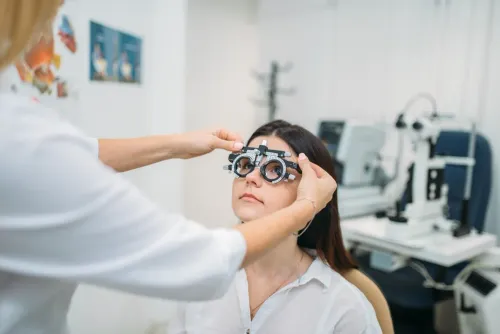
A specialist first decides whether your eyes can safely tolerate a lens; sharper vision alone is not enough. A contact lens evaluation begins before any diagnostic lens is placed, because an unhealthy cornea or unstable tear film can turn a good prescription into painful wear.
1. Your medical history identifies dry-eye disease, allergies, blepharitis, previous eye surgery, corneal injury and medicines that affect the surface. Tell the specialist how long you use screens, how many hours you want to wear lenses, and whether you can wash, insert and remove them reliably.
2. Your symptoms guide the risk assessment. Burning, gritty sensation, fluctuating vision, watering, discharge, light sensitivity or recurring redness can signal that lenses should wait while the underlying problem is treated.
3. A tear-film assessment checks whether tears spread evenly and remain long enough to protect the eye. The specialist also examines the eyelids, lashes and conjunctiva for inflammation, deposits or rubbing.
4. A corneal examination with a slit lamp looks for staining, swelling, scars, infection and irregular shape. Measurements of corneal curvature or diameter help determine whether a lens could cover and move safely.
The outcome may be daily glasses, part-time wear or no lenses until the surface improves. If you develop pain, increasing redness or sudden blurred vision after wearing a lens, remove it and seek prompt eye-care advice.
Why is a contact-lens prescription different from a spectacle prescription?
A spectacle prescription gives power at a fixed distance in front of your eyes. A contact-lens prescription must account for a lens sitting directly on the cornea, so the same power is not always correct, particularly for strong prescriptions. It also specifies how the lens should fit and be worn.
The specialist converts and refines the prescription by selecting:
- Power, including the adjustment for the lens’s position on the eye.
- Cylinder and axis for astigmatism.
- Base curve, which controls how closely the back surface follows the cornea.
- Diameter, which determines how much of the cornea the lens covers.
- Material, oxygen transmission, replacement schedule and wearing schedule.
A diagnostic lens tests these choices before the final contact-lens prescription is issued:
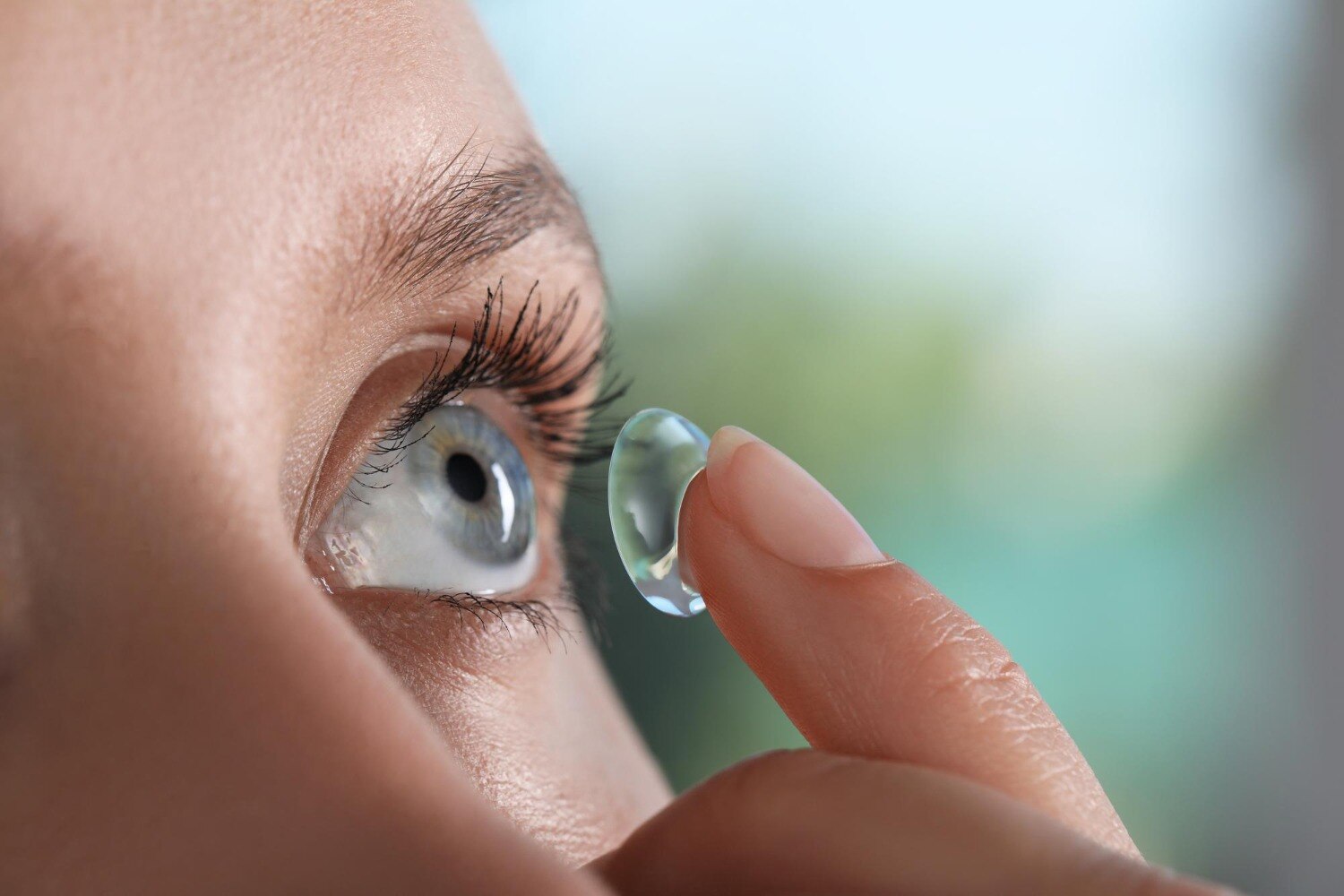
- The specialist selects a lens with the intended power, base curve and diameter, then places it on your eye.
- After the lens settles, they check whether it is centred, covers the cornea completely and moves appropriately when you blink.
- You read an eye chart through the lens while the specialist checks vision, including the effect of cylinder and axis or multifocal zones.
- You report comfort after wearing it for a short period; excessive movement, unstable vision, persistent redness or a gritty sensation signals that the parameters need changing.
How does the specialist choose between soft, toric, multifocal and rigid lenses?
The visual problem comes first, but replacement habits and eye health can rule out a design. A specialist also weighs oxygen transmission, deposit buildup, cleaning effort and the cost over time; stretching a replacement interval can let deposits and microorganisms accumulate and change lens performance.
| Option | Visual problem addressed | Replacement and upkeep | Handling, deposits, oxygen and cost |
|---|---|---|---|
| Soft spherical | Myopia or hyperopia without significant astigmatism | Daily disposable lenses need no case cleaning; two-week lenses and monthly lenses require cleaning and scheduled replacement | Fastest handling; daily lenses reduce deposit exposure. Oxygen transmission varies by material. Frequent replacement can cost more per year. |
| Toric lenses for astigmatism | Astigmatism requiring cylinder and axis correction | Available in disposable schedules, with the same replacement rule as the chosen model | Stabilisation must prevent unpredictable rotation. Deposits can disturb vision; cleaning and handling are more demanding than with a basic soft lens. |
| Multifocal soft | Presbyopia with distance and near vision needs | Usually disposable, with cleaning effort set by the replacement schedule | More fitting time may be needed to balance distances. Deposits can reduce contrast; material oxygen transmission and replacement frequency affect cost. |
| Rigid gas-permeable | Irregular cornea, keratoconus, scarring, or sharper optics for selected prescriptions | Replaced less often, but requires daily cleaning and careful storage | Takes longer to handle and adapt to, yet resists deposits and delivers high oxygen transmission. Higher upfront effort can lower replacement cost over time. |
The specialist confirms the lens stays centred, moves correctly and gives stable vision. A rigid, multifocal or toric lens is not automatically better: the acceptable choice is the one you can handle hygienically and wear without harming the cornea.
How do dry eyes, allergies and irregular corneas change the recommendation?
Dry eye and contact lenses often require a slower, more conservative plan. Reduced tears, blepharitis, eyelid inflammation and allergies can make a lens feel gritty, trap deposits or worsen redness. The specialist may treat the eye surface, review medicines and cosmetics, choose a higher-oxygen material, shorten wearing time or recommend glasses until the inflammation settles.
Long screen sessions reduce blinking and increase evaporation, so part-time wear, planned blink breaks and lubricating drops compatible with contact lenses may be safer than all-day wear. Previous corneal surgery also changes shape, sensation and tear distribution; it may require custom measurements rather than a standard soft lens.
The recommendation changes when the cornea is irregular:
- Keratoconus or corneal scarring can prevent an ordinary soft lens from correcting vision. Corneal topography or tomography helps determine whether rigid gas-permeable lenses, hybrid lenses or scleral lenses will provide a smoother optical surface.
- Rigid gas-permeable lenses vault the irregular area and can sharpen vision, but adaptation, movement and wearing time need close review.
- Hybrid lenses combine a rigid centre with a soft skirt, offering rigid-lens optics with a different comfort profile.
- Scleral lenses rest on the sclera and hold a fluid reservoir over the cornea. The specialist checks vault, edge pressure, conjunctival blanching, fogging and your removal technique.
- Pain, increasing redness, light sensitivity, discharge or sudden blurred vision means remove the lens and seek prompt eye-care advice; continuing to wear it can worsen an infection or ulcer.
How do you know the lens fits correctly after the trial?
A correctly fitted lens stays centered, covers the cornea fully, moves slightly with each blink and gives stable vision without persistent redness, sharpness, grittiness or pain. During the contact lens trial fitting, the specialist observes lens centration and movement, checks vision in each eye and asks how the lens feels after a period of wear.
- Confirm that the lens remains over the cornea rather than sliding toward the white of the eye.
- Blink several times and look in different directions; excessive movement, blurred vision or a lens that stays fixed needs adjustment.
- Report dryness, burning, gritty sensation or discomfort that does not settle quickly. Clear vision alone does not prove a healthy fit.
- Follow the prescribed wearing schedule. Do not sleep in lenses unless an eye-care professional specifically approves overnight wear; extended-wear approval does not remove infection risk.
- Replace lenses at the stated interval, even if they look clean. Delaying replacement increases deposits and reduces predictable performance.
- Follow the cleaning routine exactly. With hydrogen-peroxide lens care, place lenses in the supplied case and complete its neutralization cycle; never put unneutralized peroxide in your eye or use an ordinary case.
- Remove the lens and seek prompt review for pain, increasing redness, light sensitivity, sudden blurred vision, discharge or marked watering.
At Focus Eye Clinic - 02235048608, a contact lens follow-up can reassess the fit and ocular surface before extending wear time or changing the lens. Glasses or stopping lenses is safer when the cornea or surface remains unhealthy.
Frequently asked questions
What does a contact lens specialist check before recommending a lens?
The specialist checks corneal health, tear-film stability, eyelids, blinking, eye surface, prescription and lifestyle before placing a diagnostic lens.
Why is a contact-lens prescription different from a spectacle prescription?
A contact-lens prescription includes lens power plus the brand or material, base curve, diameter and design needed for the eye’s fit.
How does a specialist choose between soft, toric, multifocal and rigid lenses?
The choice depends on your prescription, astigmatism, near-vision needs, corneal shape, tear-film quality, comfort goals and wearing routine.
How do dry eyes, allergies and irregular corneas change the recommendation?
Dry eyes or allergies may require treating the eye surface first or choosing a lens that limits irritation. Irregular corneas may need a rigid or specialty lens.
How do you know whether a contact lens fits correctly after the trial?
The specialist checks stable vision, adequate movement with blinking, centration, comfort, corneal health and the absence of redness after removal.
Keywords