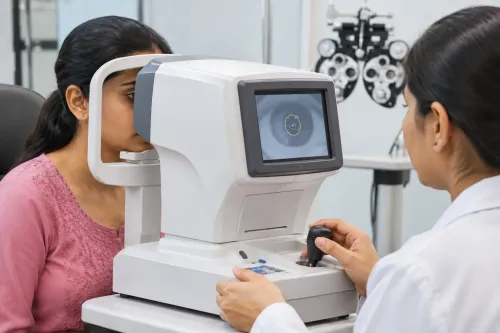

When cataracts begin affecting useful vision, patients often encounter the term Phacoemulsification Surgery while exploring treatment options. Phacoemulsification is a commonly used modern technique for removing the cloudy natural lens affected by cataract.
Understanding the procedure can make discussions about cataract treatment clearer and help patients ask more relevant questions before surgery.
What happens during phacoemulsification
During the procedure, the ophthalmic surgeon creates a small incision and uses specialised equipment to break the cloudy lens into small fragments. These fragments are removed, and an artificial intraocular lens is then placed inside the eye.
The exact surgical plan depends on the patient's cataract, eye anatomy, associated eye conditions, and intraocular lens requirements.
Why the lens implant matters
Removing the cataract is only one part of the process. The natural cloudy lens is replaced with an artificial intraocular lens, often abbreviated as IOL.
Before surgery, measurements are taken to estimate an appropriate lens power.
Patients may hear about different categories of intraocular lenses. Choosing among them should involve more than comparing names or prices. Factors such as retinal health, corneal condition, lifestyle, occupational requirements, and realistic visual expectations need consideration.
What should be evaluated before surgery
A cataract assessment should look beyond the cataract itself.
Preoperative evaluation may involve:
- Measurement of visual acuity
- Assessment of cataract density
- Intraocular lens calculations
- Corneal evaluation
- Eye pressure measurement
- Retinal examination
- Review of existing eye disease
- Review of relevant medical history
For example, a patient with significant retinal disease may have different visual expectations after cataract removal than someone whose retina and optic nerve are otherwise healthy.
Is every cataract treated immediately
No.
The presence of a cataract alone does not establish the timing of surgery. The effect on daily activities, visual quality, examination findings, and individual circumstances all matter.
Someone experiencing difficulty driving at night may seek treatment earlier than another person whose cataract causes minimal functional inconvenience.
Preparing useful questions for the surgeon
Before proceeding, patients can ask about:
- Whether the cataract explains their current vision problem
- The recommended surgical technique
- Suitable intraocular lens options
- Existing conditions that could affect the result
- Expected postoperative medication
- Follow-up requirements
- Activity restrictions during recovery
Dr. Mohini Modak at Focus Eye Clinic can assess cataract-related visual problems and discuss whether phacoemulsification is appropriate based on clinical findings.
Patients travelling within Thane and neighbouring parts of Maharashtra may also find it useful to plan transport and postoperative assistance according to the surgeon's instructions.
Phacoemulsification has become an established approach to cataract surgery, but good cataract care is not defined by technique alone. Careful assessment, appropriate lens planning, management of coexisting eye conditions, postoperative medication, and scheduled follow-up all contribute to the overall treatment process.
Understanding these elements helps patients approach cataract surgery as an informed healthcare decision rather than simply a procedure for removing a cloudy lens.
Keywords