Blurred vision is only one possible warning sign. By sorting gradual changes from sudden danger signals, you can decide whether to book a routine examination, seek same-day care or go to an emergency service—and arrive prepared with the information an eye-care professional needs.
Key takeaways
- Arrange an examination for persistent blurred vision, halos, eye strain, or distorted straight lines.
- Seek same-day care for sudden vision loss, severe eye pain, flashes, or a curtain-like shadow.
- Schedule comprehensive eye checks even when vision seems normal.
- Remove contact lenses when symptoms start and seek prompt advice for pain or redness.
Which early vision changes deserve an eye examination?
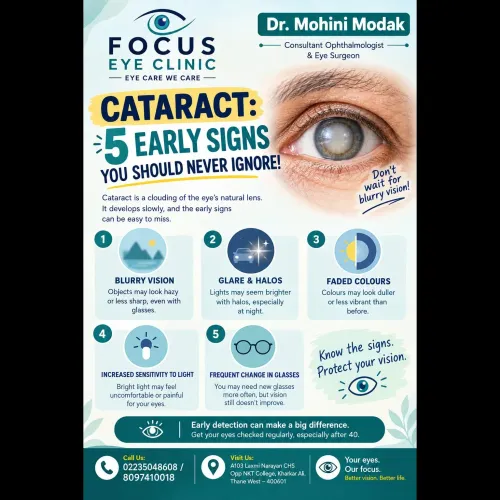
Book an eye examination for persistent or recurring changes, even when they cause little disruption. Adults may notice blurred distance vision, blurred near vision, headaches after reading, eye strain, glare or halos, poorer night vision, distorted straight lines, reduced colour vision, or difficulty judging depth.
Gradual, painless worsening with glare and frequent prescription changes can indicate cataract.
Children may not complain because one eye compensates for the other. Arrange assessment if you notice:
- Frequent squinting, closing one eye, head tilting, or sitting unusually close to screens
- An eye that turns, poor hand-eye coordination, or difficulty judging steps
- A persistent abnormal red reflex in photographs
- Reading avoidance, losing their place, or headaches after schoolwork
New floaters or flashes deserve prompt assessment, particularly when a curtain or shadow crosses the vision. A painful red eye with blurred vision, halos, headache, nausea, or vomiting needs emergency care.
| Change or finding | Why examination matters | Appropriate response |
|---|---|---|
| Gradual blur, glare, or night-vision difficulty | Cataract or a change in prescription | Arrange a routine comprehensive examination |
| No symptoms with diabetes or glaucoma risk | Retinal or optic-nerve damage can develop silently | Follow the clinician-recommended dilated retinal and glaucoma checks |
| New flashes, many floaters, or a curtain-like shadow | Retinal tear or detachment | Seek same-day eye assessment |
| Sudden vision loss, eye injury, or chemical splash | Potential sight-threatening damage | Seek emergency care immediately |
Which eye symptoms need same-day or emergency care?
Sudden vision loss needs emergency assessment, not a routine spectacle check. Treat a new or rapidly worsening one-eye disturbance as urgent even when there is no pain; retinal artery blockage, vitreous haemorrhage, retinal disease, stroke or optic-nerve disease can be time-sensitive.
| Symptom | What to do | Why it matters |
|---|---|---|
| Sudden vision loss in one or both eyes | Seek emergency care immediately | It can signal retinal, vascular, optic-nerve or brain disease |
| New flashes and floaters, especially with a dark curtain or shadow | Obtain same-day eye assessment | A retinal tear can progress to retinal detachment |
| Painful red eye with blurred vision, halos, headache, nausea or vomiting | Seek emergency eye care | These features can indicate acute angle-closure glaucoma |
| Eye injury, chemical splash, severe light sensitivity or a cloudy cornea | Use emergency services or an urgent eye facility | Trauma, burns and corneal or internal inflammation can threaten sight |
| Double vision with weakness, facial drooping, confusion or severe headache | Seek emergency medical care | Neurological causes require rapid assessment |
A red eye alone does not prove conjunctivitis. Severe pain, reduced vision, unequal pupils or marked light sensitivity need urgent assessment; do not use leftover or steroid eye drops unless prescribed for this episode.
Do not dismiss new visual symptoms in one eye as migraine aura. Persistent or truly monocular symptoms need medical assessment. If you have diabetes, keep scheduled dilated retinal examinations even when your sight feels normal, because diabetic retinopathy can develop without early symptoms.
When should you schedule a routine comprehensive eye examination?
Book a comprehensive eye examination even when your glasses still feel adequate. A routine eye examination checks more than refraction: it can assess eye movements, pupils, the front of the eye, eye pressure, optic nerves, retina and visual fields.
Use this timing guide:
- Children: arrange an examination before school and repeat it as advised, especially if they squint, sit close to screens, avoid reading or have trouble tracking objects.
- Adults with no risk factors: schedule routine checks at intervals recommended by an eye-care professional; increase the frequency after age 40, when glaucoma and other age-related conditions become more common.
- Diabetes: follow your clinician’s dilated retinal-examination schedule. Diabetic retinopathy can develop before blur, floaters or vision loss, so do not wait for symptoms.
- High blood pressure, previous eye disease or medicines that can affect the eyes: ask when your next examination is due rather than relying on a standard interval.
- A parent, sibling or child with glaucoma: request glaucoma screening and tell the examiner about that family history.
A spectacle-number test only determines whether your prescription needs changing. Unless additional tests are included, it does not assess the retina, optic nerve, peripheral vision, eye alignment or eye pressure. You can read the smallest chart line and still have early glaucoma or retinal disease.
What happens during an eye-care-centre visit, and how should you prepare?
Bring your current glasses, contact-lens details, previous eye reports, and a list of medicines to the appointment. Note when the problem began, whether it affects one or both eyes, what makes it better or worse, and whether pain, flashes, floaters, or headaches occur.
1. Expect a visual acuity test for distance and near vision, followed by refraction if blur suggests a prescription change. Reading the smallest line does not rule out disease elsewhere in the eye.
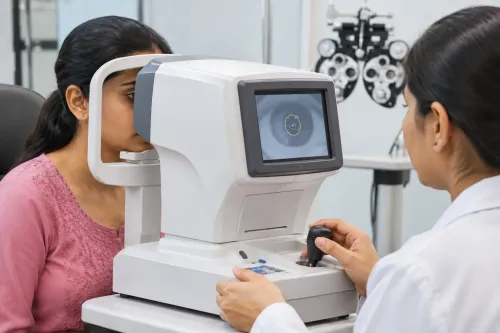
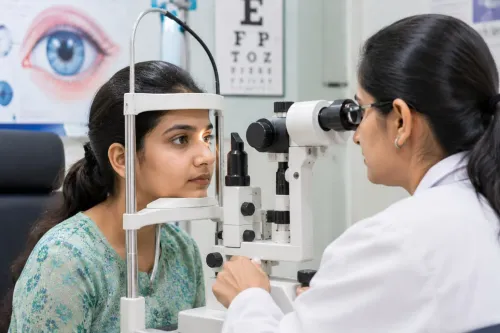
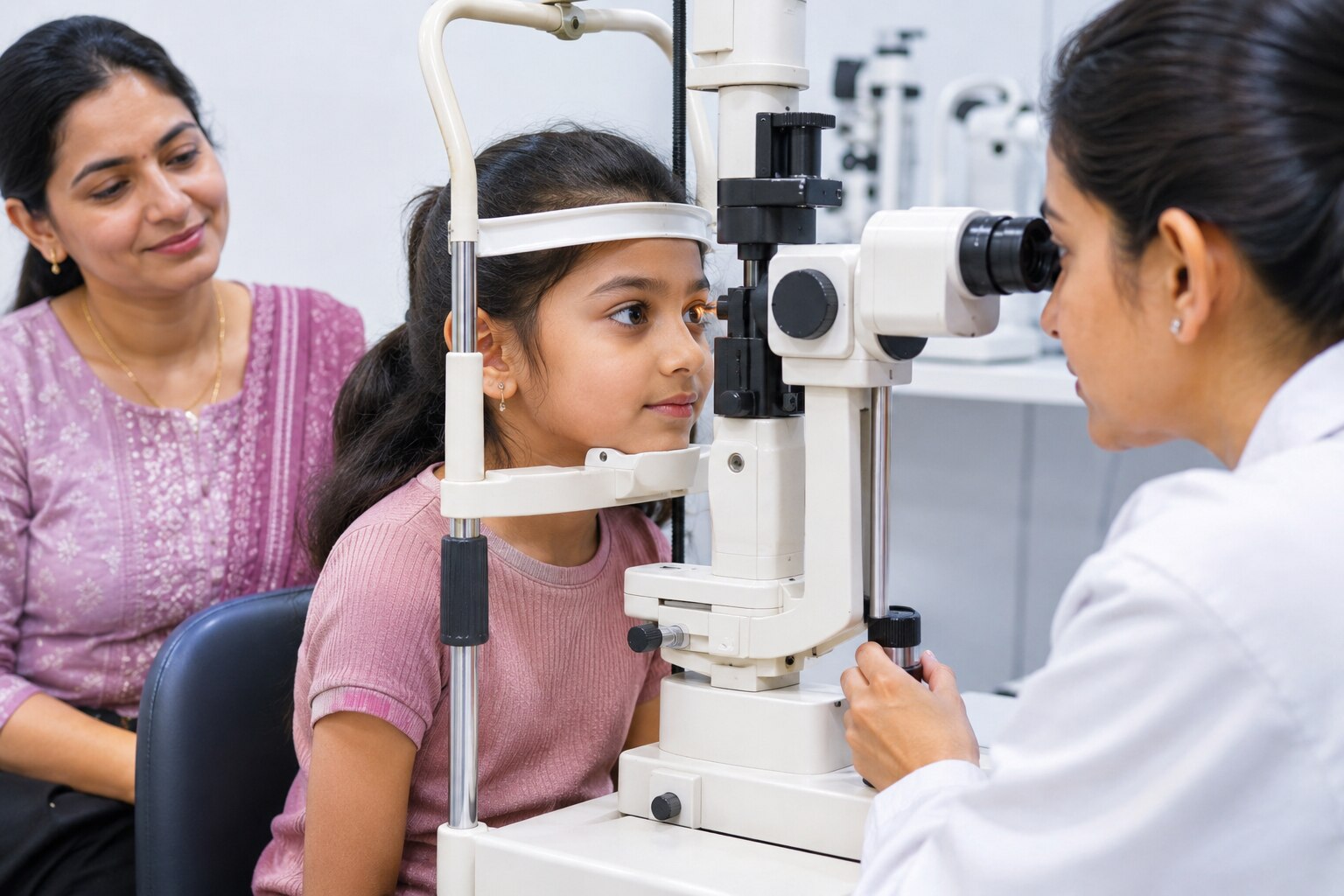
2. The clinician may check eye movements, pupils, colour vision, peripheral fields, and intraocular pressure. A slit-lamp examination inspects the cornea, conjunctiva, iris, and lens under magnification.
3. A dilated retinal examination lets the clinician inspect the retina, blood vessels, and optic nerve. People with diabetes should bring their latest diabetes results and follow their clinician’s examination schedule rather than wait for visual symptoms.
4. Bring records of diabetes, high blood pressure, glaucoma in the family, previous injuries, surgery, and treatments that affect the eyes. Tell the clinician about migraine, even if you think the visual change is an aura.
5. Ask whether your pupils will be dilated and arrange sunglasses and a driver if bright light or blurred near vision would make travel unsafe. Focus Eye Clinic - 02235048608 can use these records and symptom details to decide whether you need a prescription check, retinal assessment, or broader investigation.
Related services
Ophthalmology Eye Spectacles check up at Thane ₹900 Experience clarity and comfort with a comprehensive eye number check-up at Focus Eye Clinic, Thane. Led by Dr. View service → |
Ophthalmology ₹900 Retinal check-up at Focus Eye Clinic by Dr. Mohini Modak is essential for early detection of serious eye conditions that can affect vision. View service → |
What should parents and contact-lens wearers do when symptoms appear?
A child may not complain about poor sight because the stronger eye compensates. Protect children's vision by acting on squinting, closing one eye, head tilting, sitting unusually close to screens, an eye that turns, persistent headaches after reading, or an abnormal red reflex. Untreated amblyopia becomes harder to reverse after visual development.
| Situation | Warning signs | What to do |
|---|---|---|
| Child | One eye turns, persistent squinting, head tilting, or poor tracking | Arrange an eye assessment promptly; do not wait for the child to report blur |
| Contact-lens wearer | Pain, redness, light sensitivity, discharge, or sudden blur | Remove the lens and obtain prompt eye care for possible contact-lens eye infection |
| Anyone, including a child | New double vision, especially with weakness, confusion, severe headache, or trouble speaking | Seek emergency care immediately |
Before seeking care, follow these steps:
- Remove contact lenses at once. Do not wear them again until an eye-care professional says it is safe.
- Do not use leftover antibiotic, steroid, anaesthetic, or “redness relief” drops unless prescribed for this episode. They can mask a worsening corneal infection or delay correct treatment.
- Keep the lens, case and solution available for the clinician, but do not put the lens back into your eye.
- For a child, note when the sign began, whether it affects one eye, and whether the eye turns or the child closes one eye. A sudden change, severe pain, or vision loss needs same-day assessment.
Frequently asked questions
Which early vision changes deserve an eye examination?
Arrange an eye examination for persistent or recurring blurred distance or near vision, reading headaches, eye strain, glare or halos, poorer night vision, distorted straight lines, reduced colour vision, or difficulty judging depth.
Which eye symptoms need same-day or emergency care?
Seek urgent care for sudden vision loss, severe eye pain, a red eye with reduced vision, new flashes or many floaters, or a curtain-like shadow across your sight.
When should you schedule a routine comprehensive eye examination?
Schedule a routine comprehensive examination when vision changes recur, gradually worsen, interfere with reading or driving, or have not been checked for the interval advised by your eye-care professional.
What happens during an eye-care-centre visit, and how should you prepare?
Expect questions about symptoms and medical history, visual-acuity testing, refraction, eye-pressure measurement, and an examination of the front and back of the eyes. Bring your glasses, contact-lens details, medication list, previous reports, and symptom timeline.
What should parents and contact-lens wearers do when symptoms appear?
Parents should arrange assessment for squinting, sitting close to screens, frequent eye rubbing, headaches, or difficulty seeing the board. Contact-lens wearers should remove lenses when pain, redness, discharge, light sensitivity, or blurred vision begins and seek prompt clinical advice.
Related services
Ophthalmology ₹900 Amblyopia, commonly known as lazy eye, requires timely and specialized care to restore optimal vision. View service → |
Ophthalmology ₹900 Squint treatment at Focus Eye Clinic by Dr. Mohini Modak focuses on correcting eye misalignment (strabismus) to improve vision and appearance. View service → |
Ophthalmology ₹900 At Focus Eye Clinic in Thane, Dr. Mohini Modak provides specialized care for uveitis, an inflammatory condition that can lead to permanent vision... View service → |
Ophthalmology ₹900 Gonioscopy is a specialized diagnostic procedure used to examine the drainage angle of the eye, where the iris meets the cornea. View service → |