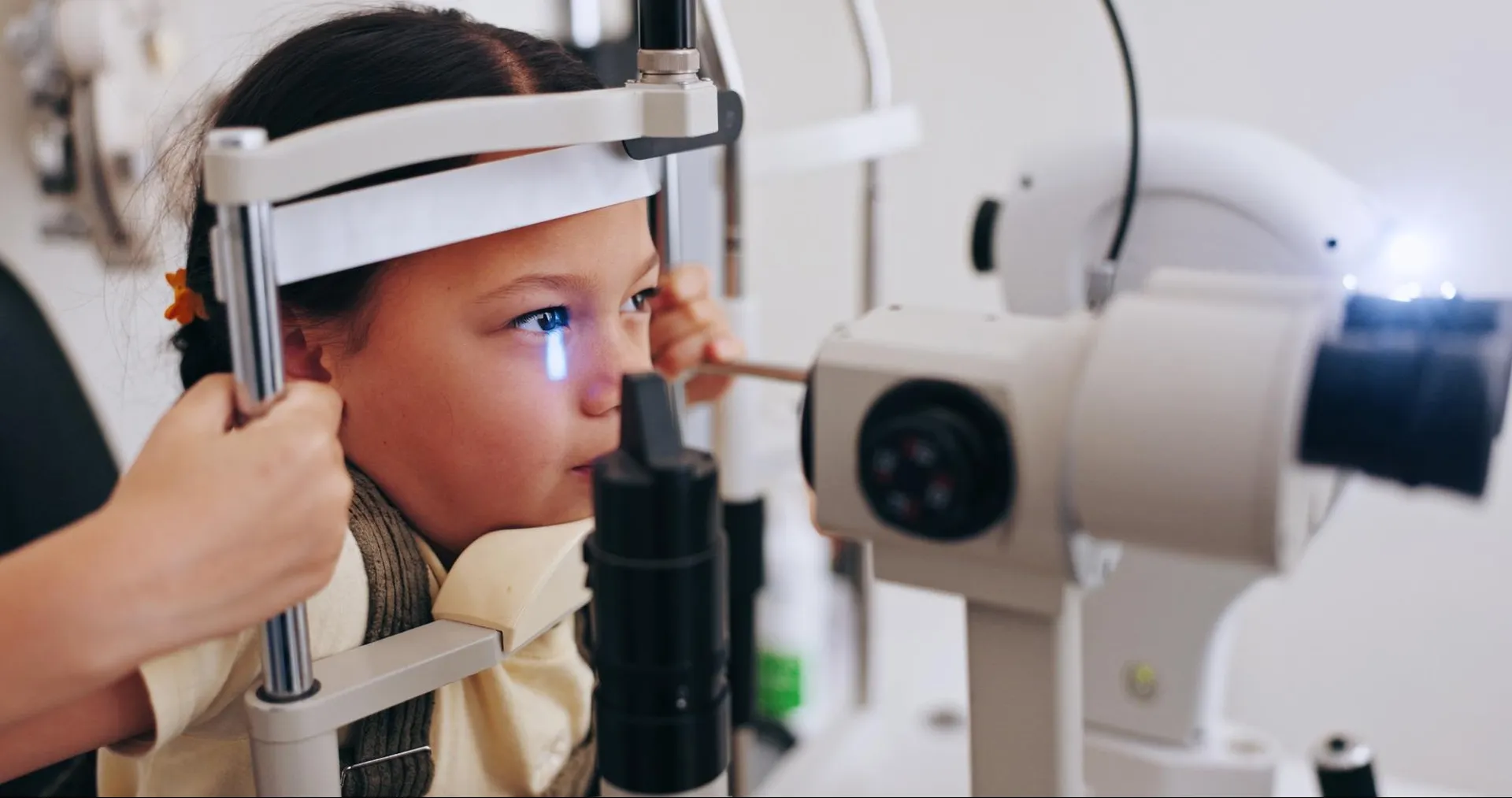
Children do not always realise that their vision is different from what other people see. A child may assume that blurred writing on a classroom board, difficulty focusing on a book, frequent headaches, or eye strain is normal. This is one reason routine observation and timely professional eye assessment are important during the growing years.
A Pediatric Eye Specialist evaluates vision and eye conditions in infants, children, and teenagers while taking their age and stage of visual development into account. For families in Thane and other parts of Maharashtra, recognising early warning signs can help ensure that a child's visual difficulties are investigated at an appropriate time.
Signs That May Indicate an Eye Problem
Some childhood eye problems cause obvious symptoms, while others can be easy to overlook. Parents and teachers may notice changes before the child reports difficulty.
Signs worth discussing with an eye specialist include:
- Sitting unusually close to the television
- Holding books or digital devices very near the face
- Frequent squinting
- Covering one eye while reading
- Recurrent headaches during visual tasks
- Difficulty copying from the classroom board
- One eye appearing to turn inward or outward
- Excessive blinking or eye rubbing
- Poor hand-eye coordination
- Unexplained decline in classroom performance
- Sensitivity to light
- Frequent watering or redness
These signs do not automatically mean that a serious eye condition is present. They indicate that a comprehensive assessment may be useful.
Why Childhood Vision Requires Special Attention
Vision continues developing during childhood. Certain problems can affect this development when they remain undetected.
Refractive errors such as myopia, hyperopia, and astigmatism can make objects appear blurred at particular distances. Strabismus can affect eye alignment, while amblyopia involves reduced vision in an eye when normal visual development has been disrupted.
Early identification can be particularly important because some childhood vision conditions are more responsive to management during specific developmental periods.
School Screening Does Not Replace a Complete Examination
School vision screening can be valuable for identifying children who may need further assessment, but screening is not the same as a comprehensive eye examination.
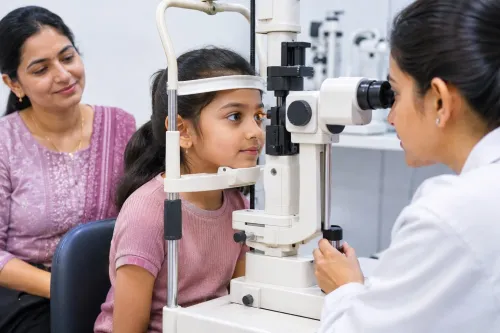
A clinical evaluation may assess:
- Visual acuity
- Refractive error
- Eye alignment
- Eye movements
- Binocular vision
- Focusing ability
- External and internal eye structures
The tests selected depend on the child's age, symptoms, medical history, and ability to cooperate.
What Parents Can Observe at Home
Pay attention to how your child behaves during reading, homework, screen use, and outdoor activities.
For example, a child who consistently moves closer to distant objects may be experiencing distance-vision difficulty. Losing place while reading, closing one eye, or avoiding visually demanding activities can also justify further assessment.
Parents should also mention premature birth, previous eye injuries, developmental concerns, and a family history of significant childhood eye problems during an examination.
Eye Care Should Match the Child's Needs
Not every child who visits an eye specialist requires glasses or treatment. The purpose of assessment is first to understand whether vision is developing appropriately and whether an eye condition is present.
Depending on the findings, management might include spectacles, monitoring, eye exercises in selected circumstances, patching for certain cases of amblyopia, myopia-management strategies, or further investigation.
At Focus Eye Clinic, children from Thane and surrounding communities can undergo evaluation based on their specific symptoms and visual needs.
Parents do not need to wait until a child clearly complains of poor eyesight. Persistent visual behaviours, noticeable eye misalignment, difficulty at school, or a family history of relevant eye conditions are reasonable reasons to arrange an eye assessment.
Keywords