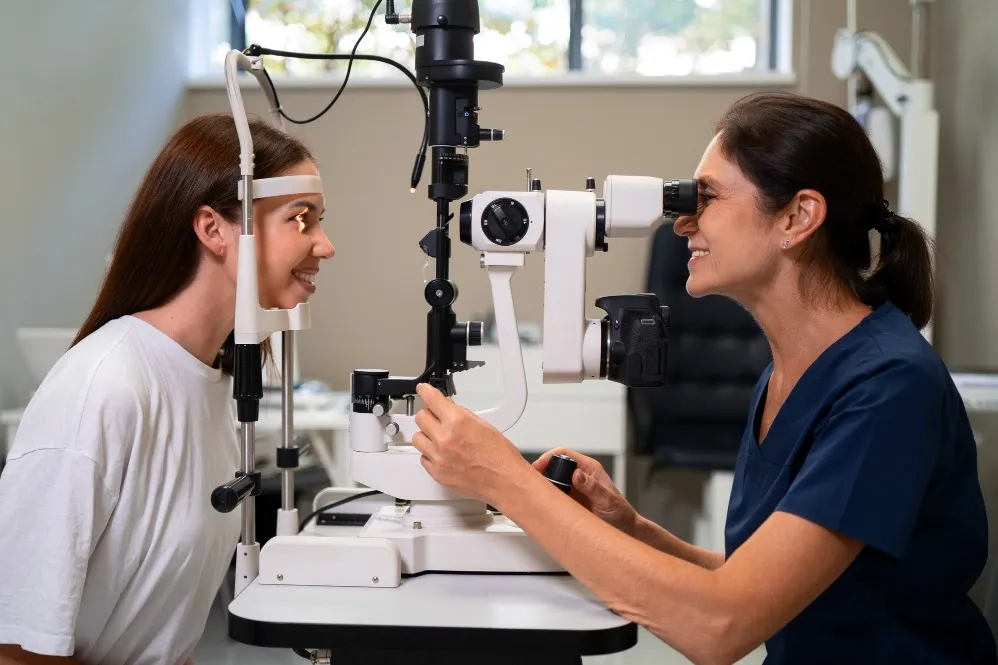
Many people schedule an eye examination only after they notice blurred vision. However, changes in eye health can develop gradually, and some conditions may not cause obvious symptoms in their early stages. Visiting an Eye Checkup Clinic periodically can help assess vision as well as the health of different structures of the eye.
For people living in Thane and other parts of Maharashtra, routine eye examinations can be particularly relevant for children, working professionals, older adults, people with diabetes, and anyone with a family history of eye disease.
What happens during a comprehensive eye checkup
An eye examination can involve more than reading letters from a vision chart. The tests recommended depend on your age, symptoms, medical history, and existing eye conditions.
A typical assessment may include:
- Visual acuity testing to measure how clearly you see
- Refraction to determine whether spectacles are required
- Eye pressure measurement when clinically appropriate
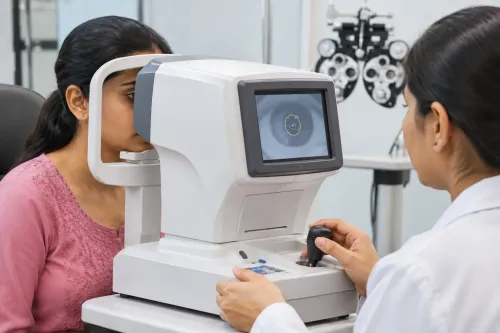
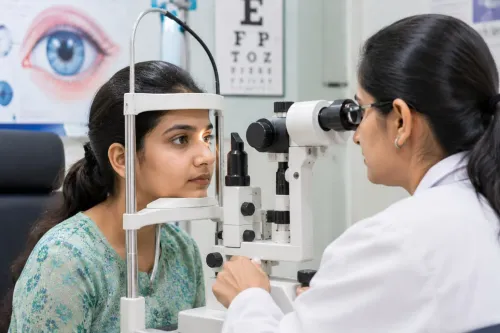
- Examination of the front portion of the eye
- Evaluation of the retina and optic nerve
- Assessment of eye movements and alignment
- Additional diagnostic testing when an abnormality is suspected
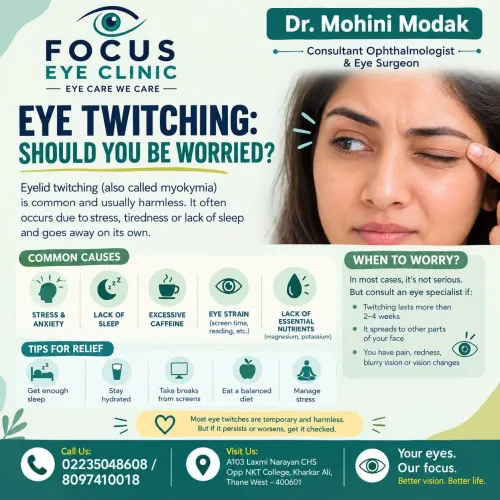
Dr. Mohini Modak at Focus Eye Clinic evaluates patients according to their individual symptoms and clinical requirements rather than relying on a single standard test for every person.
Signs that should not be ignored
Some symptoms deserve an eye examination even when they appear minor.
Persistent blurred vision, frequent headaches while reading, difficulty focusing, eye strain, recurring redness, glare around lights, and difficulty seeing at night are common reasons to arrange an assessment.
A sudden change in vision requires more immediate attention. Sudden loss of vision, new flashes of light, a sudden increase in floaters, severe eye pain, or a curtain-like shadow in the field of vision can indicate conditions that need prompt evaluation.
Eye examinations matter even when vision feels normal
Good eyesight does not necessarily mean every part of the eye is healthy.
Conditions such as glaucoma can progress without noticeable early symptoms. Retinal changes associated with diabetes may also develop before a person becomes aware of significant visual problems.
Routine examinations become particularly important for people who:
- Have diabetes
- Have high blood pressure
- Have a family history of glaucoma
- Wear contact lenses
- Have previously undergone eye surgery
- Use prescription spectacles
- Are experiencing age-related vision changes
Children and working adults have different needs
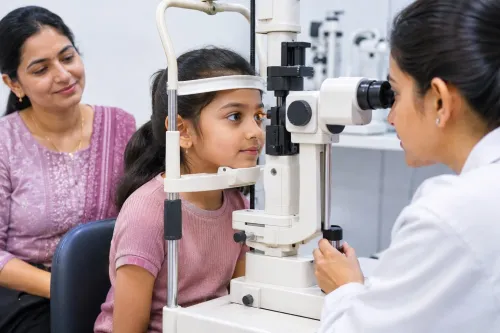
Children may struggle to explain that they cannot see clearly. Sitting unusually close to screens, squinting, frequent eye rubbing, headaches, and difficulty seeing classroom material can indicate the need for an assessment.
Working adults in Thane often spend extended hours using laptops and smartphones. While screen exposure does not automatically indicate eye disease, prolonged near work may contribute to eye strain, dryness, headaches, and temporary focusing difficulty.
How frequently should eyes be examined
There is no single schedule suitable for everyone.
Age, prescription changes, diabetes, family history, existing eye disease, previous surgery, and current symptoms all influence how often an ophthalmologist may recommend follow-up.
A comprehensive eye checkup provides an opportunity to identify refractive errors, monitor existing conditions, and investigate symptoms before they begin interfering significantly with everyday activities.
For patients across Thane, regular eye assessment can therefore be viewed as part of routine healthcare rather than something reserved only for noticeable vision loss.
Keywords