Blurred sight is not enough by itself to show that a cataract is the main problem or that surgery is the next step. By comparing specific day-to-day symptoms, urgency signals, examination findings and practical alternatives, you can decide when to arrange an eye assessment and what questions to ask.
Key takeaways
- Notice glare, halos, faded colours, and trouble judging steps.
- Book an eye examination when vision limits reading, driving, or daily tasks.
- Seek urgent care for sudden vision loss, pain, flashes, or a curtain-like shadow.
- Choose surgery after testing confirms cataract-related impairment and discusses alternatives.
Which daily vision changes suggest more than an ordinary glasses prescription?
Cataract-related blur becomes worth investigating when it affects how you function, not only when an eye chart score falls. Watch for gradually worsening contrast, faded colours, trouble judging steps or kerbs, and difficulty reading despite adequate light. Glare and halos around headlights, night driving difficulty, or repeated spectacle changes without satisfactory improvement are important clues.
- Needing much brighter light for reading, sewing or hobbies
- Seeing washed-out colours or struggling to distinguish similar shades
- Finding faces, signs or steps less clear despite apparently sharp vision
- Feeling dazzled by sunlight, lamps or oncoming headlights
- Losing confidence with work, cooking, stairs or driving
These patterns do not prove a cataract. A new refractive error often improves clearly with an updated prescription, while dry eye can cause fluctuating blur, burning and temporary improvement after blinking. Glaucoma, diabetic eye disease and macular disease can reduce contrast or central vision without causing the same lens opacity, so an examination matters.
| Pattern | More consistent explanation | Why assessment matters |
|---|---|---|
| Gradual blur with glare, halos and faded colours | Cataract-related blur | The cloudy lens may be limiting daily vision |
| Blur that changes during the day or after blinking | Dry eye | Lubrication and corneal assessment may help |
| Blur corrected by new lenses | Refractive error | Surgery would not treat the main problem |
| Missing central detail, distortion or patchy vision | Macular disease | The retina may limit improvement |
| Slow peripheral loss or difficulty in dim settings | Glaucoma or another condition | Pressure and optic-nerve checks are needed |
When should these symptoms lead to a consultation rather than more waiting?
Book a consultation when vision creates a functional limitation, even if an eye-chart result still looks acceptable. Difficulty reading, recognising faces, judging steps, driving at night, or coping with glare matters more than waiting for severe impairment or a particular visual-acuity number.
- Record what fails and when: headlights produce halos, colours look faded, reduced contrast makes print or curbs harder to see, or you need brighter task lighting for familiar work.
- Ask whether a recent glasses prescription fixes the problem. If blur remains after refraction, or glare and dim-light difficulty dominate, request an eye examination rather than repeatedly changing spectacles.
- Discuss surgery when these problems restrict work, travel, hobbies, independence or safety. Observation is reasonable when daily activities remain comfortable and examination findings do not suggest a need to intervene.
| Option | What it offers | Its limit |
|---|---|---|
| Updated glasses | Corrects refractive blur and may sharpen remaining vision | It cannot clear a cloudy natural lens |
| Brighter task lighting or magnifying aids | Helps reading, sewing and other close tasks | It does not remove glare, halos or progressive lens clouding |
| Observation | Avoids treatment while symptoms stay manageable | Cataract-related changes can continue and require reassessment |
| Surgery | Removes the established cataract and replaces the natural lens | It requires an operation, and improvement may be limited by retinal, corneal or optic-nerve disease |
No eye drops, vitamin or supplement reverses an established cataract. Arrange a routine consultation when practical changes persist; the decision should follow your symptoms and examination findings, not age or a chart threshold.
What does an eye examination need to establish before surgery is recommended?
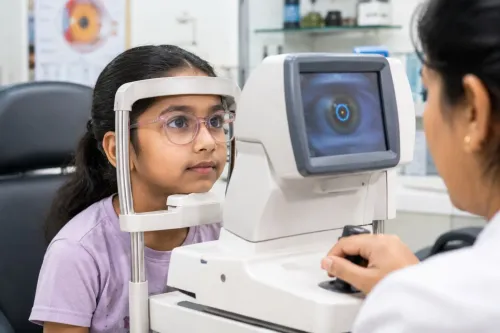
Before surgery, the examination must show that the cataract is causing useful vision to fail and estimate how much treatment can improve it. A cloudy lens is not automatically the main cause of blur.
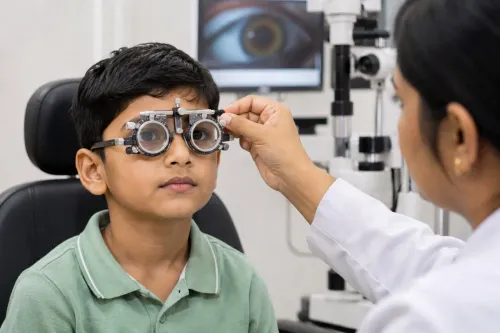
- Refraction checks whether updated glasses correct the problem. If vision becomes useful after refraction, uncorrected refractive error contributes, even though a cataract may still progress.
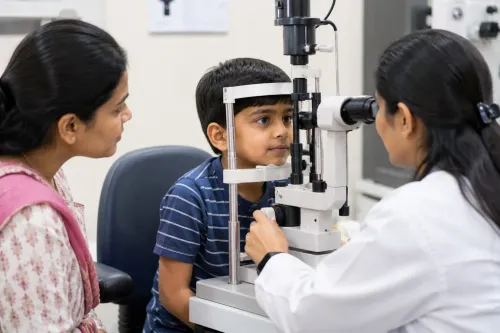
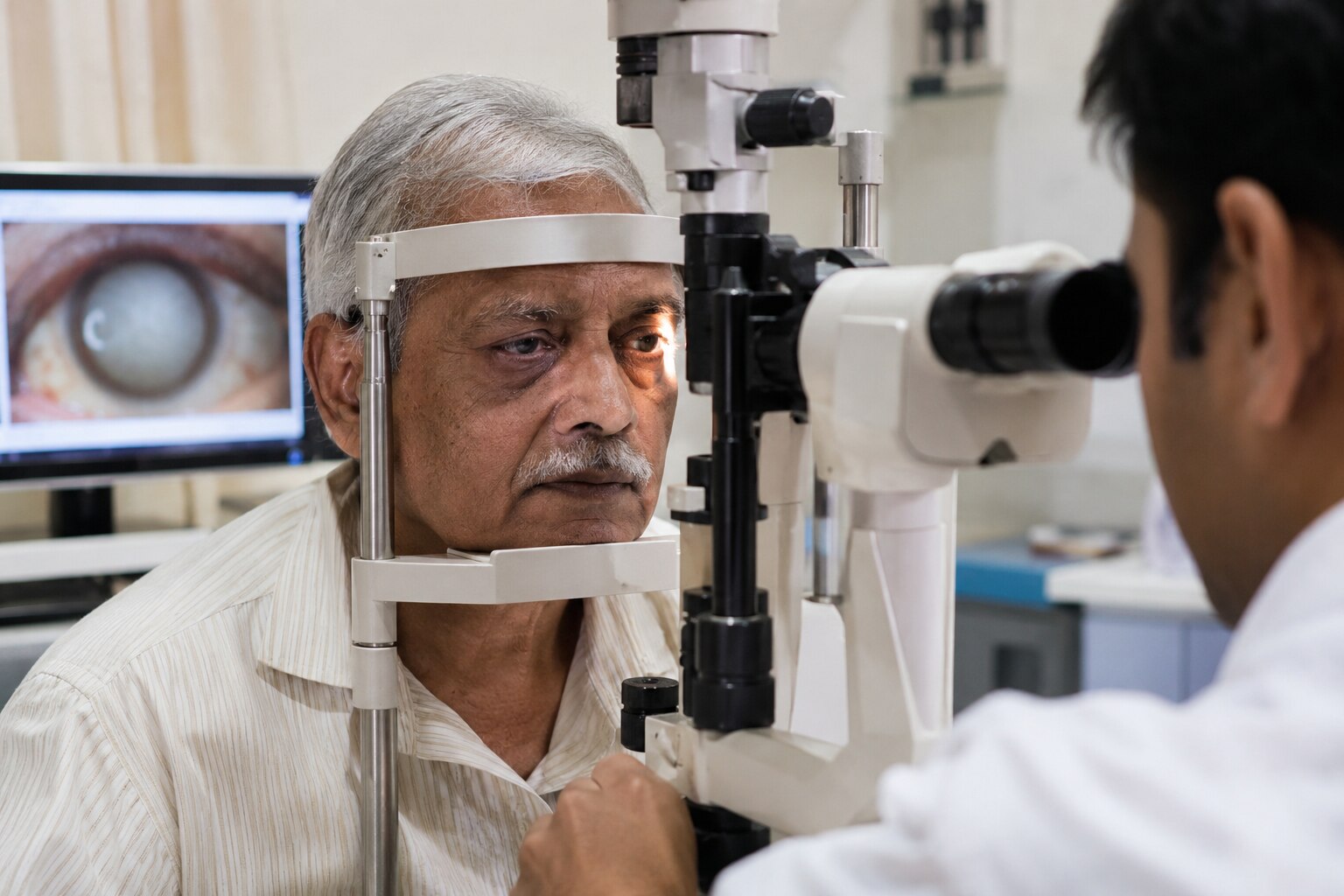
- A slit-lamp examination magnifies the cornea, lens and front of the eye. It helps identify corneal disease, surface damage and the location and density of the cataract.
- Eye-pressure measurement looks for pressure-related risk and supports assessment for glaucoma. Glaucoma damage will not be reversed by removing the lens.
- A dilated retinal examination inspects the retina, macula and optic nerve. It can reveal diabetic eye disease or macular disease that limits vision independently of the cataract.
- Biometry measures the eye’s length and corneal power to calculate the intraocular lens strength. It also supports a discussion about the expected result and lens options.
The clinician compares these findings with your daily difficulty, not a single visual-acuity number. If the cataract prevents examination or treatment of the retina, that obstruction also supports considering surgery.
At Focus Eye Clinic - 02235048608 in Thane, ask which finding explains your blur, what improvement is realistic, and whether another condition could limit the result.
Related services
Ophthalmology Cataract Consultation in Thane ₹900 Cataract Surgery at Focus Eye Clinic by Dr. Mohini Modak is a safe and effective procedure to restore clear vision affected by cataracts. View service → |
Ophthalmology Cashless Cataract Surgery Consultation ₹900 Focus Eye Clinic, Thane, led by Dr. Mohini Modak, offers seamless cashless cataract surgery designed for patient comfort and convenience. View service → |
Which symptoms require urgent assessment instead of a routine cataract appointment?
Cataract symptoms usually develop gradually and lead to an elective discussion about glasses, observation or surgery. Sudden changes, pain or marked redness point to another problem until an examination proves otherwise; delaying care could risk permanent vision loss.
Seek urgent eye assessment today for:
- Sudden vision loss or a rapid drop in sight in one eye
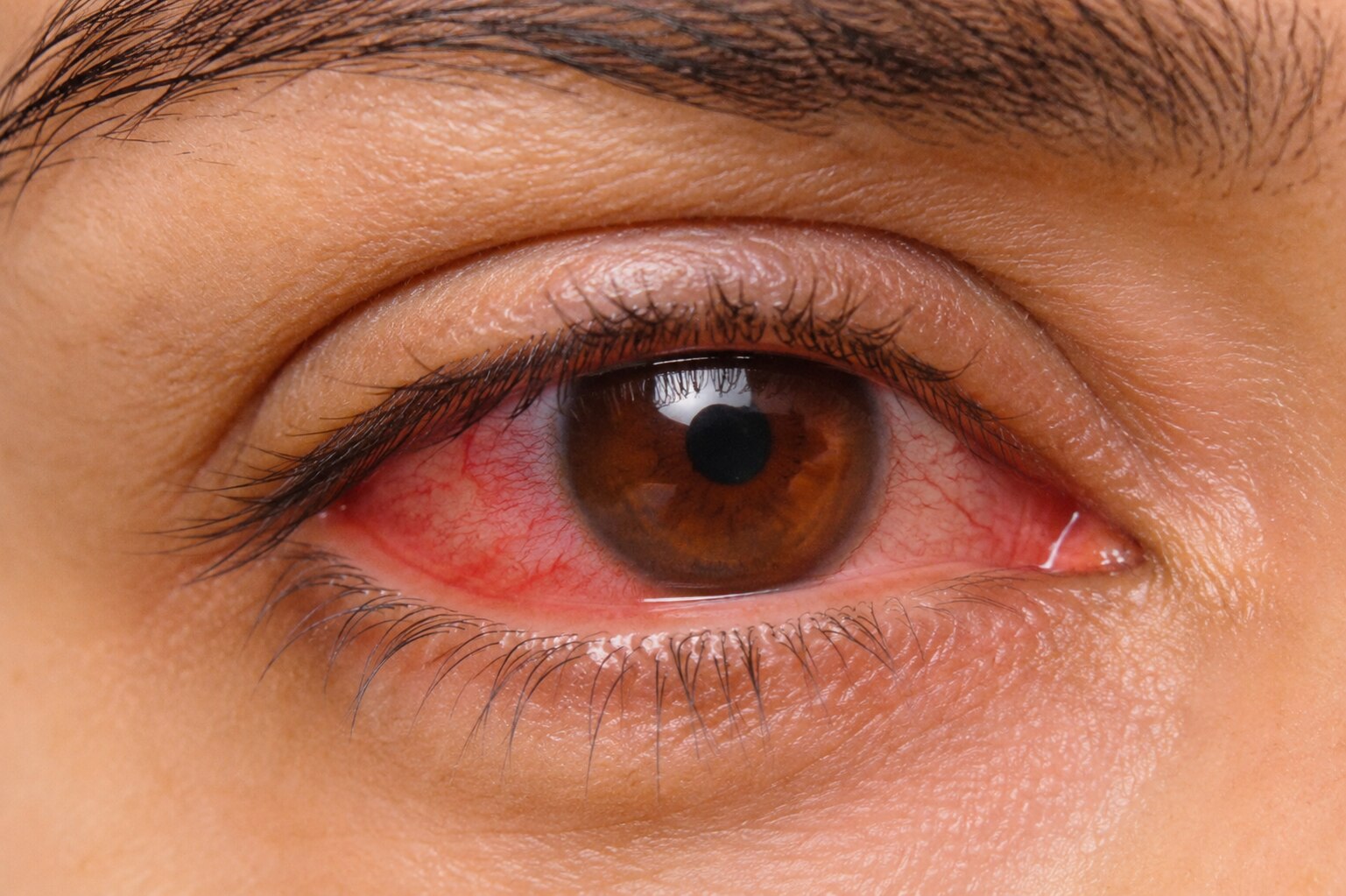
- Severe eye pain or a painful red eye
- A markedly red eye, especially with blurred vision, headache, nausea or light sensitivity
- New flashes of light
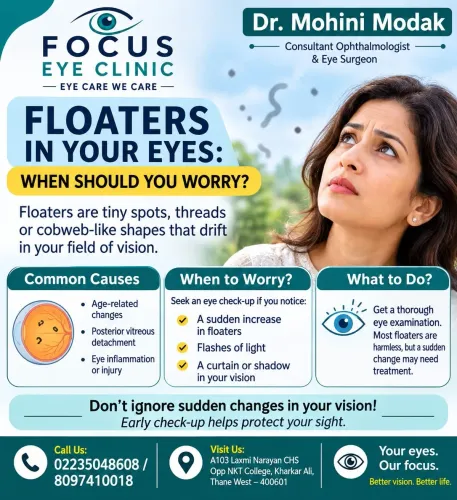
- A sudden increase in floaters, particularly a shower of dark spots
- A curtain-like shadow or dark veil moving across your vision
| Symptom pattern | More consistent with a routine cataract decision | Needs urgent assessment |
|---|---|---|
| Gradual blur | Builds over months; glare and faded colours affect daily tasks | Sudden vision loss or rapid deterioration |
| Discomfort | Usually painless | Severe pain or a painful red eye |
| Floaters and flashes | Not typical cataract features | New flashes, a sudden increase in floaters or a curtain-like shadow |
| Redness | The eye usually looks white | Marked redness with reduced vision |
Do not wait for a routine cataract appointment when these warning signs appear. Contact an emergency eye service or urgent medical service, and do not drive yourself if your vision is severely affected.
How should you weigh surgery against other options once the cause is clear?
There is no visual-acuity cutoff for cataract surgery. A cataract does not need to be completely opaque or “ripe”; the decision rests on expected improvement, examination findings, surgical safety and the effect on your daily life.
Use this checklist when weighing observation versus surgery:
- Do updated glasses, brighter lighting or anti-glare measures still let you read, drive or work safely?
- Are progressive blur, glare and reduced contrast limiting tasks despite those measures?
- Does the examination show that the cataract is the main cause of reduced vision, rather than macular disease, glaucoma, diabetic retinopathy, corneal disease or optic-nerve damage?
- Can the clinician examine and treat the back of the eye, or is the cataract blocking that view?
- Do the likely benefits outweigh the operation’s risks and recovery demands?
Glasses and lighting can provide useful temporary help, but they cannot clear a progressively cloudy natural lens. Eye drops, vitamins and supplements do not dissolve an established cataract. Surgery removes that lens and places an intraocular lens implant.
A monofocal intraocular lens gives clear vision at one main distance, so you may still need reading glasses or glasses for other distances.
Multifocal and extended-depth-of-focus lenses can reduce dependence on glasses, but halos, glare and reduced contrast can be more noticeable. Retinal, corneal or optic-nerve disease may make these lenses unsuitable or limit the improvement surgery can deliver.
Frequently asked questions
Which daily vision changes can suggest cataracts rather than a routine glasses problem?
Gradually worsening contrast, faded colours, glare, halos, night-driving difficulty, trouble judging steps, and reading problems despite good light can point to cataracts. Repeated spectacle changes without satisfactory improvement also warrant assessment.
When should blurred vision lead to a cataract consultation?
Arrange a consultation when vision interferes with reading, driving, recognising faces, climbing stairs, working, or other activities you need to perform safely.
What does an eye examination establish before cataract surgery?
The examination identifies whether a cataract explains the symptoms, measures visual function, checks the cornea, retina, optic nerve and eye pressure, and evaluates general eye health before discussing surgery.
Which symptoms require urgent eye assessment?
Seek urgent assessment for sudden vision loss, severe eye pain, marked redness, new flashes, a sudden increase in floaters, or a curtain-like shadow across your vision.
How should you weigh cataract surgery against other options?
Base the decision on confirmed cataract-related impairment, the effect on daily activities, eye health, surgical risks, and whether updated glasses, brighter lighting, glare control, or activity changes still provide adequate vision.
Related service
Ophthalmology Phacoemulsification Consultation in Thane ₹900 Phacoemulsification Surgery is an advanced and safe cataract treatment available at Focus Eye Clinic by Dr. Mohini Modak. View service → |