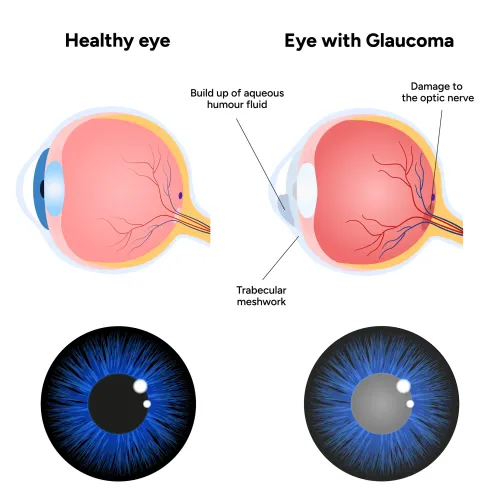



Eye care needs to change throughout life. A child may require a vision and squint assessment, an adult may need help with digital eye strain, and an older family member may require cataract, glaucoma, or retinal monitoring. Choosing an Eye care centre therefore involves more than finding somewhere that performs a basic spectacle test.
The useful question is whether the clinic can appropriately evaluate the eye problem you are experiencing and explain the next steps clearly.
Look Beyond a Routine Vision Test
Visual acuity is only one part of eye health. Depending on symptoms and age, an ophthalmic examination may also assess eye pressure, the cornea, lens, retina, optic nerve, eye movements, and other structures.
A comprehensive clinic should be able to determine when additional testing is necessary instead of applying exactly the same examination to every patient.
For example, a person experiencing sudden flashes and floaters requires a different assessment from someone seeking an updated spectacle prescription.
Consider the Range of Eye Conditions Evaluated
Families often find continuity useful when a clinic manages multiple areas of ophthalmology. Services may include cataract evaluation, glaucoma monitoring, retinal assessment, dry eye care, pediatric ophthalmology, squint assessment, refractive surgery consultation, and diabetic eye screening.
The availability of multiple services does not mean every patient needs multiple tests. It means the evaluation can be adapted to the clinical problem.
Pay Attention to Communication
Good eye care includes understandable explanations.
After an examination, patients should know what has been found, whether treatment is necessary, what tests are being recommended, and why follow-up may be important.
When considering an ophthalmology clinic in Thane, Maharashtra, patients can also ask practical questions about appointment processes, diagnostic facilities, follow-up arrangements, and whether their particular eye condition is evaluated there.
Focus Eye Clinic, where Dr. Mohini Modak provides ophthalmic care, serves patients seeking evaluation across a range of common eye concerns.
Signs That an Eye Examination Should Not Be Delayed
Some symptoms require more timely evaluation than a routine check.
These include:
- Sudden loss or marked reduction of vision
- New flashes with numerous floaters
- A curtain-like shadow across vision
- Significant eye injury
- Severe eye pain
- Sudden double vision
- Chemical exposure to the eye
- A painful red eye with visual disturbance
Urgency depends on the situation, but such symptoms should not simply be managed by changing spectacles.
Questions Worth Asking About an Eye Care Centre
Does the clinic evaluate children as well as adults?
This matters when selecting a centre for family eye care because pediatric assessment differs from a standard adult eye examination.
Can retinal and glaucoma evaluations be performed when required?
Ask what assessments are available and whether additional investigations can be arranged based on clinical findings.
Does every patient need pupil dilation?
No. Dilation is used when the ophthalmologist needs a better view of internal eye structures.
How often should healthy eyes be examined?
There is no single schedule for everyone. Age, symptoms, medical history, refractive error, family history, and existing eye disease influence follow-up frequency.
Choosing an eye clinic is ultimately about clinical relevance, continuity, and communication. A centre that evaluates the whole eye and explains why particular tests or treatments are recommended can help patients make better-informed decisions about their vision.