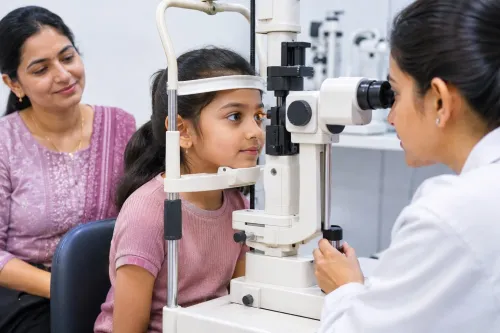

Many important structures responsible for vision are located at the back of the eye and cannot be evaluated simply by reading an eye chart. This is where a Retinal check up becomes valuable.
The retina converts light into signals that travel through the optic nerve to the brain. Conditions affecting this delicate tissue can sometimes progress quietly, while others produce sudden symptoms that require timely assessment.
Who May Need Closer Retinal Assessment
Retinal evaluation can be particularly relevant for people with:
- Diabetes
- High myopia
- Previous retinal disease
- A family history of certain retinal conditions
- Previous eye surgery or trauma
- New flashes or floaters
- Unexplained reduction in vision
- Distorted central vision
Age-related changes can also affect the retina and macula, making retinal examination an important part of eye care for some older adults.
What Are Floaters
Floaters can look like small dots, threads, cobwebs, or shadows moving through the field of vision.
Many floaters are related to changes in the gel-like vitreous inside the eye and are not necessarily dangerous. However, a sudden increase in floaters, particularly when accompanied by flashes of light, can occasionally be associated with a retinal tear.
This is why sudden new symptoms deserve professional evaluation.
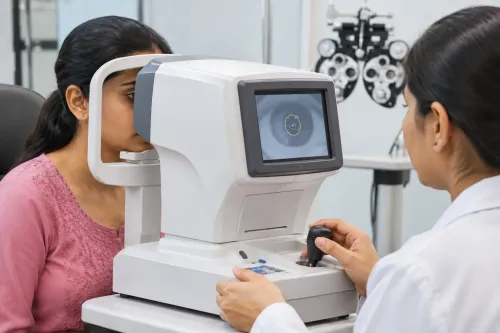
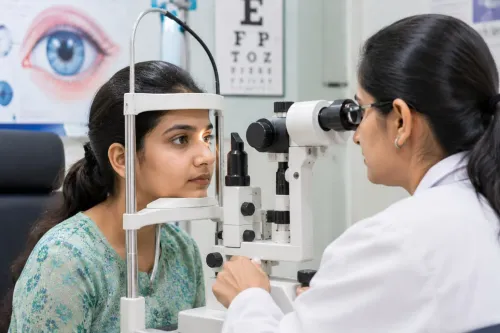
What Does the Examination Involve
The ophthalmologist may use dilating eye drops to widen the pupil and obtain a clearer view of the retina.
Depending on the clinical question, retinal imaging may also be recommended.
Optical coherence tomography can produce detailed cross-sectional images of retinal structures and is useful in evaluating certain macular and retinal conditions. Other imaging techniques may be selected when clinically indicated.
Not every patient needs every test.
Symptoms That Should Not Be Ignored
Seek timely eye assessment for symptoms such as:
- Sudden increase in floaters
- Flashes of light
- A curtain-like shadow across vision
- Sudden loss of part of the visual field
- Rapid unexplained visual reduction
- New distortion of straight lines
These symptoms can have different causes, but retinal problems are among the conditions that need to be excluded.
Why High Myopia Requires Attention
People with significant short-sightedness can have structural differences in the eye that may increase the likelihood of certain retinal problems.
This does not mean everyone with myopia will develop retinal disease. It does mean that retinal health may deserve particular attention when symptoms occur or when an ophthalmologist recommends periodic evaluation.
Retinal Health Is More Than Visual Acuity
A person can sometimes read relatively small letters while still having changes elsewhere in the retina. Conversely, reduced vision can result from conditions involving the cornea, lens, optic nerve, or other structures.
A complete assessment helps identify where the problem originates.
Patients seeking retinal evaluation in Thane can visit Focus Eye Clinic for examination based on their symptoms, medical history, and risk factors.
A Retinal check up is especially important when new visual symptoms appear suddenly. Knowing the warning signs and arranging appropriate evaluation can help distinguish common harmless changes from retinal conditions that may require closer monitoring or treatment.
Keywords