A cataract develops when the normally clear natural lens inside the eye becomes cloudy. It is commonly associated with aging, although other factors can contribute to its development. As the clouding progresses, everyday activities such as reading, driving, recognising faces, and seeing clearly in low light can become increasingly difficult.
Understanding when Cataract Surgery may be considered starts with recognising how cataracts affect vision and daily life.
How cataracts change vision
Cataracts do not always cause dramatic vision loss at the beginning. The changes can be gradual enough that a person adapts without immediately recognising how much their eyesight has changed.
Common symptoms include:
- Blurred, cloudy, or hazy vision
- Increased sensitivity to bright lights
- Glare from vehicle headlights
- Difficulty seeing at night
- Colours appearing less vivid
- Frequent changes in spectacle prescription
- Reduced contrast while reading
- Halos around lights
Some people initially notice that they need brighter lighting for reading. Others become uncomfortable driving after sunset.
Why cataracts develop
Age-related changes are among the most common reasons for cataract formation. However, cataracts may also be associated with eye injuries, previous eye inflammation, certain medications, diabetes, or other medical and ocular factors.
An ophthalmic examination is necessary because blurred vision is not always caused by cataracts. Corneal conditions, retinal problems, glaucoma, and refractive errors can produce overlapping symptoms.
When is surgery considered
Having a cataract does not automatically mean surgery is immediately required.
The decision generally depends on the extent to which the cataract affects useful vision and daily activities. Someone who has mild lens clouding but functions comfortably may be monitored. Another person may experience significant difficulty despite apparently similar cataract findings.
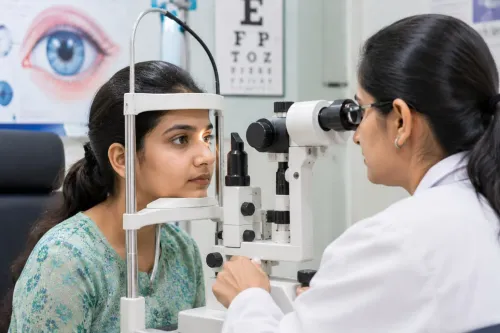
An ophthalmologist evaluates the cataract together with the patient's visual requirements, eye health, medical history, and examination findings.
What cataract surgery involves
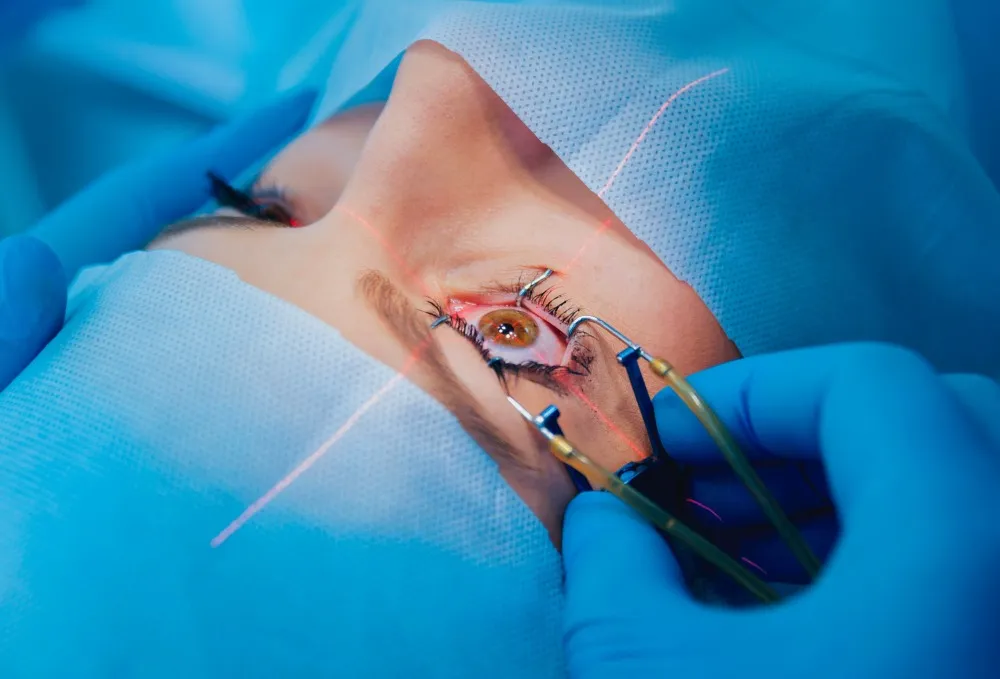
During modern cataract surgery, the cloudy natural lens is removed and an artificial intraocular lens is implanted.
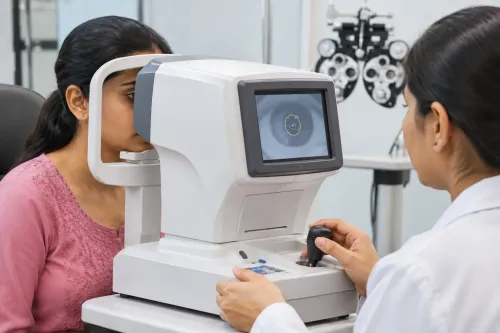
Before surgery, measurements are usually performed to help determine an appropriate intraocular lens power. The ophthalmologist may also assess the cornea, retina, eye pressure, and other structures to identify factors that could influence visual expectations after the procedure.
At Focus Eye Clinic, Dr. Mohini Modak can assess cataract symptoms and explain whether continued observation or surgical management is clinically appropriate for an individual patient.
Why preoperative evaluation matters
Cataract surgery planning is not based solely on the presence of lens clouding.
The assessment may consider:
- Severity and type of cataract
- Current spectacle prescription
- Corneal health
- Retinal condition
- Optic nerve health
- Existing glaucoma
- Previous eye procedures
- General medical conditions
Patients in Thane and elsewhere in Maharashtra may also want to discuss their daily visual needs, including reading, computer use, driving, and occupational requirements.
Cataracts are common, particularly with increasing age, but their effect differs considerably from person to person. A detailed examination helps establish whether a cataract is actually responsible for the visual difficulty and whether surgery is the appropriate next step.
Keywords