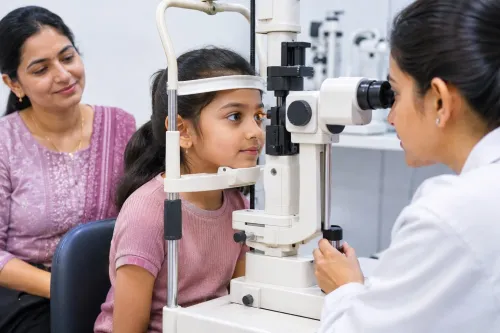
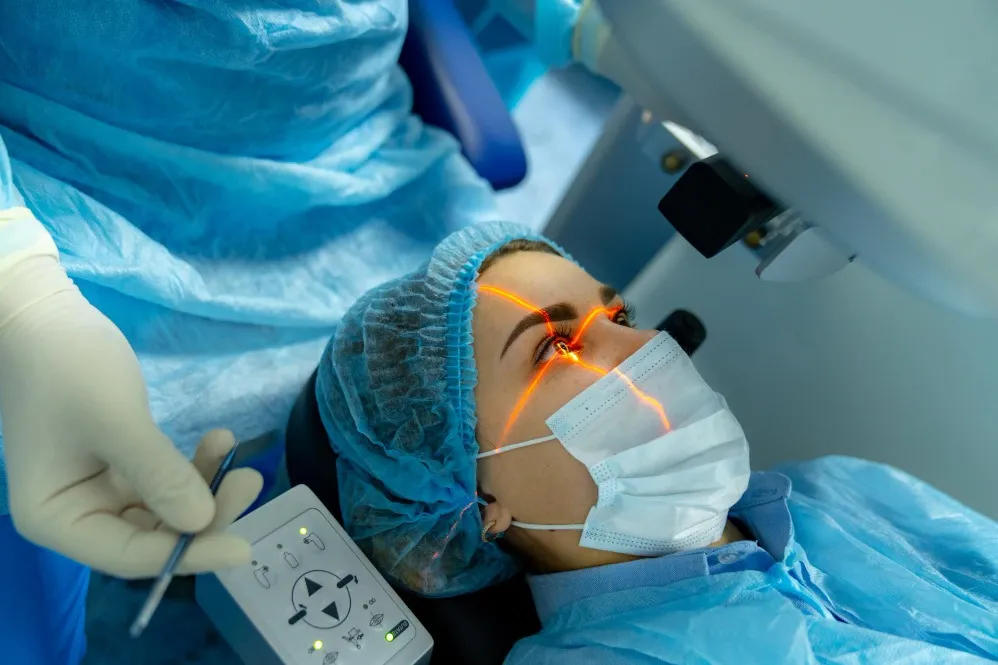
For people who have worn spectacles or contact lenses for years, laser vision correction can be appealing. Yet suitability for LASIK Surgery cannot be determined from spectacle power alone. Corneal health, prescription stability, age, lifestyle, eye-surface condition, and several other clinical factors influence whether LASIK should be considered.
A detailed evaluation is therefore more useful than deciding based only on the desire to stop wearing glasses.
What LASIK is designed to correct
LASIK reshapes the cornea using a laser so that light can focus more accurately on the retina.
It may be considered for selected patients with refractive errors such as myopia, hyperopia, and astigmatism. The amount and type of correction that can be performed safely depend on individual measurements.
Importantly, LASIK does not make someone immune to future eye conditions. Age-related changes such as presbyopia and cataracts can still occur later in life.
What makes someone a potential candidate
A LASIK assessment generally considers several factors rather than one eligibility number.
These can include:
- Stable spectacle prescription
- Adequate corneal thickness
- Appropriate corneal shape
- Healthy ocular surface
- Absence of certain corneal disorders
- General eye health
- Realistic expectations about the procedure
Pregnancy, certain medical conditions, particular medications, severe dry eye, and unstable prescriptions may affect timing or suitability.
Corneal evaluation is especially important
The cornea must be examined carefully before laser vision correction.
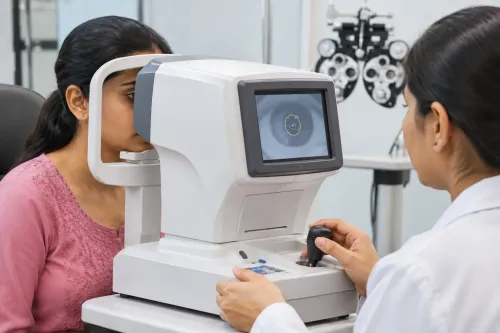
Corneal mapping helps an ophthalmologist assess its shape and identify irregularities that may influence procedure selection. Thickness measurements also contribute to determining whether adequate corneal tissue is available for the intended correction.
Skipping comprehensive screening in favour of choosing a procedure purely by spectacle number overlooks important safety considerations.
LASIK is not the only refractive option
One common mistake is assuming that everyone interested in spectacle independence should receive the same procedure.
Different refractive procedures exist, and some people may be better suited to an alternative technique. Others may be advised to continue using spectacles or contact lenses.
The appropriate recommendation depends on examination findings rather than the popularity of a particular procedure.
Questions worth asking during a consultation
Patients considering laser vision correction can make the consultation more useful by asking:
- Is my prescription stable enough for treatment?
- What do my corneal measurements show?
- Do I have dry eye that should be managed first?
- Which procedure is suitable for my eyes?
- What visual result is realistic in my case?
- Could I still require spectacles for some activities?
- What follow-up is expected after treatment?
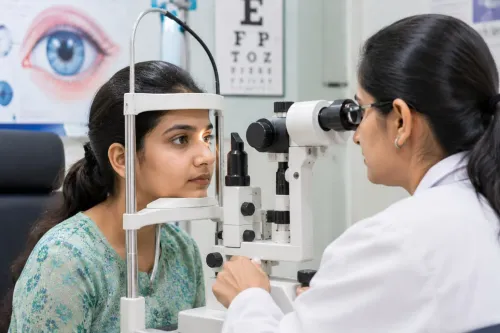
Dr. Mohini Modak at Focus Eye Clinic can perform an ophthalmic assessment and discuss refractive surgery suitability based on individual findings.
For adults in Thane considering LASIK, the most useful starting point is not choosing a procedure but determining whether their eyes are suitable for refractive surgery in the first place.
A well-planned consultation should explain candidacy, limitations, expected recovery, possible risks, and alternative options. That provides a stronger basis for making an informed decision than focusing solely on spectacle removal.
Keywords