

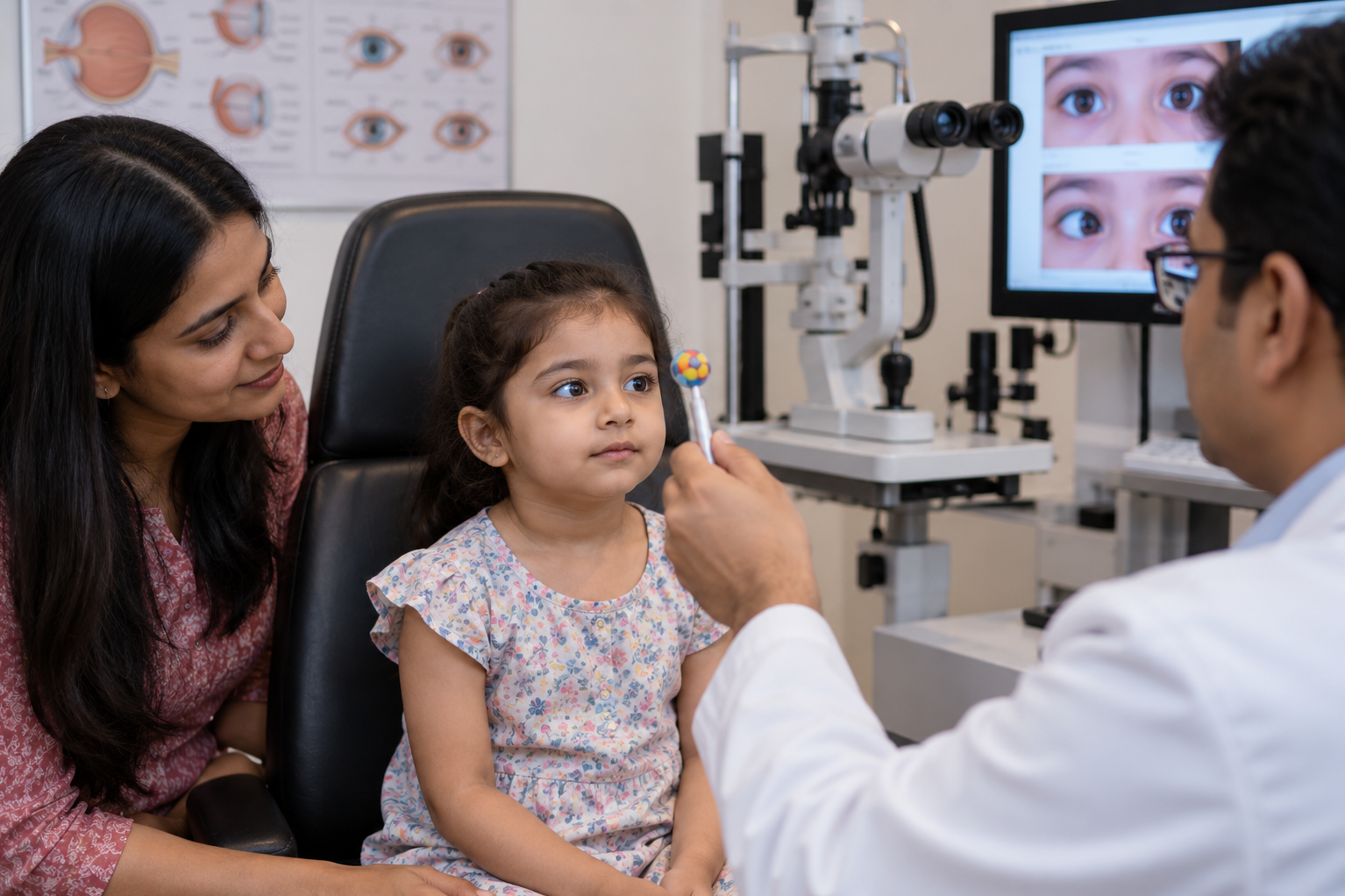
A squint occurs when the eyes are not consistently aligned in the same direction. One eye may turn inward, outward, upward, or downward while the other maintains fixation.
Although squint can be cosmetically noticeable, it is not simply an appearance issue. In children, eye alignment can influence visual development. In adults, newly developed misalignment may cause double vision and can sometimes require investigation for an underlying cause.
The appropriate Squint Treatment depends on the type of deviation, the patient's age, vision in each eye, and the reason the misalignment has developed.
Childhood Squint Needs Proper Assessment
Some children are born with an eye turn, while others develop it later.
Parents may first notice misalignment in photographs, when the child is tired, or when looking at particular distances. Some apparent squints are caused by facial features and are not true ocular misalignment, which is another reason clinical examination is useful.
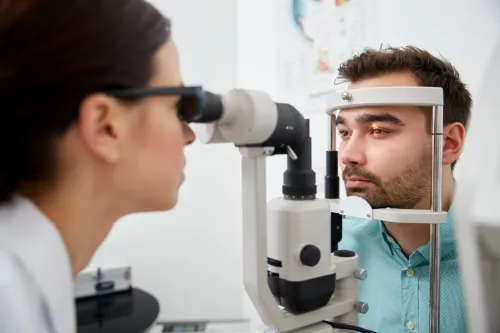
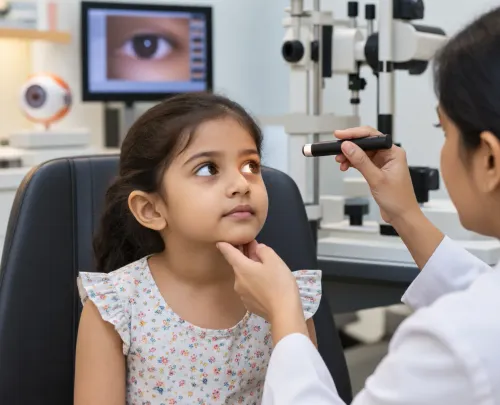
An eye specialist may assess:
- Vision in each eye
- Refractive error
- Direction and size of the deviation
- Eye movements
- Binocular vision
- General eye health
Why Vision in Each Eye Matters
When one eye is consistently misaligned during early childhood, the brain may begin relying more heavily on the better-aligned eye.
This can contribute to amblyopia, commonly known as lazy eye.
Management may therefore need to address both eye alignment and visual development. Glasses, patching, or other measures can be recommended depending on the findings.
Straightening the eyes alone does not necessarily address every associated visual problem.
Does Every Squint Need Surgery
No.
Treatment varies according to the diagnosis.
Spectacles can improve certain forms of squint associated with refractive error. Amblyopia management may be needed in children. Prisms can be useful for selected patients with double vision, while eye-muscle surgery may be recommended for particular alignment problems.
The decision is based on clinical measurements rather than appearance alone.
Adult-Onset Squint Is Different
An adult who suddenly develops eye misalignment or double vision should not assume that the problem is simply cosmetic.
Possible causes range from nerve and muscle problems to thyroid-related eye disease and other medical conditions.
The pattern of double vision, eye movements, medical history, and neurological signs can help determine whether additional investigation is needed.
Sudden double vision associated with other neurological symptoms requires prompt medical attention.
What to Ask Before Choosing Treatment
Patients and parents should understand:
- The exact type of squint
- Whether vision is reduced in either eye
- Whether glasses can influence alignment
- Whether amblyopia treatment is needed
- The purpose of any proposed surgery
- Whether more than one procedure may potentially be required
- What follow-up will involve
These discussions help establish realistic expectations.
Families and adults seeking evaluation in Thane, Maharashtra, can consult Focus Eye Clinic for assessment of eye alignment and associated visual concerns.
Good Squint Treatment starts with defining the problem accurately. The goal may involve improving visual development, reducing double vision, improving alignment, or a combination of these objectives depending on the individual patient.