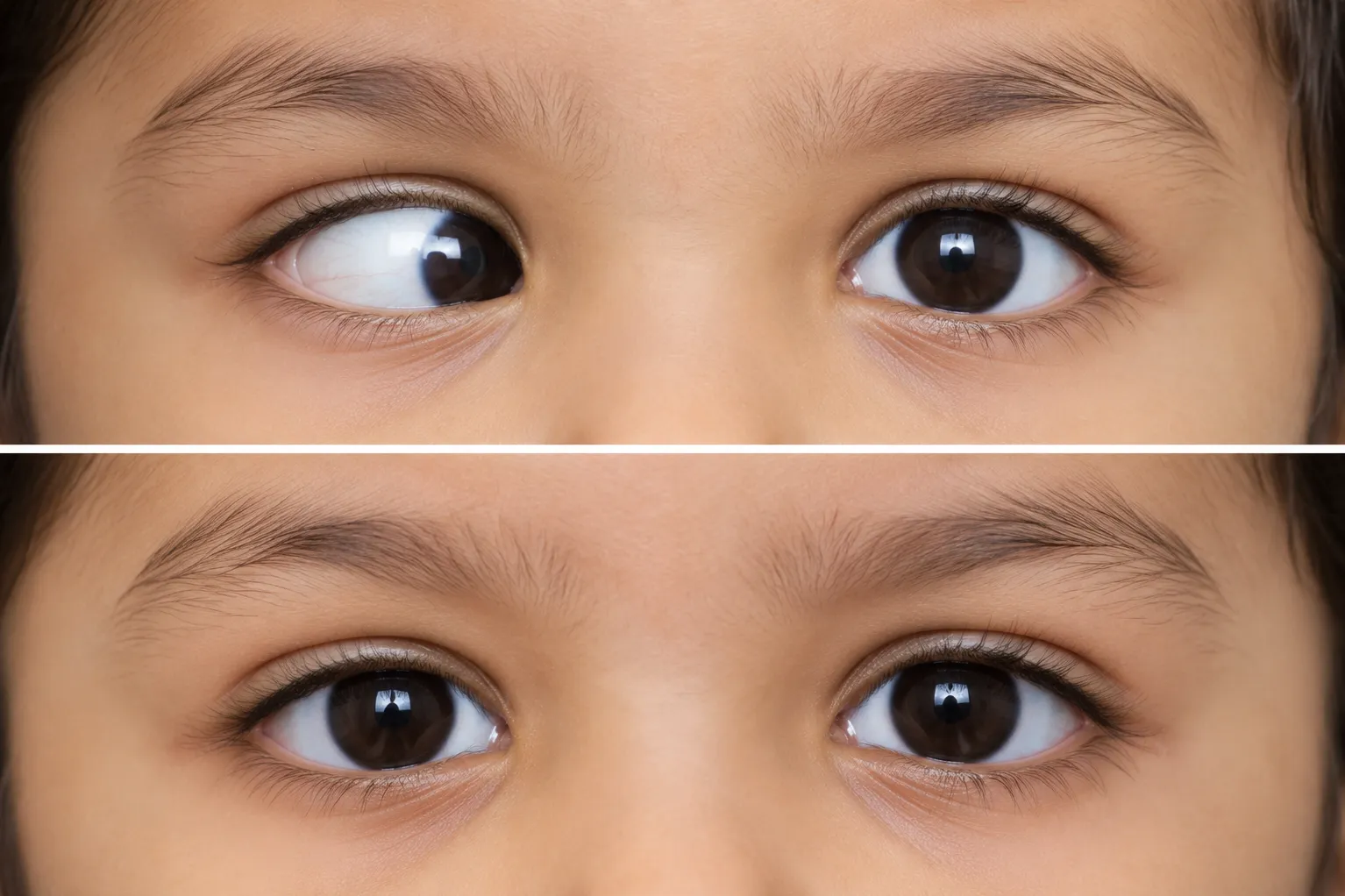
A squint occurs when the two eyes do not remain properly aligned in the same direction. One eye may turn inward, outward, upward, or downward while the other looks straight ahead. The deviation may be constant or appear only at certain times.
Appropriate Squint Treatment depends on the type of misalignment, its cause, the patient's age, vision in each eye, and whether the condition is affecting binocular vision.
Squint is more than a cosmetic concern
Eye alignment contributes to the way both eyes work together.
In children, persistent squint can sometimes be associated with amblyopia, commonly called lazy eye, in which vision does not develop normally in one eye. Detecting this early can be important because visual development occurs during childhood.
Adults with newly developed squint may experience double vision and require evaluation to determine why the alignment has changed.
Signs parents may notice
A child's eye deviation may be obvious, but intermittent squint can be more difficult to recognise.
Parents may notice:
- One eye turning inward or outward
- Closing one eye in bright light
- Tilting or turning the head while looking at objects
- Difficulty judging distances
- Frequent eye rubbing
- Complaints of double vision in older children
- Abnormal findings in photographs
Some children may appear to have a squint because of facial features even when the eyes are aligned normally. An eye examination helps distinguish apparent misalignment from a true squint.
What does a squint assessment involve
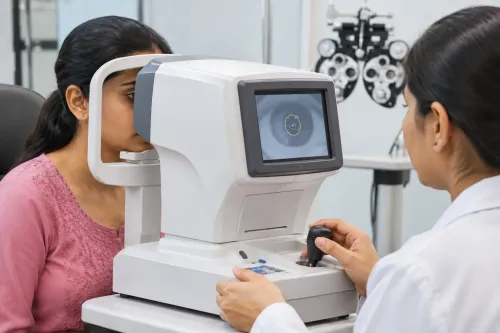
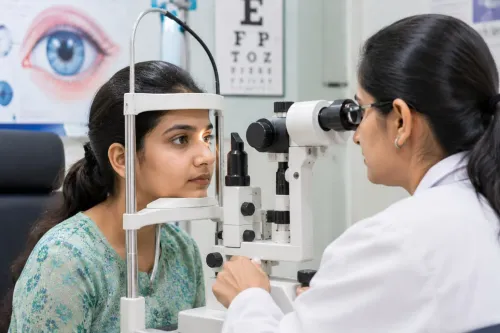
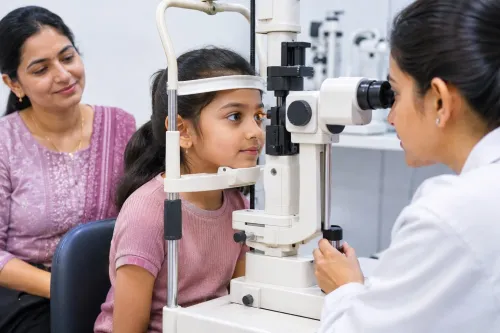
Evaluation can include visual acuity, refractive testing, eye movement examination, measurement of the deviation, binocular vision assessment, and examination of the internal structures of the eye.
Children may require dilating drops to accurately assess spectacle power.
The purpose is to identify both the alignment problem and any associated visual deficit.
Treatment is not identical for every patient
Depending on the findings, management may include:
- Prescription spectacles
- Treatment for amblyopia
- Patching in selected children
- Prisms in certain situations
- Eye exercises for specific conditions
- Squint surgery when clinically indicated
Surgery is therefore not automatically required for every eye deviation.
Adult squint deserves proper investigation
An adult who has had a stable childhood squint presents differently from someone who suddenly develops eye misalignment.
New double vision or sudden squint can sometimes be associated with nerve, muscle, neurological, vascular, or other medical problems. The cause needs evaluation before a treatment plan is established.
Dr. Mohini Modak at Focus Eye Clinic can assess eye alignment concerns and advise on further management according to the examination findings.
Families in Thane and across Maharashtra should avoid assuming that children will simply grow out of an obvious eye deviation. Early assessment can identify refractive errors, amblyopia, and alignment abnormalities at a stage when appropriate intervention may be particularly important.
For adults, treatment decisions depend on the underlying cause and the impact of the squint on vision and daily functioning.
Whether the concern involves a child or an adult, a structured eye examination is the starting point for determining what type of squint is present and which management approach is appropriate.
Keywords