
Burning, stinging, watering, heaviness, and a gritty sensation are often dismissed as minor eye irritation. When these symptoms repeatedly return, however, dry eye may be one of the possible explanations.
Effective Dry Eye Treatment begins by understanding why the tear film is becoming unstable rather than simply using eye drops whenever discomfort appears.
Dry eye does not always mean the eyes feel dry
This condition can produce surprisingly varied symptoms.
Some people experience:
- Burning or stinging
- A sandy sensation
- Fluctuating blurred vision
- Redness
- Sensitivity to light
- Eye fatigue
- Difficulty wearing contact lenses
- Excessive watering
Watery eyes can seem inconsistent with dry eyes, but irritation may sometimes trigger reflex tearing. These tears may not provide the stable lubrication needed to keep the eye surface comfortable.
Screen habits can contribute to symptoms
Extended laptop and smartphone use is common among students and professionals in Thane. Concentrated screen work may reduce blink frequency or lead to incomplete blinking.
The tear film consequently evaporates more quickly, which can increase dryness and discomfort.
Simple changes can sometimes help, including consciously blinking, taking regular visual breaks, positioning screens appropriately, and avoiding direct airflow from air conditioners or fans.
Not every dry eye case has the same cause
The tear film has several components, and problems with different parts of this system can produce similar symptoms.
Potential contributors include:
- Reduced tear production
- Excessive tear evaporation
- Eyelid gland dysfunction
- Blepharitis
- Contact lens use
- Certain medications
- Environmental conditions
- Age-related changes
- Some systemic medical conditions
This is why repeatedly purchasing different lubricating drops without an assessment may not address the underlying issue.
What an eye examination can reveal
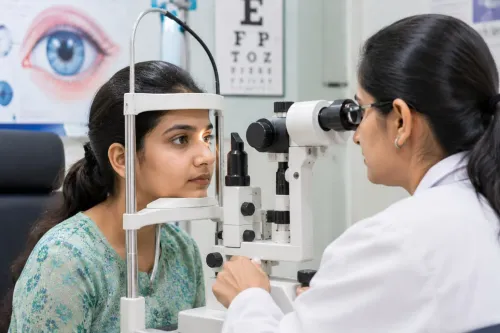
An ophthalmologist may evaluate the eyelids, blinking pattern, tear film, corneal surface, and oil-producing meibomian glands.
Depending on the findings, management can involve lubricating eye drops, eyelid hygiene, warm compresses, changes in contact lens habits, environmental adjustments, prescription treatment, or additional procedures when clinically indicated.
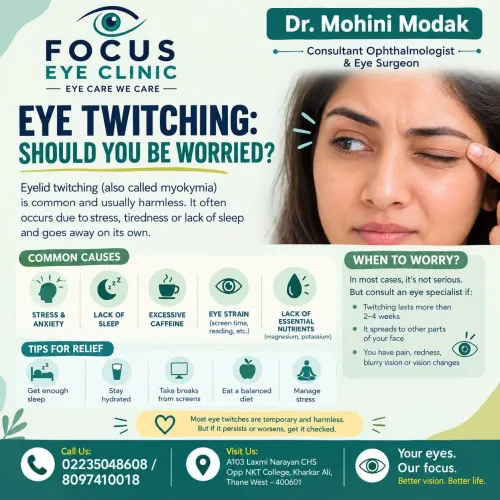
At Focus Eye Clinic, Dr. Mohini Modak can assess persistent dry eye symptoms and determine whether another eye-surface condition may be contributing to the discomfort.
Small daily habits can make a difference
People with recurring symptoms may benefit from reviewing the environment in which discomfort occurs.
Notice whether symptoms become worse:
- After prolonged screen sessions
- In strongly air-conditioned rooms
- While travelling in dusty conditions
- After wearing contact lenses for extended periods
- During late-night smartphone use
- Following insufficient sleep
These observations can provide useful information during an eye consultation.
Dry eye is not always a simple shortage of tears. It can involve tear quality, evaporation, eyelid function, environmental exposure, and individual health factors.
For people experiencing recurring irritation in Thane and the wider Maharashtra region, identifying the cause is usually more useful than repeatedly treating the sensation alone. Persistent symptoms, recurrent redness, pain, light sensitivity, or noticeable changes in vision deserve proper eye evaluation.
Keywords