The decision to remove a cataract depends on how much it interferes with reading, driving, work, and everyday independence—not on a visual-acuity number alone. You will learn how the examination guides that decision, what to arrange before surgery, how lens choices differ, what the operation feels like, and which recovery symptoms require urgent help.
Key takeaways
- Surgery is appropriate when cataracts limit daily activities, not because of one eye-chart score.
- Compare intraocular lenses by your priorities, including glasses use, night vision, and cost.
- Use prescribed drops exactly and avoid rubbing, heavy lifting, and swimming during early recovery.
- Seek urgent eye care for severe pain, worsening vision, increasing redness, flashes, or new floaters.
How doctors diagnose a cataract and decide whether surgery is appropriate
A cataract diagnosis comes from a cloudy natural lens seen during a slit-lamp examination, supported by symptoms and visual testing. Visual acuity shows how clearly you read an eye chart, but no single score requires surgery; some people struggle despite a reasonable chart result.
Surgery becomes appropriate when the cataract disrupts daily life despite an accurate glasses prescription. Tell your ophthalmologist if you have difficulty with:
- Reading books, labels, or phone screens
- Driving, especially at night or in glare
- Working safely or using tools
- Recognising faces, climbing stairs, or moving between bright and dim rooms
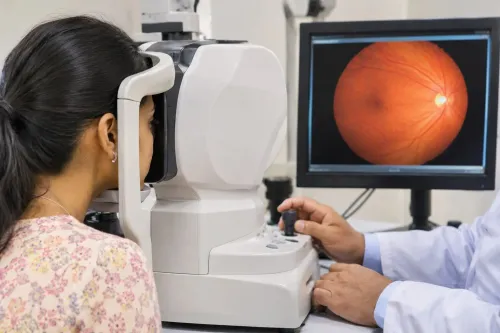
The decision also depends on whether the cataract causes a complication or blocks doctors from examining or treating the back of the eye. A retinal examination before cataract surgery checks for macular, retinal, and optic-nerve disease that could limit the final result.
Your examination should identify factors that make surgery more complex:
- Diabetes or diabetic retinopathy
- Glaucoma, uveitis, or corneal disease
- Previous eye surgery, pseudoexfoliation, or weak zonules
- Small pupils or retinal disease
These findings do not automatically rule out surgery, but they change risk discussions and expectations. Cataract surgery clears the cloudy lens; it cannot repair vision already lost from glaucoma, macular degeneration, amblyopia, or optic-nerve damage. You should proceed when expected visual and functional improvement outweighs the surgical risks.
What to arrange before surgery and how to compare intraocular lenses
Before surgery, complete biometry measurements to calculate the intraocular lens (IOL) power. The scan records axial length and corneal curvature; the examination also includes an eye-pressure check before cataract surgery, a dilated retinal examination, and assessment of the cornea, pupil, optic nerve, and macula.
Tell the surgeon about previous LASIK or other eye surgery because the glasses prescription is harder to predict afterward.
- Bring every medicine and supplement, including blood thinners, insulin or diabetes tablets, steroid medication, tamsulosin, and drug allergies. Do not stop a prescription without instructions.
- Report glaucoma, diabetes, uveitis, corneal or retinal disease, pseudoexfoliation, small pupils, or previous operations. These findings can change surgical planning.
- Ask which eye will be targeted for distance, computer work, or reading. A standard monofocal IOL does not restore youthful focusing, so glasses often remain necessary.
- Confirm the follow-up schedule, transport home, and whether your chosen lens corrects astigmatism.
IOL options compare like this:
| Option | Main benefit | Trade-offs |
|---|---|---|
| Monofocal | Clear focus at one chosen distance; predictable glasses plan | Reading or computer glasses usually needed |
| Toric | Corrects corneal astigmatism at the selected distance | Costs more in planning and must remain correctly aligned |
| Multifocal or extended-depth-of-focus | Reduces dependence on glasses across several distances | Halos, glare, reduced contrast, and night-vision complaints can occur |
Focus Eye Clinic - 02235048608 can use the consultation to review these measurements and match the lens choice to your driving, reading, and work priorities. No IOL guarantees freedom from glasses, especially after prior corneal refractive surgery.
Related services
Ophthalmology Phacoemulsification Consultation in Thane ₹900 Phacoemulsification Surgery is an advanced and safe cataract treatment available at Focus Eye Clinic by Dr. Mohini Modak. View service → |
Ophthalmology Cashless Cataract Surgery Consultation ₹900 Focus Eye Clinic, Thane, led by Dr. Mohini Modak, offers seamless cashless cataract surgery designed for patient comfort and convenience. View service → |
What happens during phacoemulsification—and when another technique is considered
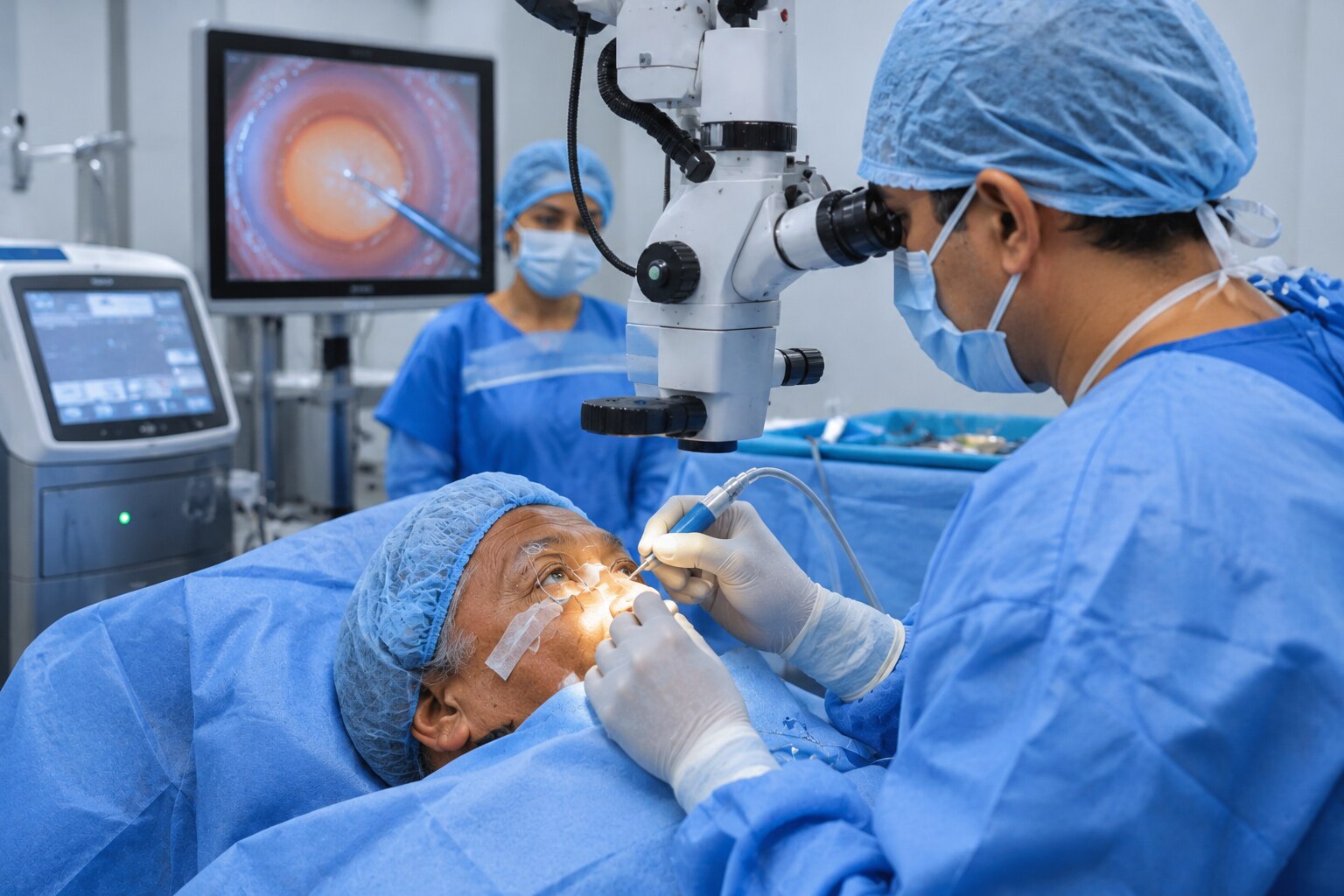
Most phacoemulsification operations take 15–30 minutes, with you awake under topical anaesthesia (numbing drops) or local anaesthesia delivered around the eye. The team cleans the eyelid, places a sterile drape, and keeps the lids open with a small holder.
You will see bright lights and may feel pressure, cool fluid, or movement; sharp pain is not expected, so report it immediately.
The phacoemulsification procedure steps are:
- The surgeon makes a small corneal incision.
- A probe uses ultrasound to break the cloudy natural lens into tiny fragments.
- The surgeon aspirates those fragments rather than removing the natural lens intact.
- An intraocular lens is inserted into the remaining lens capsule, where it unfolds and stays.
The choice changes when lens density, a small pupil, zonular weakness, corneal disease, or previous eye surgery makes ultrasound removal less suitable. Your surgeon selects the approach after examining the eye, not from cataract severity alone.
| Technique | What happens | Why it may be chosen |
|---|---|---|
| Phacoemulsification | Ultrasound fragments leave through a small corneal incision; an IOL follows | Standard option when the eye and cataract suit ultrasound removal |
| Manual small-incision cataract surgery | The lens nucleus is delivered through a self-sealing scleral tunnel, then an IOL is placed | Useful for very dense cataracts or where this technique offers a safer, more reliable route |
| Extracapsular cataract extraction | The lens nucleus comes out in one piece through a larger incision; the remaining cortex is removed and an IOL is inserted | Considered when the cataract is extremely hard or phacoemulsification is unsuitable; sutures and slower healing are more likely |
The first days after surgery: drops, activity, driving, and normal sensations
Arrange transport home before the operation: you generally cannot drive immediately afterward. During early cataract recovery, wear the eye shield while sleeping for the period your surgeon specifies, and do not rub, press, or touch the operated eye.
Use your postoperative eye drops exactly as prescribed. Wash your hands, keep the bottle tip away from your eye and lashes, and leave about five minutes between different drops. Antibiotic, corticosteroid, or anti-inflammatory drops may be prescribed in different combinations; do not stop or restart them without instructions.
Use only recommended pain relief, such as paracetamol when suitable for you, rather than someone else’s eye drops.
Your cataract surgery activity restrictions depend on the incision and your surgeon’s findings. Until you receive clearance:
- Avoid heavy lifting and vigorous exercise.
- Keep out of swimming pools, hot tubs, and natural water.
- Avoid dusty or dirty environments.
- Follow instructions about bathing and protecting the eye.
Blurred vision, grittiness, watering, mild discomfort, and light sensitivity are common for several days. Sunglasses can make bright light easier to tolerate, but worsening pain or vision needs prompt advice from your eye clinic.
Driving after cataract surgery must wait until your vision meets the applicable legal standard and you can control the vehicle safely. Do not assume you can drive the next day; postoperative glasses may still be needed, and your final prescription can take several weeks to settle.
Warning signs, delayed changes, and realistic long-term results
Seek urgent assessment for sudden or worsening vision loss, severe or increasing pain, marked redness, increasing discharge, or new flashes and floaters. Do not wait for the next routine appointment.
- Endophthalmitis symptoms include worsening vision, pain, redness, light sensitivity, and increasing inflammation, often within days of surgery.
- Retinal detachment warning signs include a sudden shower of floaters, repeated flashes, or a curtain-like shadow across your vision.
- A painful red eye with nausea, headache, or rapidly blurred vision also needs same-day ophthalmic review.
A technically successful operation removes the cataract but cannot reverse glaucoma, macular degeneration, diabetic retinopathy, amblyopia, or optic-nerve damage. These conditions can limit the final result.
| Cause of limitation | What you may notice | Usual response |
|---|---|---|
| Residual prescription | Blurred distance or near vision | Updated glasses or contact lenses |
| Monofocal IOL | Clear vision at one main distance; near work remains difficult | Reading glasses |
| Multifocal or extended-depth-of-focus IOL | Halos, glare, or reduced contrast, especially at night | Review lens-related symptoms and driving safety |
| Posterior capsule opacification | Haze, glare, or fading clarity months or years later | Nd:YAG laser capsulotomy when visually significant |
Posterior capsule opacification is not a cataract growing back. It is clouding of the membrane behind the intraocular lens and is treated with an outpatient laser procedure. Driving must wait until your vision meets the legal standard and you can control the vehicle safely.
Frequently asked questions
How do doctors decide whether a cataract needs surgery?
Doctors combine slit-lamp findings, visual testing, symptoms, and the effect of reduced vision on reading, driving, work, and daily activities.
How should you compare intraocular lenses before cataract surgery?
Discuss monofocal, toric, and multifocal or extended-depth-of-focus lenses in relation to astigmatism, glasses preferences, night vision, and expectations.
What happens during phacoemulsification surgery?
The surgeon makes a small opening, breaks the cloudy lens with ultrasound, removes the fragments, and places an intraocular lens in the eye.
What symptoms after cataract surgery require urgent attention?
Contact an eye-care professional promptly for severe pain, worsening vision, increasing redness, flashes, a sudden increase in floaters, or a curtain-like shadow.
Related service
Ophthalmology Cataract Consultation in Thane ₹900 Cataract Surgery at Focus Eye Clinic by Dr. Mohini Modak is a safe and effective procedure to restore clear vision affected by cataracts. View service → |