A child can have a significant vision problem without saying that anything is wrong, while some symptoms require same-day medical attention. By using an age-based screening plan, recognising urgent signs, and understanding what a complete pediatric eye examination involves, you can choose the right time and place for assessment.
Key takeaways
- Arrange newborn screening for prematurity, unusual red reflex, drooping eyelid, or misalignment.
- Seek urgent care for sudden vision loss, severe eye pain, injury, or a new pupil change.
- Eye exams can assess alignment, focusing, eye health, and vision without reading charts.
- Bring medical records, medication details, and previous glasses; follow the specialist’s review schedule.
What eye checks should your child have at each age?
1. At birth, arrange a newborn eye examination if the baby is premature, has an unusual red reflex, drooping eyelid, eye misalignment, or a relevant medical concern. Premature infants need timing based on gestational age and retinal risk, not only their calendar age.
2. During infancy, arrange an infant eye check when concerns appear and at routine health visits. Persistent crossing after about 4 months, a consistently drifting eye, significant ptosis, or an eyelid covering the pupil needs assessment even if the baby behaves normally.
Developmental delay, cerebral palsy, Down syndrome, neurological conditions, diabetes, previous eye trauma, long-term medication use, or a family history of strabismus or amblyopia calls for earlier or more frequent review.
3. Before school, arrange a preschool vision assessment using clear criteria for referral and follow-up, including each eye’s vision, alignment, eye movements, and refractive error. An age-based vision screening that appears normal does not cancel referral when risk factors or symptoms remain.
4. At school age, complete screening at the intervals offered by your school or health service. A failed result requires a comprehensive eye examination, not repeated screening indefinitely.
Children do not always complain: they can accommodate to blur, accept one eye’s poorer vision as normal, or rely on the better-seeing eye. Uncorrected refractive error can make reading tiring, reduce classroom participation, and encourage near-work avoidance; glasses do not, by themselves, cause learning difficulties.
Arrange assessment for closing one eye, losing place while reading, or persistent squinting.
Which vision symptoms require urgent care rather than a routine appointment?
Sudden vision loss, reduced vision, a painful red eye in a child, severe light sensitivity, corneal clouding, an eye injury, or a child who cannot open the eye needs urgent pediatric eye assessment. Chemical exposure requires immediate, prolonged irrigation with clean running water while emergency care is obtained; do not wait for symptoms to settle.
| Seek urgent medical assessment | Arrange a routine pediatric eye appointment |
|---|---|
| Sudden vision loss or reduced vision | Closing one eye |
| New eye turn, persistent double vision, restricted eye movement, or drooping eyelid | Sitting unusually close to screens |
| New unequal pupils in children | Losing their place while reading |
| White pupil in photographs or a white reflection | Frequent headaches or poor hand-eye coordination |
| Severe headache, vomiting, weakness, imbalance, or altered behaviour with visual symptoms | Avoiding near work, declining classroom performance, or failing screening |
| Eye injury, chemical exposure, corneal clouding, or a painful red eye | Continuing to squint despite glasses |
A white pupil or reflection, called leukocoria, needs prompt assessment because causes include cataract, retinal disease, and retinoblastoma. A newly developed eye turn or unequal pupils can signal a neurological or vision-threatening problem rather than a glasses prescription.
A brief, isolated symptom that resolves quickly may not require a specialist as the first stop. Recurring or worsening symptoms do. A failed screening needs a complete examination, not endless repeat screening, because screening identifies risk but does not diagnose the cause.
What can a pediatric eye examination detect when a child cannot read an eye chart?
A pediatric eye examination can detect vision and eye disease even when a child cannot read an eye chart or describe symptoms.
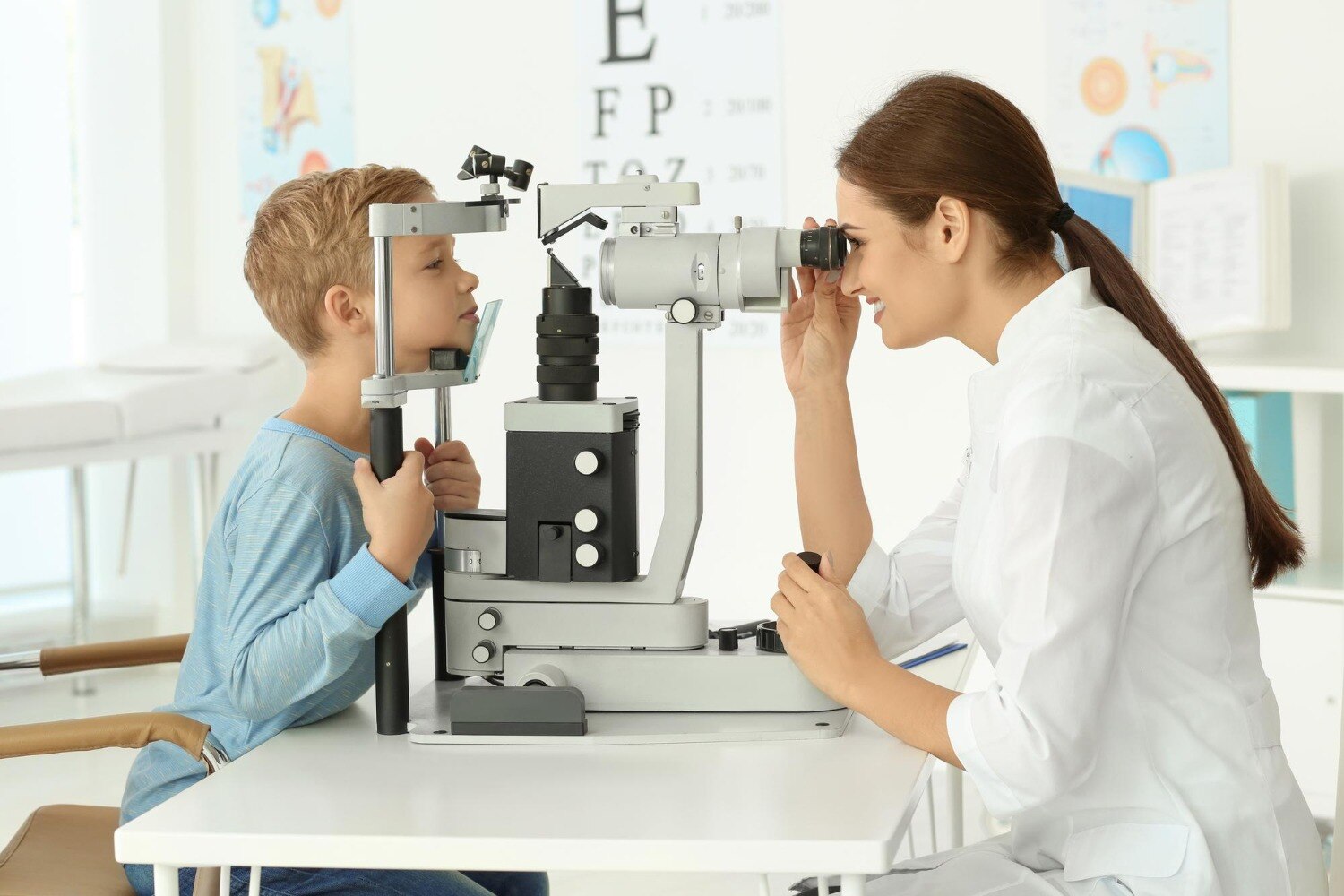
For a baby eye examination without an eye chart, the clinician checks whether each eye fixes on and follows a light or toy, then assesses pupil responses, eye alignment, eye movements, binocular vision, age-appropriate visual acuity, ocular health, and refractive error.
- Cycloplegic refraction for children uses dilating drops to temporarily relax focusing, allowing a more accurate measurement of the underlying prescription. Drops can cause light sensitivity and blurred near vision for several hours.
- The examination may include a dilated retinal examination to inspect the retina and optic nerve, particularly after an abnormal screening result, symptom, or risk factor.
- Follow-up visits may be needed to confirm findings, monitor eye development, or assess treatment for amblyopia or strabismus.
School vision screening versus comprehensive eye exam is a crucial distinction: screening identifies risk, while a full examination diagnoses refractive error, amblyopia, strabismus, cataract, retinal disease, and optic-nerve problems. A basic spectacle-number check, optical-shop vision test, or online test cannot replace that assessment.
Allow more time than a quick screening because cooperation and age-appropriate tests determine the appointment length. Children can usually return to school or sports once comfortable, but protect light-sensitive eyes and avoid activities requiring clear near vision while blur persists.
Online tests and school checks have a limited role; symptoms or risk factors require clinical assessment.
How should parents prepare for the appointment and manage follow-up?
Before the visit, bring previous prescriptions, school screening results, birth and medical history, medication and supplement lists, family eye history, and photographs showing a white pupil reflection or eye turn. Record when symptoms occur, which eye is involved, screen distance, headaches, reading errors, and classroom changes.
Preparing a child for an eye examination means describing it as “looking at your eyes,” not promising a particular result. Practise identifying shapes or pictures without coaching answers, bring a comfort object, and schedule around naps. Tell the clinician about sensory needs, communication preferences, or neurodivergence.
After assessment, follow the written plan and share it with teachers or caregivers. Glasses may need a short adjustment period; report persistent headaches, eye strain, or refusal to wear them. Never stop glasses, patching, atropine, or another amblyopia treatment because vision appears better. Amblyopia treatment follow-up checks whether the prescription or treatment schedule needs adjustment.
| Patching schedule for children | Follow the prescribed hours and eye |
|---|---|
| At-home monitoring | Note eye turn, closing one eye, symptoms, and glasses use |
| Dilating drops aftercare | Expect temporary light sensitivity and blurred near vision; use sunglasses and avoid leftover eye drops |
| Safety | Do not cover an eye for prolonged periods without professional direction |
Keep every review appointment, even when progress is obvious. Contact the clinic if treatment causes unexpected pain, marked redness, or worsening vision.
How do you choose the right pediatric eye specialist for your child?
After a failed screening, persistent symptoms, or a risk-based referral, choose care by examination scope—not location alone. Look for a child-friendly eye clinic that can assess children who cannot read a chart or cooperate reliably.
- Confirm pediatric examination experience and ask for an alignment and binocular vision assessment, including eye movements.
- Check that cycloplegic refraction with focusing-relaxing drops and a dilated retinal examination are available.
- Ask how the clinician examines toddlers, children with developmental differences, or children who become distressed.
- Choose child-friendly communication and request a written follow-up plan covering results, treatment, timing, and warning signs.
- Ask whether the service manages glasses, patching, atropine, school communication, and referrals for surgery when needed.
| Care option | What it can provide | When it fits |
|---|---|---|
| Pediatric ophthalmologist | Objective testing and medical or surgical planning | Strabismus, amblyopia, abnormal visual development, congenital cataract or glaucoma |
| Specialist eye clinic | Examination, refraction, retinal assessment, and treatment planning | Failed screening, persistent tearing, ptosis, trauma, or unclear findings |
| Neurology-linked assessment | Eye examination plus neurological coordination | Suspected neurological involvement or abnormal eye movements |
A pediatric ophthalmologist in Thane is especially appropriate for these concerns. Expect an initial appointment, possible repeat visits, glasses adaptation, patching, home observation, and communication with school. Focus Eye Clinic - 02235048608 in Thane is one option to assess whether its specialist diagnosis, treatment planning, laser procedures, or eye surgery match your child’s findings.
Related services
Ophthalmology ₹900 At Focus Eye Clinic in Thane, Dr. Mohini Modak offers expert care for Pterygium—a wing-shaped growth on the eye’s surface often caused by UV... View service → |
Ophthalmology LASIK Surgery and consultation in Thane ₹900 LASIK Surgery at Focus Eye Clinic by Dr. Mohini Modak is an advanced laser vision correction procedure designed to reduce or eliminate dependence on... View service → |
Frequently asked questions
What eye checks should a child have at each age?
Arrange a newborn eye examination for premature babies or babies with an unusual red reflex, drooping eyelid, eye misalignment, or relevant medical concerns. Continue age-appropriate vision screening and specialist examinations when symptoms, screening results, or medical risks call for them.
Which child vision symptoms require urgent care?
Seek urgent assessment for sudden vision loss, severe eye pain, an eye injury, a new or marked eye misalignment, a white pupil or unusual red reflex, sudden double vision, or swelling with fever.
What can a pediatric eye examination detect if a child cannot read an eye chart?
The specialist can assess fixation, eye alignment, pupil responses, eye movements, focusing, refractive error, depth perception, and the health of the front and back of the eye using age-appropriate tests.
How should parents prepare for a pediatric eye appointment?
Bring your child’s medical and birth history, medication list, previous prescriptions, glasses, family eye history, and notes about symptoms. Ask when the next review is needed and follow the recommended treatment or observation plan.
Keywords