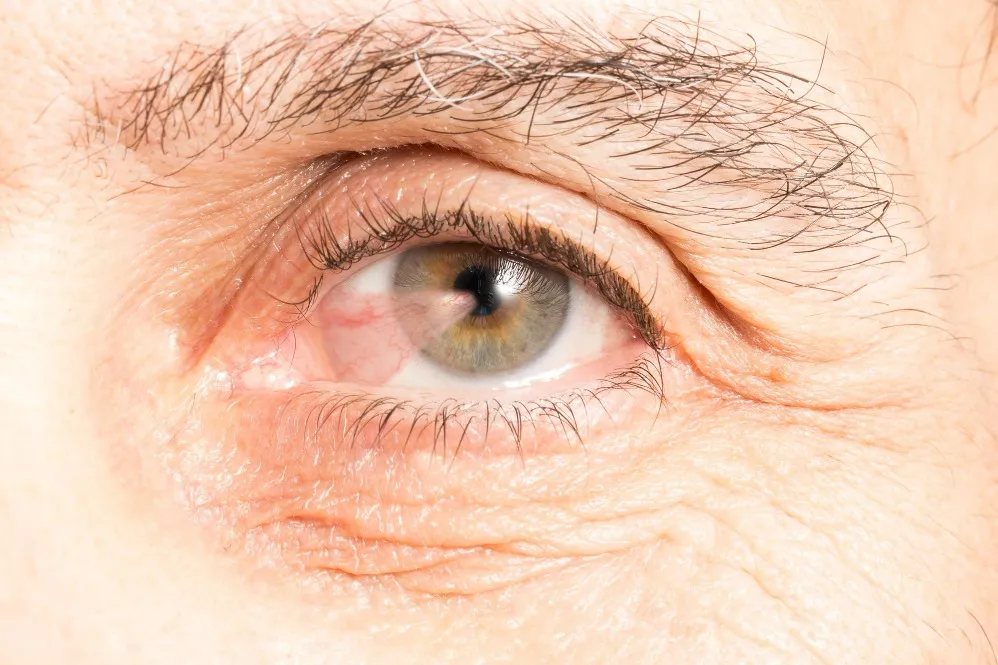
A fleshy or triangular growth extending from the white part of the eye toward the cornea can understandably cause concern. This condition is called pterygium. Pterygium Management depends on its size, symptoms, progression, effect on vision, and the degree of irritation it causes.
Not every pterygium requires surgery, which is why assessment matters before deciding what to do.
What Is a Pterygium
A pterygium is a growth of conjunctival tissue that can extend onto the cornea. Long-term ultraviolet exposure is considered an important risk factor, and environmental exposure to wind and dust may also contribute to irritation.
Some people have a small, stable pterygium that causes little difficulty. Others experience recurring redness, dryness, foreign-body sensation, or visual changes.
When Monitoring May Be Appropriate
If the growth is small, stable, and not significantly affecting vision, the ophthalmologist may recommend observation along with measures to improve comfort and reduce environmental exposure.
Lubricating drops may help associated surface irritation. UV-protective eyewear can also be useful for people spending substantial time outdoors.
These measures do not necessarily make an established pterygium disappear. Their role is different from surgical removal.
When Surgery May Enter the Discussion
Surgical management may be considered when a pterygium progresses toward the central cornea, affects vision, produces significant astigmatism, causes persistent symptoms despite appropriate management, or creates other clinically relevant concerns.
The decision is individualized.
Patients should also understand that recurrence can occur after surgery. Surgical technique and postoperative care are therefore important parts of the discussion.
Questions to Ask Before Choosing Treatment
A useful consultation should clarify:
- How far the pterygium has extended
- Whether it is progressing
- Whether it is affecting corneal shape
- Whether it is contributing to visual symptoms
- Whether conservative care is reasonable
- Why surgery is being recommended when applicable
- What follow-up will be required
People in Thane, Maharashtra, frequently experience outdoor exposure to sunlight, traffic-related dust, and environmental irritants. While these factors do not prove the cause of an individual patient's condition, protecting the eyes can be a practical part of long-term surface care.
At Focus Eye Clinic, Dr. Mohini Modak can examine pterygium and distinguish it from other conjunctival and corneal conditions that may appear similar to patients.
Frequently Asked Questions About Pterygium
Is pterygium cancer?
A typical pterygium is a benign growth. However, any unusual eye-surface growth should be examined so the diagnosis can be confirmed.
Can eye drops remove it completely?
Lubricating or other prescribed drops can help control associated symptoms but generally do not eliminate the established tissue.
Does every pterygium eventually cover the pupil?
No. Progression varies significantly between individuals.
Can it return after removal?
Recurrence is possible, which is one reason surgical planning and follow-up matter.
The presence of visible eye growth does not automatically mean an operation is required. Pterygium care works best when decisions are based on progression, symptoms, corneal involvement, and the effect on vision rather than appearance alone.
Keywords