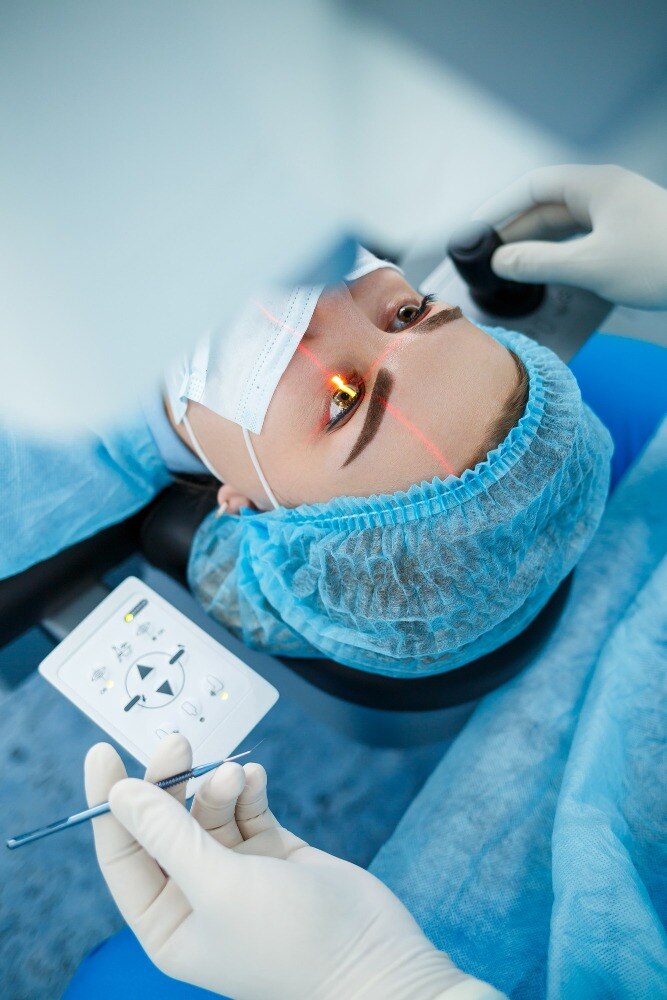
LASIK is elective corneal surgery, so a suitable glasses prescription alone does not make you a candidate. You need to understand the screening tests, conditions that change the recommendation, realistic alternatives, possible side effects and the practical recovery demands before deciding whether to proceed.
Key takeaways
- LASIK requires age 18 or older and a stable prescription for 12 months.
- Corneal thickness, shape and eye health can rule LASIK in or out.
- Compare LASIK with PRK and SMILE based on your eyes and recovery priorities.
- Ask about side effects, recovery restrictions, enhancement policy and alternatives.
Are you a suitable LASIK candidate?
You meet the basic LASIK requirements only when your age, prescription, cornea and expectations all fit the procedure. The minimum age for LASIK is 18, and your spectacle prescription should have remained stable for at least 12 months. A healthy cornea for LASIK must also have adequate thickness and a regular shape.
Use this LASIK candidacy checklist:
- You are at least 18 and your prescription has not changed significantly for one year.
- Your corneal thickness and shape can support laser tissue removal without creating excessive ectasia risk.
- Your tear film is adequate; severe dry eye needs treatment before surgery.
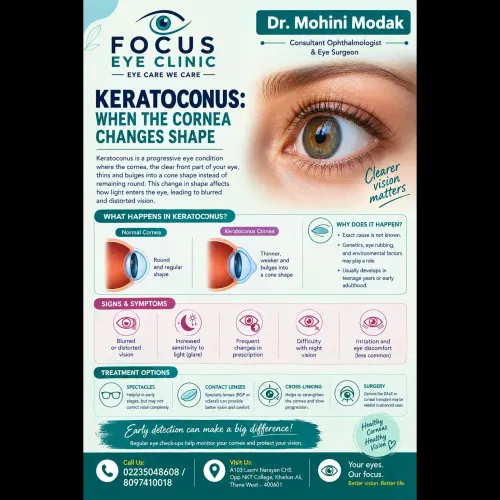
- You do not have keratoconus, suspicious corneal topography, active eye infection, uncontrolled glaucoma or uncontrolled diabetes.
- Pregnancy, breastfeeding and some autoimmune diseases have ended or are medically stable before assessment.
- You accept that glasses or contact lenses may still be needed and that enhancement is not always safe or possible.
A refraction alone cannot establish candidacy. Assessment should include corneal topography or tomography, pachymetry, tear-film testing, pupil measurement, slit-lamp examination and a dilated retinal examination.
LASIK reshapes the cornea to reduce eligible myopia, hyperopia and astigmatism; it does not cure cataracts, retinal or optic-nerve disease, or stop presbyopia. You may still need reading glasses as you age, and a perfect 20/20 result is not guaranteed.
Which examinations can rule LASIK in or out?
LASIK eligibility tests do more than confirm your glasses prescription: they look for corneal weakness, an unhealthy eye surface and conditions that could make healing unsafe. A suitable assessment includes the following:
- Refraction measures your prescription and checks whether it has remained stable for at least one year. An unstable prescription calls for delay.
- Corneal topography maps the cornea’s surface. Corneal tomography also examines its front and back surfaces, revealing keratoconus or suspicious shape that can raise the risk of corneal ectasia.
- Pachymetry measures corneal thickness. The surgeon combines that result with the planned tissue removal; a normal central measurement alone does not prove adequate structural strength.
- Tear-film tests and a slit-lamp examination identify severe dry eye, blepharitis, corneal scars, infection or other active eye disease.
- Pupil measurement helps assess the risk of night glare and halos. A dilated retinal examination checks the retina and optic nerve for problems unrelated to the cornea.
| Finding | Decision | Reason |
|---|---|---|
| Abnormal tomography, keratoconus or excessive planned tissue removal | Usually rule out LASIK | Removing tissue could weaken the cornea and cause progressive bulging. |
| Severe dry eye, uncontrolled glaucoma or active infection | Treat first or choose an alternative | LASIK can worsen symptoms or delay healing. |
| Uncontrolled diabetes, autoimmune disease, pregnancy or breastfeeding | Delay and obtain medical clearance | Healing, prescription stability or medication safety may be affected. |
If LASIK is unsuitable, PRK, SMILE, phakic intraocular lenses or spectacles may offer safer alternatives after specialist review.
How does LASIK compare with PRK, SMILE and other choices?
The key trade-off is not simply sharper vision. Compare how much corneal tissue each option uses, how quickly you need functional vision, and whether you can reverse the decision.
In LASIK vs PRK, PRK avoids a flap and may suit some people with thinner corneas, challenging surface anatomy or high trauma exposure. In LASIK vs SMILE, SMILE uses a small incision and removes a lenticule, but its prescription range and enhancement options depend on the platform.
| Option | Candidacy and tissue use | Discomfort and recovery | Reversibility and long-term trade-off |
|---|---|---|---|
| LASIK | Healthy, adequately thick cornea; flap plus laser permanently removes tissue. | Usually mild discomfort and useful vision within days. | Not reversible; the flap can dislodge after significant trauma, even years later. |
| PRK | Uses surface ablation without a flap; useful when a flap is less attractive. | More soreness and slower visual recovery, often over several days to weeks. | Tissue removal is permanent, but there is no flap; haze and delayed healing require consideration. |
| SMILE | Small incision and lenticule removal; eligibility and enhancements vary by system. | Usually less surface discomfort than PRK, with recovery that can be slower than LASIK. | Not reversible; preserves more tissue or corneal nerves in some settings, but does not suit every prescription. |
| Phakic intraocular lenses | Adds a lens inside the eye without removing corneal tissue; useful for selected high prescriptions or thin corneas. | Intraocular surgery brings a different recovery and risk profile. | The lens can be removed, but this is not risk-free; long-term monitoring is necessary. |
| Spectacles and contact lenses | Broadest candidacy; no surgical tissue loss. | Immediate correction; contacts can cause dryness or irritation. | Fully reversible, but require ongoing wear, cleaning, replacement and cost. |
LASIK also does not prevent presbyopia, so reading glasses may still become necessary later. A result short of 20/20 can leave residual prescription, while enhancement requires stable measurements and enough safe corneal tissue.
What risks and side effects should you weigh?
A 20/20 result does not guarantee comfortable or safe vision at night. LASIK risks include glare, halos and starbursts after LASIK, ghost images and reduced contrast; large pupils, dry eye, residual prescription and higher-order aberrations increase the chance.
LASIK dry eye occurs because the flap interrupts corneal nerves involved in sensation and tear regulation, causing burning, fluctuating vision or discomfort during healing.
The FDA-funded PROWL studies show why frequency and severity must be separated: up to 46% of participants reported at least one new visual symptom three months after surgery, while fewer than 1% reported great difficulty with usual activities at six months. Persistent symptoms remain possible.
- Residual nearsightedness, farsightedness or astigmatism can require glasses; enhancement is considered only after the prescription and cornea stabilise.
- Infection is uncommon but threatens sight and needs rapid treatment.
- Flap displacement or epithelial ingrowth can follow trauma, including contact sports, even years later.
- Corneal ectasia is progressive weakening and bulging after excessive tissue removal or an undetected corneal abnormality.
Seek urgent eye care for worsening pain, a sudden vision drop, increasing redness, pus-like discharge, marked light sensitivity or a flap-related injury. Ask how your tear-film results, corneal thickness and topography affect each risk—not just your expected visual-acuity result.
What will recovery require, and what should you ask before choosing?
Arrange transport home on surgery day; you must not drive until your surgeon confirms that vision and eye comfort meet legal and practical safety needs.
LASIK recovery time is often shorter than PRK, but plan time away from work for at least the day of treatment and possibly several days if your job involves screens, dust or demanding visual accuracy.
LASIK aftercare includes prescribed antibiotic, anti-inflammatory and lubricating drops. Do not rub or press your eyes. Keep water and dust away as instructed, avoid swimming until cleared, and postpone contact sports or wear approved eye protection because trauma can displace the flap, even years later.
| Option | Typical planning point | What to confirm |
|---|---|---|
| Driving | No driving immediately after surgery | The surgeon’s clearance criteria |
| Work | Day of surgery off; more time for dusty or visually demanding work | Your job-specific restriction |
| Swimming and sport | Delay until the surgeon clears you; contact sports need added protection | Exact return dates |
LASIK follow-up visits check healing, pressure, refraction and side effects. Vision can fluctuate before stabilisation, so ask when night driving and final results will be judged.
- Which measurements make me suitable, and what risks do my corneal thickness, tear film and pupil size show?
- Which drops, restrictions and warning signs apply to me?
- When can I drive, work, swim and play contact sports?
- What happens if I have residual power, dry eye or flap trouble?
- What will I need for presbyopia later?
A preoperative consultation at Focus Eye Clinic - 02235048608 can connect these answers to your examination results, work demands and expectations rather than treating a glasses prescription as the decision.
Related service
Ophthalmology LASIK Surgery and consultation in Thane ₹900 LASIK Surgery at Focus Eye Clinic by Dr. Mohini Modak is an advanced laser vision correction procedure designed to reduce or eliminate dependence on... View service → |
Frequently asked questions
Am I a suitable candidate for LASIK?
You need to be at least 18, have a spectacle prescription stable for at least 12 months, and have adequate corneal thickness, regular corneal shape, healthy eyes and realistic expectations.
Which examinations can rule LASIK in or out?
A suitability assessment examines your prescription, corneal thickness, corneal shape and overall eye health. These findings help identify whether LASIK is appropriate or whether another option is safer.
How does LASIK compare with PRK and SMILE?
LASIK, PRK and SMILE use different approaches to reshape the cornea. Your surgeon should compare their eligibility requirements, recovery demands, benefits, risks and alternatives for your eyes.
What risks and side effects should I discuss before LASIK?
Ask about temporary visual symptoms, dry eye, under- or over-correction, infection, healing problems and the possibility of needing glasses or further treatment.
What should I ask before choosing LASIK?
Ask which procedure suits your corneas, what recovery requires, when you can resume normal activities, which warning symptoms need urgent attention and how follow-up care is arranged.
Keywords