Cataracts do not always announce themselves through dramatic vision loss. Early changes may be subtle enough to blame on spectacles, tiredness, dim lighting, or age. A Cataract Consultation becomes useful when these changes begin affecting everyday visual tasks or when routine examination identifies clouding of the natural lens.
Recognising the pattern can help patients understand when a detailed assessment is worthwhile.
Night Driving Becomes Increasingly Difficult
Headlights may appear excessively bright, halos can become distracting, and contrast may decrease. Someone who previously drove comfortably after dark may gradually begin avoiding night travel.
These changes are not exclusive to cataracts, so an eye examination is necessary to identify the actual cause.
Spectacle Changes Stop Providing Enough Clarity
Cataracts can change the way light passes through the natural lens. Some patients notice that their prescription changes repeatedly, yet their overall visual quality remains unsatisfactory.
A refraction can determine whether a new prescription is likely to help. If reduced vision persists despite appropriate optical correction, the ophthalmologist can investigate other causes.
Colours Look Less Vivid
Because cataracts can alter the transparency and colour of the lens, patients may notice that colours seem duller or less distinct. This change is often gradual and may become more noticeable when comparing vision between the two eyes.
Reading Requires More Light
Increasing dependence on brighter illumination can be another sign of reduced visual quality. Fine print may become difficult despite apparently adequate spectacles.
However, retinal disease, dry eye, glaucoma, and other conditions can also affect reading. Cataract should therefore be confirmed through examination rather than assumed from symptoms.
What Happens During Cataract Consultation
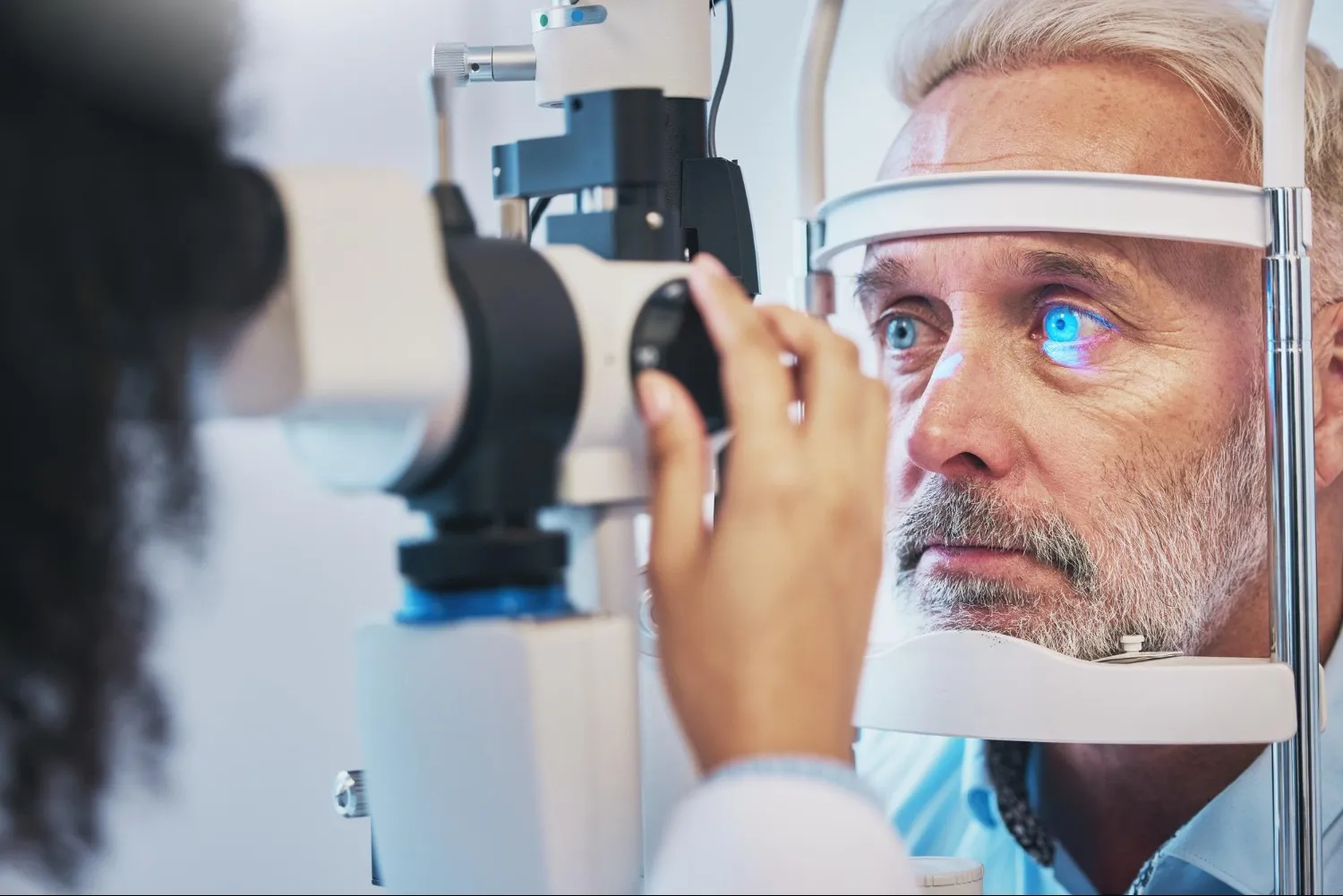
The ophthalmologist evaluates vision and examines the lens to determine the presence and extent of cataract. The rest of the eye is also important because retinal, corneal, and optic nerve conditions can affect expected visual outcomes.
If surgery is being considered, additional measurements may be required for intraocular lens planning.
At Focus Eye Clinic in Thane, Maharashtra, Dr. Mohini Modak can assess patients experiencing progressive visual changes and determine whether cataract, refractive error, or another eye condition is responsible.
Does Every Cataract Need Immediate Surgery
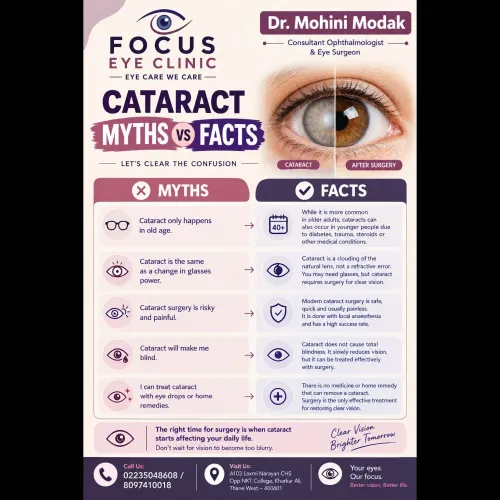
No. A cataract that is present but causes little functional difficulty may sometimes be monitored.
Surgery becomes more relevant when reduced vision interferes with activities that matter to the individual or when the ophthalmologist identifies another clinical reason for intervention.
Common Questions About Cataract Assessment
Can eye drops remove a cataract?
Established cataract involves clouding of the natural lens. Cataract surgery is the definitive treatment when intervention becomes necessary.
Can cataracts return after surgery?
The removed natural lens does not grow back. Some patients later develop clouding of the capsule behind the implanted lens, which is a different condition and can often be treated with a laser procedure when appropriate.
Should both eyes be treated at the same time?
Surgical planning depends on the individual patient, the condition of each eye, and the ophthalmologist's recommendation.
Cataract assessment is therefore less about reaching a particular age and more about understanding how lens changes are affecting vision, safety, independence, and daily life.
Keywords