A child can appear to see normally while one eye is providing significantly poorer visual input than the other. Because children may rely on the stronger eye, they often do not complain. Amblyopia management is aimed at improving visual development when reduced vision results from abnormal visual experience during childhood.
Amblyopia is commonly known as lazy eye, but the term can be misleading. The eye itself is not simply being “lazy.” The problem involves how vision develops when the brain does not receive equally clear or properly aligned input from the eyes.
What Can Lead to Amblyopia
Several situations can interfere with normal visual development.
These include:
- A significant difference in spectacle power between the eyes
- Squint
- High refractive error affecting both eyes
- Visual obstruction during early childhood
- Certain congenital eye conditions
Because the child may compensate well, screening and examination can identify problems that parents cannot easily see at home.
Signs That Deserve Attention
Some children show obvious clues, while others show none.
Possible signs include persistent eye misalignment, sitting unusually close to screens, difficulty with visually demanding tasks, closing one eye, an unusual head posture, or problems noticed during school vision screening.
A failed screening test is not itself a diagnosis. It indicates that a more complete eye examination may be needed.
How Amblyopia Management Is Planned
The first step is identifying and treating the cause of reduced visual input. Appropriate spectacles may be prescribed when refractive error is present.
Depending on the child's condition, treatment may also involve patching the stronger eye for prescribed periods or using other methods intended to encourage use of the weaker eye. Treatment plans are individualized according to age, visual difference, cause, and response.
Parents should follow the recommended schedule rather than increasing patching time independently. More treatment is not automatically better.
Why Timing Can Matter
Visual development is particularly active during childhood. Earlier recognition generally provides more opportunity to address abnormal visual development, although older children may still benefit from treatment in appropriate circumstances.
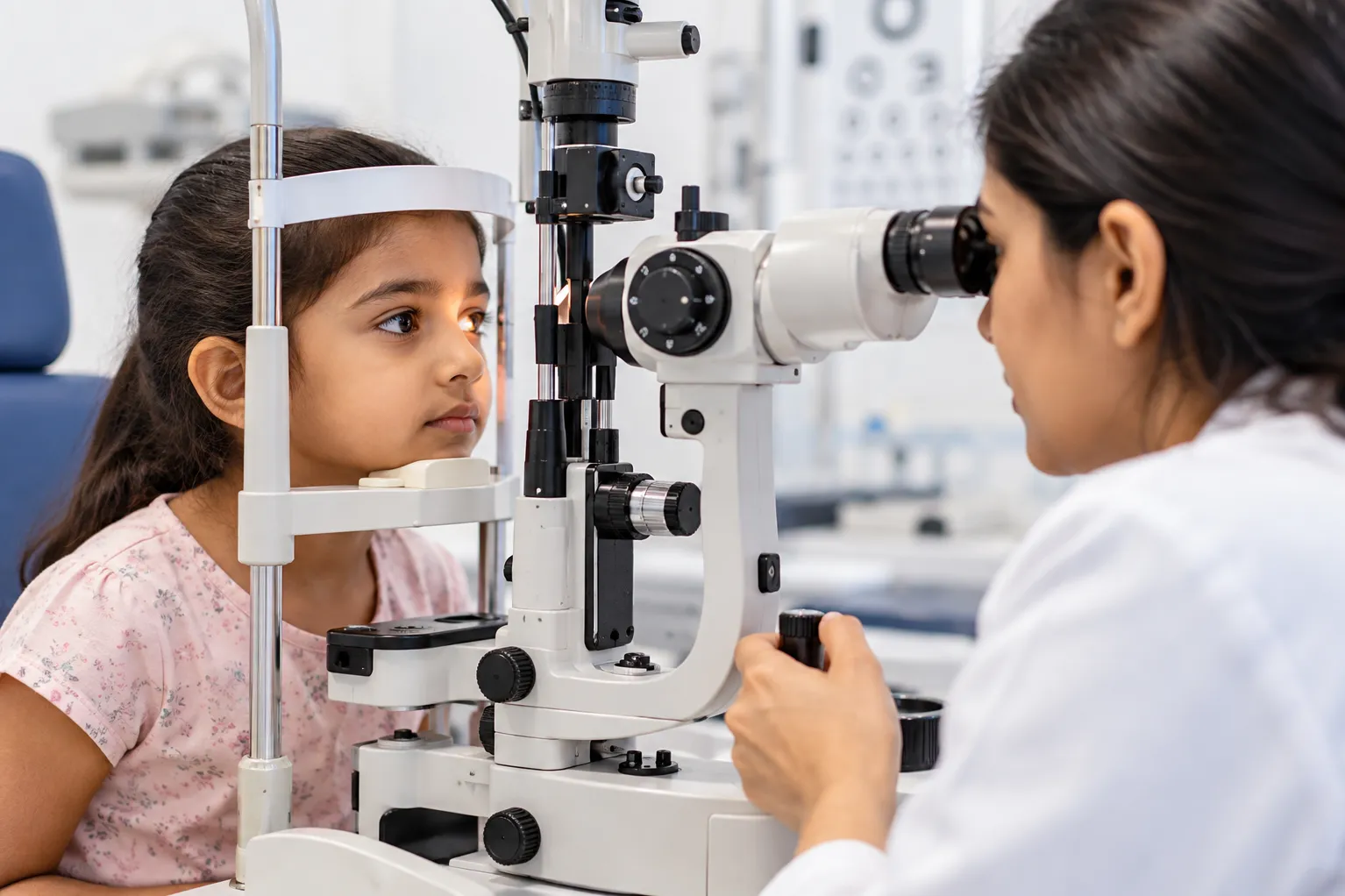
This makes pediatric eye assessment important when parents, teachers, pediatricians, or screening programmes identify a possible concern.
Families in Thane, Maharashtra, can consult Focus Eye Clinic, where Dr. Mohini Modak evaluates pediatric eye concerns including reduced vision, refractive errors, squint, and amblyopia.
Questions Parents Often Ask
Will spectacles alone improve amblyopia?
For some children, appropriate optical correction can produce meaningful improvement. Others require additional treatment.
Does patching damage the stronger eye?
Patching is prescribed according to a controlled schedule. Follow-up is important so visual progress in both eyes can be monitored.
How quickly does vision improve?
Response varies. Age, severity, cause, treatment adherence, and individual visual development all influence progress.
Can a child outgrow lazy eyes without treatment?
Amblyopia should not simply be expected to disappear with age. Untreated abnormal visual development can persist.
The key is not to wait for a child to describe blurred vision. Children frequently adapt to the vision they have. A proper examination can reveal whether both eyes are contributing appropriately and whether intervention during the developmental years is indicated.
Keywords