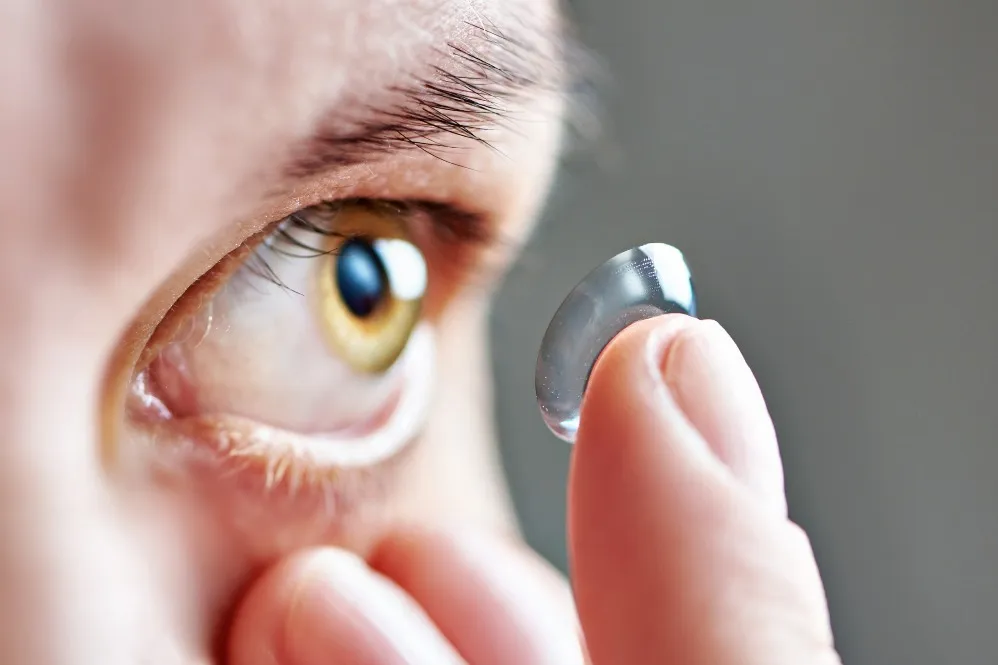
Contact lenses can provide clear vision without spectacles, but choosing lenses involves more than matching the power written on a spectacle prescription. The shape of the eye, tear film, lens material, wearing schedule, and hygiene habits all influence comfort and eye health.
A qualified Contact Lens Specialist assessment is particularly useful for first-time wearers, people experiencing discomfort, and anyone considering a different type of lens.
Why spectacle power cannot simply be copied
Spectacles sit a short distance in front of the eyes, while contact lenses rest directly on the tear film covering the cornea.
Because of this difference, a contact lens prescription may not always be identical to a spectacle prescription. Lens diameter, curvature, material, and fit must also be considered.
Proper fitting helps determine whether a lens sits appropriately and moves as expected when you blink.
Signs that your current lenses need review
Contact lenses should not routinely cause persistent discomfort.
Consider arranging an assessment if you notice:
- Recurrent redness
- Burning after wearing lenses
- Persistent dryness
- Fluctuating vision
- Lenses frequently moving out of position
- Difficulty tolerating lenses for normal wearing periods
- Sensitivity to light
- Increasing dependence on lubricating drops
Pain, marked redness, discharge, or sudden deterioration in vision while wearing contact lenses requires prompt eye evaluation.
Daily lenses and reusable lenses have different demands
There is no universally best contact lens format.
Daily disposable lenses are discarded after use, while reusable lenses require appropriate cleaning, storage, and replacement. Lifestyle, prescription, ocular surface health, budget, and wearing frequency can all influence the choice.
People who wear lenses only occasionally may have different requirements from those using them throughout the working week.
Hygiene mistakes can increase problems
Even a correctly fitted lens can become problematic when care practices are poor.
Common mistakes include:
- Sleeping in lenses not prescribed for overnight use
- Extending lenses beyond their recommended replacement schedule
- Handling lenses without clean hands
- Exposing lenses to tap water
- Reusing old solution
- Failing to maintain reusable lens cases appropriately
- Wearing lenses despite significant redness or pain
These habits can increase the risk of irritation and potentially serious corneal complications.
What should be checked before choosing lenses
A useful contact lens evaluation considers visual correction as well as eye health.
Dr. Mohini Modak at Focus Eye Clinic can assess refractive requirements and ocular health before contact lens use. The examination can also help determine whether dry eye, allergies, corneal changes, or another condition is contributing to poor lens tolerance.
For contact lens users in Thane, environmental exposure, long working hours, air-conditioned offices, and prolonged screen use may also affect comfort.
Contact lenses can be a practical vision correction option when they are appropriately selected and cared for. The objective should not simply be finding a lens that provides clear vision for a few minutes during fitting.
A suitable lens should provide acceptable vision, fit appropriately, and be supported by safe wearing and hygiene practices. Periodic reviews are useful even for experienced wearers because prescriptions, tear-film characteristics, and eye health can change over time.
Keywords